天才小书
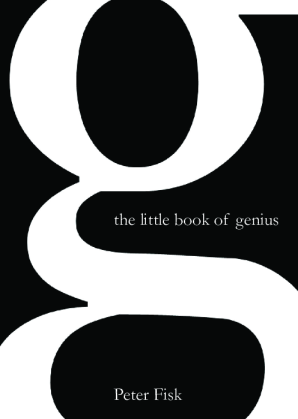
The Little Book of Geniusbrings together some of the best insights andideas from the bestselling “genius” series of books by inspirational authorPeter Fisk. These are extraordinary times. A world changing all around us. Economic turbulence and uncertainty thataffects every one of us. Technological impacts with speed and connectionsnever before imagined. A social and environmental crisis that is even moreserious. Power is rapidly shifting from west is east, large to small companies, massmarkets to niches, business to customers. Customers are more individualand connected, more informed and demanding than ever before. There areunlimited opportunities to focus, but with unprecedented competition. It’s time to press the “reset” button. Whilst the Chinese use the same word to mean threat and opportunity,Einstein reminds us that we cannot solve problems with the same thinkingthat created them, and Picasso sees turbulent times as the most exciting times,because everything changes. See things differently. Think different things. How will your markets be shaped by these new forces? How do you harnessthem to develop a better strategy, drive more radical innovation, harnessthe power of networks, re-engage your best customers, and deliver moreprofitable, sustainable growth? Now is the time to seize the opportunities of a changing world, to shapeyour markets in your vision rather than live by someone else’s, and to deliverextraordinary results. Be bold, be brave, be brilliant. “Hello, I am your customer.Do you see the worldlike I do? It’s simplereally. Start with meand everything elsefollows. Together wecan do extraordinarythings ... Are you ready?” Customers are now in control of our markets, demanding that we do businesson their terms. Their expectations are high, and loyalty is rare. They areindividual and emotional, well-informed and highly organized. They know whatthey want, and only accept the best. “Customer Genius”introduces a 10 step blueprint for building a customer-centric business; proving that the right customer strategies, based on deepercustomer insight, driving more compelling propositions and distinctiveexperiences, can engage those ‘wonderful people’ we call customers. of the best ideas fromCustomer Geniusare 1. Outside in.Power has shifted to customers, and business must learn to think and actfrom the outside in. Customers see their challenges and solutions more holistically, withoutsectors or categories. 3. Less is more.Better to attract and retain fewer, more profitable customers than to try toserve everyone. 4. Deep diving.Use more personal immersion to discover what factors really drive attitudesand behaviours. People are more irrational and emotional. Focus on the energisers, not justthe essentials. 6. Pull don’t push.Don’t sell products, engage people on what matters to them – where, whenand how they want. 7. Work together.Collaborative, help people to solve problems and achieve more with co-created solutions. 8. Intuition rules.Throw away the rule book, and enable customer service people to behuman and responsive. 9. Word of mouth.Customers are more loyal to each other than any business, so harness thepower of advocacy. Customer metrics are lead indicators, whilst financials only tell you aboutthe past. 1.Understanding people moredeeply •As business people we have a very narrow perspective on our markets,limited by the boundaries that we define, and missing much of what mattersin our customers’ worlds. •When was the last time you had a proper conversation with a customer notabout products or problems, but about what drives and influences them, theirhopes and dreams? •Most research is superficial, based on and seeking to confirm existingprejudices and beliefs. It is filtered and aggregated, squeezing out any newinsights. •“Customer immersion” is about understanding people more deeply. It’s abouthaving real conversations, one to one, listening and exploring what mattersto them and motivates them. •Leaders and managers should each spend time with real people – gainingdeeper insight, memorable anecdotes and renewed motivation for why theydo business. •Malcolm Gladwell calls it “thin slicing” – the ability of a police officer to visit aperson’s home and, through observation and listening, to learn an enormousamount about them within seconds. •Few companies have insight(s) ... Insight is described as a constant state ofcuriosity, whilst insights are defined as penetrating discoveries, flashes ofinspiration. •Abraham Maslow created his hierarchy of needs, from basic to aspirational,however a better way to look at this is rational to emotional, essential toenergizing. •The “energizer pyramid” helps you to interpret customer needs, and thebenefits you offer: •“Essentials” are what customers expect you and others to provide. Make sureyou deliver them every time, however you can differentiate and engagepeople in other ways. •“Enablers” are about what you enable people to