领导力实验室
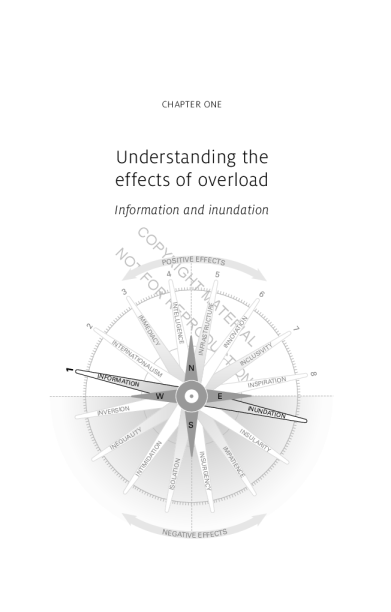
Information and inundation There’s more information around us than ever before. E-mail,24-hour news and social media are an almost constant sourceof distraction. We know more about our world than any previ-ous generation. We also measure everything. We measure ourweight, steps, heart rate, the time we take for activities, oursleep, our calorie intake – and that’s just the personal informa-tion. In the workplace, the compulsion to measure and analyseis even greater. But what if all this information that we relyupon so much for our logical, analytical approach had becomeso abundant that it was inundating us and our understanding? COPYRIGHT MATERIALNOT FOR REPRODUCTIONIn this chapter, we look at how the volume and type of infor-mation are changing leadership culture. We’ll see how it is un-dermining our ability to make sense of the world by constantlyinterrupting and changing our thought processes. We’ll also seehow our own filtering and that of others can narrow our field ofvision. We’ll look at the technological changes of the past decadeand show how, in many instances, they have created paradoxi-cal effects. This is creating polarities that demand a new type ofthinking away from just analysis towards parenthesis. Analysisfocuses leadership goals on the short-term, quantitative (oftenfinancial), tangible goals. It marginalizes those of little economicvalue and ignores wider community goals such as caring andcompassion. Leaders need more balance between the two kindsof thinking and more fluidity to shift between them. In this chapter, this is what we will cover: lLeft-brain processlRight-brain processlThe overloadlHow it changes uslThe algorithms make this worselNews is about profits, toolIs the overload hurting our creativity?lThe sort of people we’re becominglThe siren call of the numbers lAnalysis versus parenthesislLearning to refocuslOur socio-economic perspective also dictates our understandinglA mixed reality environmentlHow this changes the leader’s mandatelSpotting the signs of a waterboarded leaderlOverconfidence as a cause of our problemslCould it be the faster we move, the more superficial ourinformation becomes?lAn inherent bias against diversity?lConclusions COPYRIGHT MATERIALNOT FOR REPRODUCTIONBefore we explore this further, we must review how we processinformation using the two main techniques that we have at ourdisposal. Left-brain process These are the logical, rational processes at the core of West-ern Reductionism. Although it has its roots in antiquity, inthe work of Aristotle and Plato, its modern application reallydates from the age of Enlightenment. This was an intellectu-al and philosophical movement of the 18th century that sawthe flourishing of science and the pushing back of theology inEurope. At its core, reductionism or the left-brain process allows usto compare, contrast, analyse and measure. It provides us withour convergent or analytic capability. By its nature, this pro-cess separates and atomizes because it focuses attention on thatwhich is different. Computers are excellent assistants when itcomes to processing and breaking down data because they arefounded on logic. They allow us to calculate answers and buildcomplex models which can be run and re-run to test hypothesesand assumptions. Analysis allows us to reach the correct answer with certainty.It allows us to develop scientific thinking and has been the sin-gle most productive philosophy mankind has embraced. This iswhy it has been adopted by all of the most industrially advancednations, in schools, universities, government, the military andcommerce. The most skilled intellects (as defined by their abilityuse logic and rational thinking) are the most highly prized andsought after in all walks of life. COPYRIGHT MATERIALNOT FOR REPRODUCTIONWhen first meeting someone or when we’re interrupted, alert-ed or distracted, it is to the left-brain process that we turn. Theprocess helps us assess a situation, tells us what the informationis, what we need to do with it and how and when to respond.This analytic, logical and reductionist ability is so powerful andall-encompassing as to almost completely eclipse the other ma-jor process which we know is there, but is harder to spot. Right-brain process These processes don’t just deal with the opposite of reductionism,they also deal with synthesizing, contextualization and broadervision. These are termed divergent processes, because they seekto join things up rather than separate them. They are slower andrely heavily on what we might call offline processing. How do weknow this? Well, it’s difficult to prove scientifically. InToo Fastto Think1a survey of leaders from many different backgroundswas undertaken. All the leaders were experts in the Western Re-ductionist tradition. They all had one degree, some even had two,with further professional qualifications on top of that. They wereasked where they were when got their epiphanies or best ideas. The results were fascinati