债务减免帮助中国汽车市场跨越“中等收入陷阱”
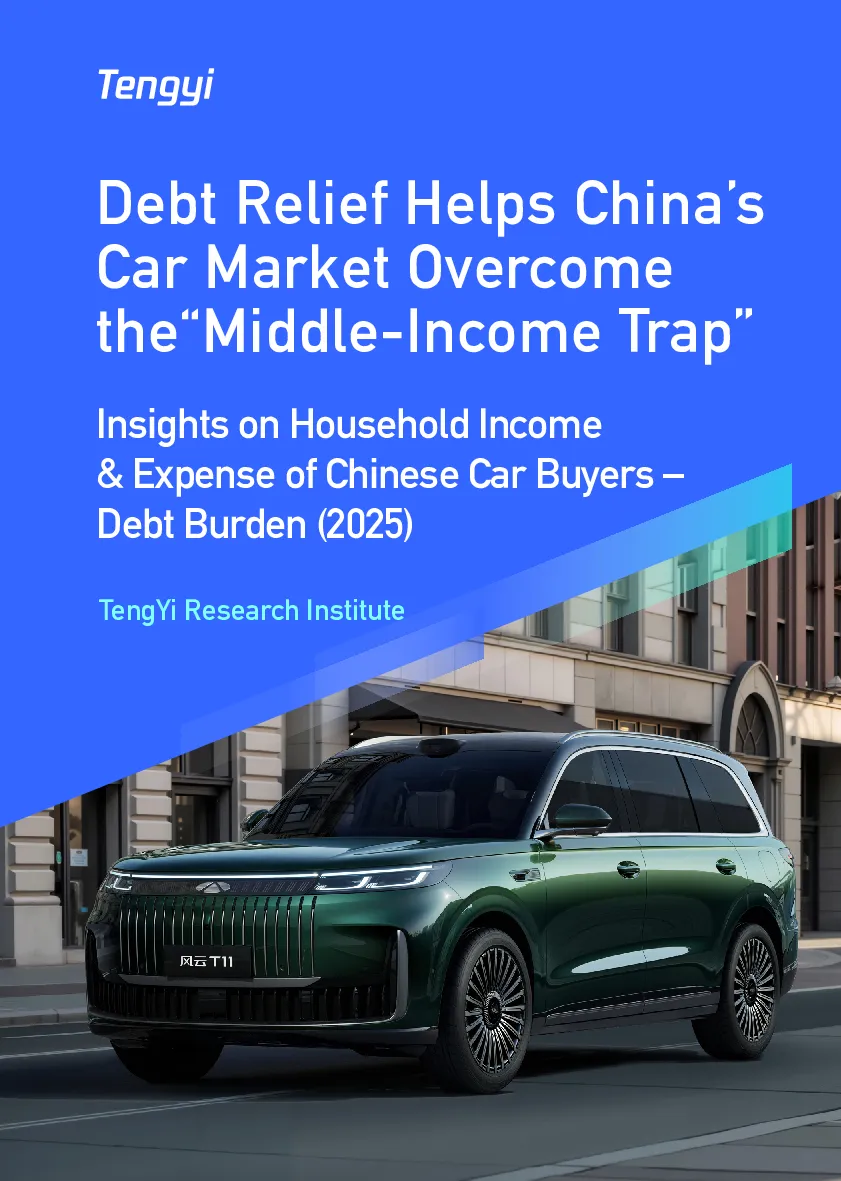
Debt Relief Helps China’sCar Market Overcome Insights on Household Income& Expense of Chinese Car Buyers – Lijun Zhou Director/Chief Analystzhoulijun1@yiche.com Industry AnalystBenya Shi In 2024, debt penetration among Chinese car-buying house-holds fell to 65.97%, averaging RMB 620,000 per household; From 2015 to 2019, driven by the continuous boom in real estate and successive collapses in P2Pfinance, debt penetration among Chinese car-buying households rose rapidly. In both 2019 and 2020, itexceeded 80%, meaning that more than four out of five households were in debtlike living under asword hanging overhead, possible to fall at any time. The pressure eased somewhat during the latter In 2024, total debt of car-buying households in China was concentrated in the range of RMB200,000-700,000, accounting for nearly 40% of the total. The RMB 500,000700,000 bracket was themost prominent, making up close to 14%. The proportion of households with debts exceeding RMB 700,000dropped significantly: those owing RMB 700,0001,000,000 fell to slightly above 10%, RMB Between 2020 and 2024, China’s passenger car (new vehicle) market underwent rapid “middle-classtransformation,” with the middle-class share rising swiftly from below 35% to over 45%. Middle-classfamilies have thus become the new main force of China’s car market. From 2025 to 2030, if the Share of China's Passenger Car(New Vehicle) Market by The primary cause of high household debt among Chinese carbuyers is housing purchase: over 85% of middle-class families In 2024, 65.97% of Chinese car-buying households were still in debt, with an average household debt ofRMB620,000. The primary culprit was house purchase: nearly 80% of car-owning families were indebteddue to property purchase, far surpassing other reasons such as car loans, short-term financing needs, In recent years, education expenses have rapidly become a major new source of debt for many Chinesecar-buying households, accounting for over 9% in 2024 and ranking sixth among major causes of debt. Thisis closely related to the persistent burden of expensive extracurricular tutoring and the sharply rising tuition ofprivate universities. As of September 2025, tuition at private universities generally ranges from RMB With the rapid aging of society and the growing prevalence of serious illnesses among younger people,medical expenses have also become one of the major causes of debt among Chinese car-buying house-holds, accounting for over 7% in 2024. Shockingly, online fraud has also made its way into the top 10 causesof debt, accounting for 4.73% and ranking eighthboth baffling and alarming. Among blue collar families,penetration exceeded 8%, making them the primary victims of online fraud. Fortunately, the Chinese As living standards continue to rise in China, tourism has also entered the top 10 causes of debt amongcar-buying households. This, in turn, indirectly supports the growth of the tourism industryparticularly Mortgage Payment asShare of Household Debt In 2024, the core middle-class groupmarried car-buyinghouseholdssaw their average debt exceed RMB700,000, In 2024, the average debt of married car-buying households in China exceeded RMB 700,000, whilethat of single buyers was less than RMB 300,000. Debt penetration among married households wasclose to 70%, compared with just over 50% among singles buyers. In recent years, more and more For married car-buying households in 2024, house purchases were the largest source of debt, accountingfor more than 80%. Those who bought homes between 2016 and 2023, upon getting married, often faceheavy mortgage burdens. The next two major causescar purchases and home improvementare When both spouses are employed, household income naturally rises after marriage, sometimes evenelevating the family into middle-class status. Reducing the debt burden of married households would help Although house and car purchases were also the top two causes of debt among singles car buyers, theirpenetration rates were much lowerless than 50% for housing and only 30% for cars. Without the need tobear child-rearing responsibilities, a life being single is far more relaxed. In many citiesespecially first-tierones like Beijing, Shanghai, Guangzhou and Shenzhenit is increasingly common to see single men and In 2024, post-85s and post-90s middle-class car-buyinghouseholds saw their average debt exceed RMB800,000, with In 2024, the total household debt among Chinese car buyers varied significantly by age group. Car buyersaged 24 and under–mostly single–carried relatively little debt, averaging less than RMB 150,000. Thoseaged 25–29 began forming families and purchasing homes and cars, pushing their average debt close toRMB 500,000. For the 30–34 age group (mainly post-90s) and 35–39 group (mainly post-85s)–the main Debt penetration also differed sharply across age groups, with both the post-85 and post-90 cohorts While the main debt drivers for car buyers aged 30–39 (p