您的浏览器禁用了JavaScript(一种计算机语言,用以实现您与网页的交互),请解除该禁用,或者联系我们。[彭博]:年轻日本投资者与长辈背道而驰,拥抱股票 - 发现报告

年轻日本投资者与长辈背道而驰,拥抱股票

2025-09-30彭博C***
AI智能总结
查看更多
年轻日本投资者与长辈背道而驰,拥抱股票

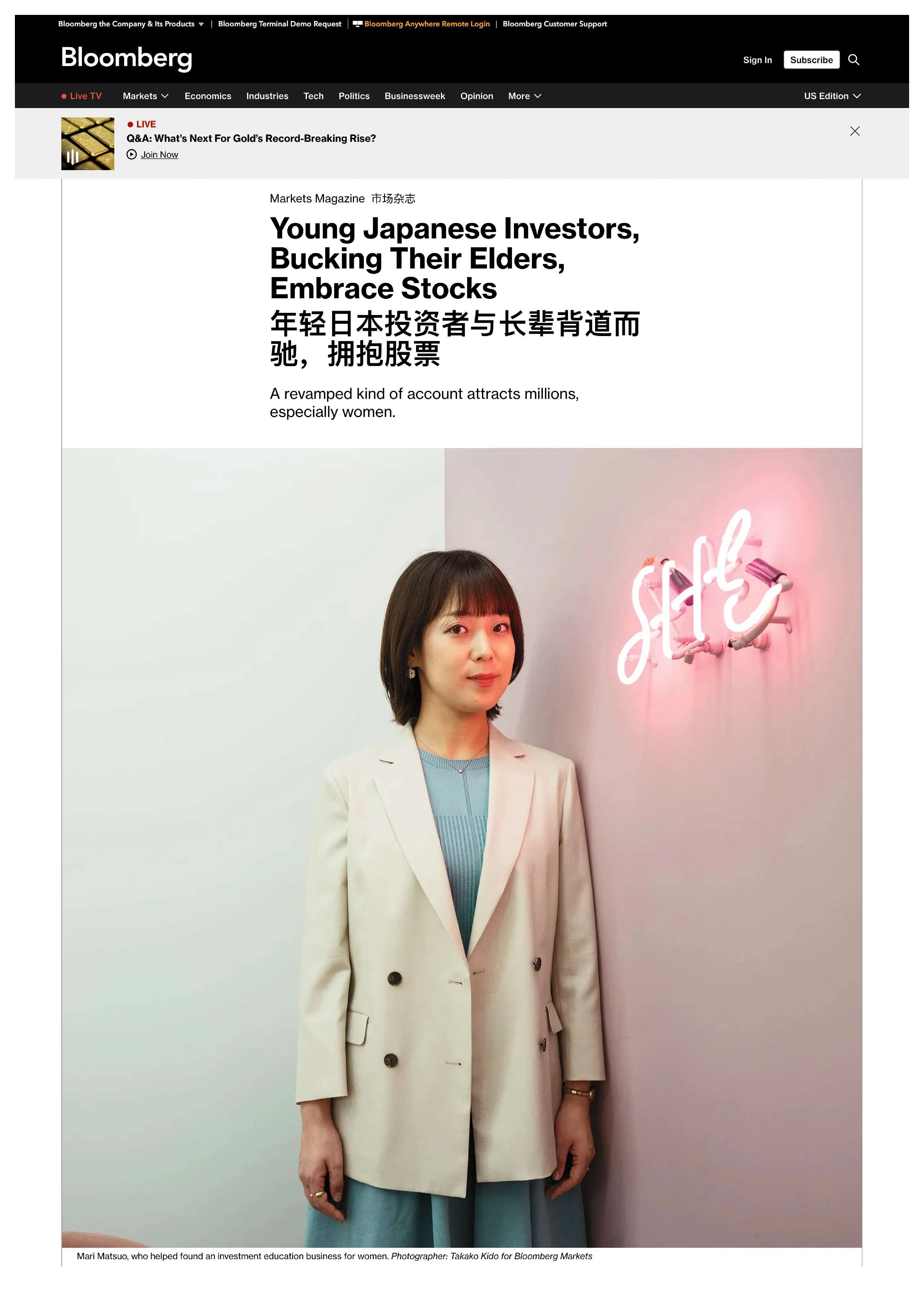
YoungJapanese Investors,BuckingTheir Elders,EmbraceStocks年轻日本投资者与长辈背道而驰,拥抱股票 Arevamped kind of account attracts millions,especiallywomen. ByFinbarr Flynn September30,2025 at7:00 AM GMT+8 ChihiroKuga istaking afinancial step thatwould be commonplaceintheUS orEurope but represents arevolutionary change inhercountry,Japan.InJanuary,she opened abrokerage account,whichnowhas abalance ofabout¥100,000($673). 久我千尋正在采取一项在美国或欧洲司空见惯,但在她的国家日本却代表着革命性变化的金融举措。今年一月,她开设了一个券商账户,目前余额约为¥100,000($673)。 Only19years old,Kuga has already passed along advice toherelders.“My father and mother arestarting torealize that justdepositingmoney inthebank orkeeping cash on hand isn’t agreatidea,but they don’t have alotofknowledge about what todo,”saysKuga,astudent atMeiji University inTokyo,where she belongs toaninvestment club. 古贺(Kuga)年仅19岁,却已向长辈们传授建议。“我父亲和母亲开始意识到仅仅把钱存银行或拿着现金并不是一个好主意,但他们对应该怎么做并不了解,”古贺说。她是位于东京的明治大学的学生,属于一个投资社团。 Fueledby these kinds ofindividual decisions,Japan’s investmentcultureischanging,slowly,aspart ofthecountry’s attempt toshiftfromanation ofsavers toone ofinvestors.Although Japanesehouseholdsstillhave about halfoftheir$15 trillioninfinancial assetsincash and deposits,they held 19%instocks and investment fundsasofJune,according totheBank ofJapan.That proportion marksthehighest levelsince Japan’s economic boom ended intheearly1990s. 受此类个人决策推动,日本的投资文化正在缓慢改变,作为该国从储蓄型社会向投资型社会转变努力的一部分。尽管日本家庭在约15万亿美元的金融资产中仍有约一半以现金和存款形式持有,但据日本银行数据,截至6月,他们在股票和投资基金中的持有比例为19%。该比例为自1990年代初日本经济繁荣结束以来的最高水平。 Tax-ExemptInvesting Takes Off免税投资兴起 Nipponindividual savings accounts atyearend年终日本个人储蓄账户数 Oneoftheforces driving thechange istheinvestment vehicle thatKugachose:aNippon individual savings account,orNISA.ItresemblestheRoth individual retirement account intheUS and wasmodeledaftertheUK’s individual saving account.Users investmoneyand reap any profits,tax-free. 推动这一变化的力量之一是久贺选择的投资工具:日本个人储蓄账户 (NISA)。它类似于美国的Roth个人退休账户,并以英国的IndividualSaving Account为蓝本。用户投入资金并可免税获得任何收益。 Nowwidely advertised on subways and even indepartment stores,theaccount was introduced in2014,but thegovernment made itfarmoreappealing lastyear.Users could put inasmuch as¥3.6 millionannually,triplethe previous limit,or atotal of¥18 million over theirlifetime.Since yearend 2023,theamount ofinvestments made inNISAsrose 68%,to¥59 trillion,asofMarch 31.InAugust,Japan’sFinancialServices Agency proposed making NISAs available tocustomersyounger than 18. 如今在地铁乃至百货公司广泛做广告的这一账户最早于2014年推出,但政府在去年使其更具吸引力。用户每年可投入最多¥3.6million,较此前限额增加三倍,或在其一生中累计投入最多¥18million。截至2024年3月31日,自2023年年末以来,投入NISA的资金规模增长了68%,达到¥59 trillion。8月,日本金融厅提议将NISA推广至18岁以下客户。 CashIsStillKing现金仍为王 Financialassets held by households inJapan,by year ended March 31,inyen按截至3月31日年度计算的日本家庭金融资产(以日元计) InaMay report,Morgan Stanley compared thesituation inJapan tothatoftheUS inthe1970s.Inboth countries,inflation began torise,encouragingashifttoward higher-returning and higher-riskinvestments.During that period theUS government started lettingcompaniesestablish 401(k)s fortax-advantaged savings inworkplaces,leading to aboom instock market participation bymiddle-and upper-middle-income households. 在五月的一份报告中,摩根士丹利将日本的情况比作1970年代的美国。在两国中,通胀开始上升,促使人们转向更高收益且风险更高的投资。在那一时期,美国政府开始允许公司为工作场所设立401(k)以实现税收优惠储蓄,从而推动中等及中上收入家庭大量参与股市。 InJapan,ashifttoward stock investingrepresentsan opportunity forbig banks suchasMitsubishi UFJ Financial Group Inc.andMizuhoFinancial Group Inc.,aswellasfast-growingonline brokers that market suchaccounts,earning fees.They include JapanesecompaniesRakuten Group Inc.and MonexGroupInc.The number ofNISA accountsatRakuten’sbrokerage unit climbed 18%,to6.53million,inthe second quarter from thesameperiodayear before. 在日本,转向股票投资为大型银行如三菱UFJ金融集团(MitsubishiUFJ Financial Group Inc.)和瑞穗金融集团(MizuhoFinancial GroupInc.)以及推广此类账户并收取费用的快速成长网络券商带来机会。其中包括日本公司乐天集团(RakutenGroup Inc.)和Monex集团(MonexGroup Inc.)。乐天券商单位的NISA账户数量在第二季度较去年同期增长了18%,达到653万账户。 Featuredinthe October/November issue ofBloombergMarketsPhotographer:Ben Weller for Bloomberg Markets 收录于《BloombergMarkets》10/11月刊摄影:Ben Weller,为《BloombergMarkets》拍摄 InAugust,Yuta Era held sessions on investingattheTokyo Stock Exchange forstudentsatcolleges,high schools and middle schools.“Japan isweak becauseeveryonehas been hoarding money intheirdressers,”saysEra,24,afourth-yearstudent inhuman sciences atWaseda University inTokyowho belongs toan investment club.“There isnothing thatwecando about inflation.We have toadapt toit.” 今年8月,Era Yuta(Yuta Era)在东京证券交易所为大学、高中和初中学生举办了投资课程。“日本之所以疲弱,是因为每个人都把钱囤在梳妆台里,”现年24岁的Era说,他是早稻田大学(WasedaUniversity)人间科学系四年级学生,并加入了一个投资俱乐部。“我们对通胀无能为力。我们必须适应它。” Erasays he started investing as ateenager,sinking¥400,000 frompart-timejobsintothe initialpublic offering of akimono rental shopcalledWagokoro Co.He sayshe exited with atidy profit,though healsolostmoney on some biotech stocks. Era说他十几岁时开始投资,把兼职赚的40万日元投入到一家名为WagokoroCo.的和服租赁店的首次公开募股中。他表示自己以可观利润退出,尽管也在一些生物科技股票上亏过钱。 Recentchanges tothe NISA accounts appear tohave beenparticularlyeffective inattracti