您的浏览器禁用了JavaScript(一种计算机语言,用以实现您与网页的交互),请解除该禁用,或者联系我们。[莱坊]:2025年第三季度澳大利亚建造租赁更新 - 发现报告

2025年第三季度澳大利亚建造租赁更新

建筑建材2025-08-18莱坊M***
AI智能总结
查看更多
2025年第三季度澳大利亚建造租赁更新

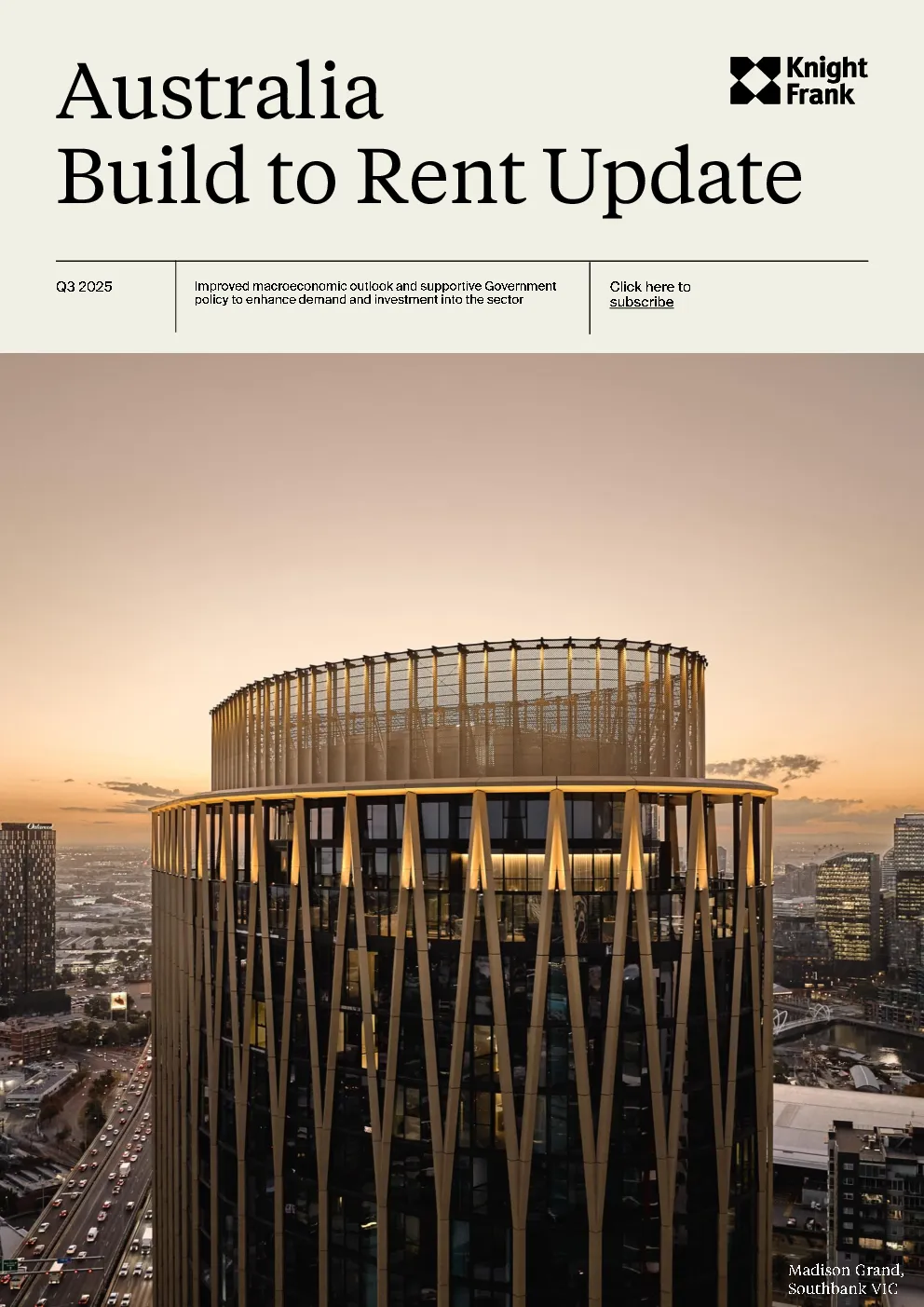
Accelerating housing delivery is high up on thegovernment agenda, with BTR representing a key toolto ramp up supply. The NSW Government recentlyannounceda permanent50% land tax exemption in apositive move for thesector. Operational schemes are demonstrating strongperformance, with high occupancy rates and steadyrental growth which is providing added confidence tothe market and investors. Following a record year of supply in 2024 this isforecast to be eclipsed again in 2025 with 6,000 unitsexpected to be delivered. Easing construction costsand lower interest rates will support furtherdevelopmentactivity. Encouraging signs of macro-economic stabilityreturning to the market, providing an improvingbackdrop for BTR investment activity. This coupledwith supportive Government policy will only enhancethesector’sappeal to investors and developers. As global investors scale up their exposure to theliving sectors, more entrants are expected to enter themarket as the sector is maturing. A gradual return to core strategies will beinstrumental in driving the BTR sector’s next phase ofgrowth. With market conditions stabilising, attention has nowturned to stimulating the next wave of growth. A consistentpipeline of new project commencements is needed to ensurethat the recent slowdown is only a short-term blip, andcentral to this is the ability to activate the pool of approvedschemes. In total there are around 20,500 units in thepipeline sitting at the DA-approved stage whereconstruction has not yet commenced. This is a significantnumberand these projects will be crucial in sustaining therecentgrowth trajectory of the sector. Last year marked a record for the BTR sector, with 4,660units delivered across 18 schemes nationally. As we reachthe halfway point of 2025, early indications suggest thatdelivery is trending higher compared to 2024, although finalfigures will depend on timing of completions as the yearprogresses. Since the turn of the yearfourschemes have opened adding1,298units to the total operational stock. Two of the projectsin Melbourne; Claremont Tower and Madison Grand,further reinforcing the city’s position as the national leaderin BTR delivery to date.TwomoreschemesopenedinBrisbaneknownasArklifeCordeliaand Liv Anura,whereinterest in the asset class continues to grow amid tighteningrental conditions. How many of theseschemesprogress to delivery, and howquickly, will partly be dictated by market forces. After achallenging period marked by elevated construction andfinance costs, the outlook for Australia’s BTR developmentsector is beginning to shift. Recent signs of easing build costinflation, reducing interest rates, and improving access tocapital are renewing confidence across the market. As amore stable macroeconomic environment emerges, there isgrowing optimism that a greater share of projects at the DA-approved stage will move into delivery over the coming 12-24 months. Our database shows a further4,702units earmarked forcompletion in the second half of the year across12schemes.This would take annual delivery to 6,000 units, comfortablyeclipsing the record level of supply seen in 2024. However, analysis of the construction pipeline suggests thismomentum is likely to start to taper off in 2026, reflectingthe feasibility challenges experienced by developers acrossthe residential sector over the last couple of years. Earlyprojections indicate a notable decline in new supply, witharound 4,000 units currently forecast for completion nextyear. After an unsettled period for the development market,a slowdown wasinevitableand this will keep supply levelsmuted in the short term. Policy support remains a critical lever in unlocking the nextwave of BTR supply across Australia. With a significantportion of the pipeline in planning, targeted governmentintervention can help accelerate project viability anddelivery. The MIT legislation passed at the end of last yearwas a significant step in the right direction and a positiveexample of the role policy can play in incentivising BTRdevelopment and attracting institutional capital. Stretched affordability has now placed a firm brake onrental growth, a trend encouraged by easing populationgrowth with a reduction in net overseas migration. TheWage Price Index (ABS)peaked in Q4 2024 at +4.3% (annualmovement) and has since ticked down to +3.4% as at Q12025. It is likely that wage growth will ease further in theshort term and a period of stability in the rental market isexpected, characterised by more modest rental growth. The first half of 2025 has seen the return of a more balancedrental market with rental growth moderating whilst vacancyrates are steady. At a national level, the vacancy ratecurrently stands at 1.3% withyear to daterental growth of4.8%. This marks a clear differencetothesametimelastyear where annual rental growth was 19.2%. The chronic supply-demand imbalance in the housingmarket has meant that rental growth has significantlyoutpaced wage growth, pl