您的浏览器禁用了JavaScript(一种计算机语言,用以实现您与网页的交互),请解除该禁用,或者联系我们。 [北京市企业家环保基金会]:中华白海豚种群生存报告 - 发现报告

中华白海豚种群生存报告

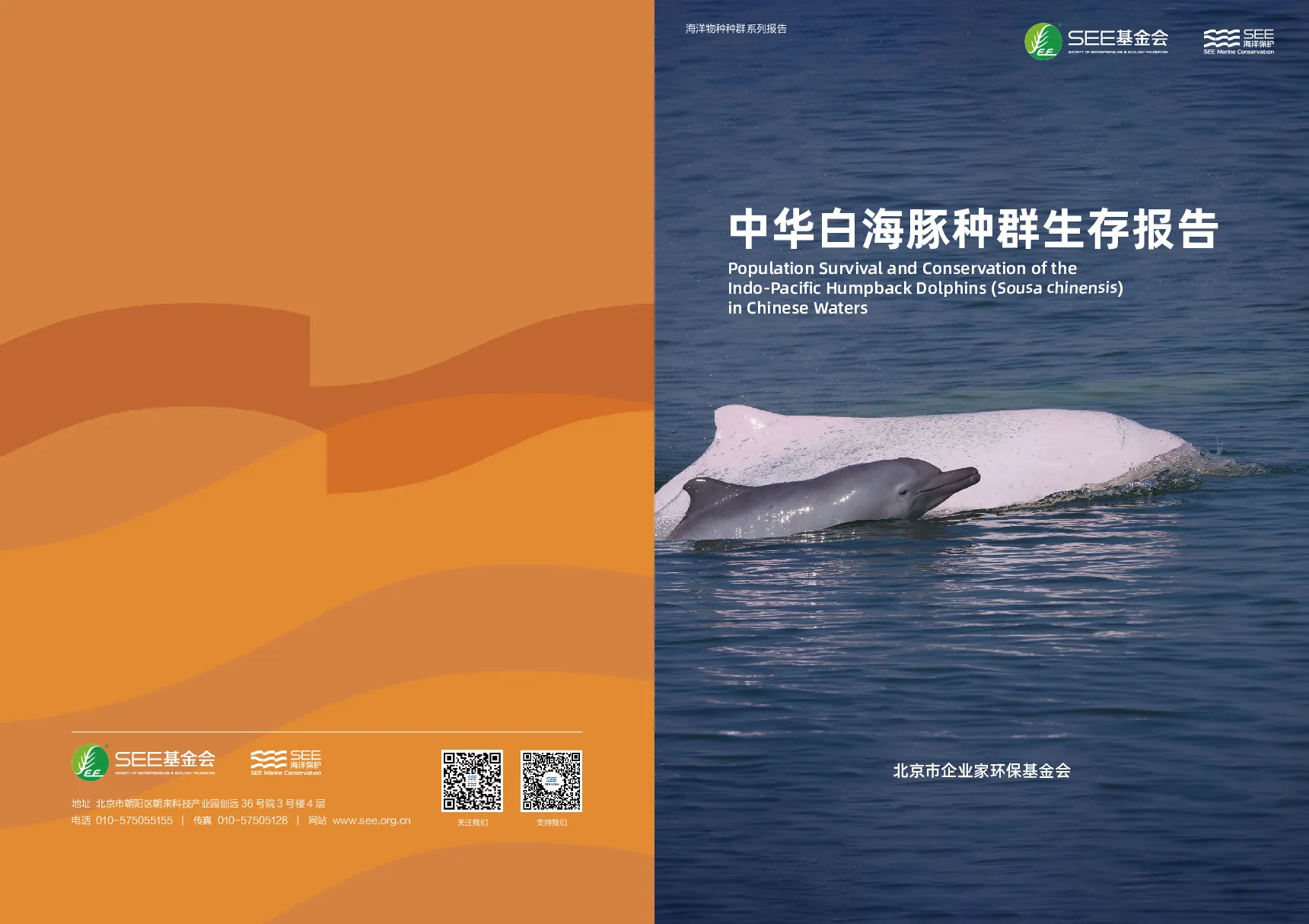
报告封面

地址 北京市朝阳区朝来科技产业园创远 36 号院 3 号楼 4 层电话 010-575055155 | 传真 010-57505128 | 网站 www.see.org.cn 报告编写组范敏黄 祥 麟陈芳吴 海 萍陈 炳 耀陈涛王 先 艳林 家 德洪 荣 标王静北京市企业家环保基金会广西科学院广西海洋科学院中国野生动物保护协会水生野生动物保护分会广西北部湾大学南京师范大学中国水产科学研究院南海水产研究所自然资源部第三海洋研究所广西钦州市海洋局白海豚保护办公室厦门市海洋与渔业局北京市企业家环保基金会 中华白海豚属于鲸目齿鲸亚目海豚科驼背豚属,是印太洋驼背豚(Indo-Pacifichumpback dolphin)在我国水域的名称,学名为西太平洋和东印度洋的热带和亚热带近岸及河口海域,在我国主要分布于福建宁德以南至广西北部湾的大陆近岸海域,以及海南西南沿海和台湾西部海域。中华白海豚平均寿命介于 33-36 岁,已知最大为 43 岁。9-12 岁性成熟,成年中华白海豚体长 250cm 左右,体重介于 200-250kg。中华白海豚出生体长大约为100cm,生殖周期介于 3-5 年,哺乳期介于 6 个月(开始进食固体食物)至 2 年(独立生活)。中华白海豚的体色由刚出生的铅灰色,到青少年时期身体颜色逐渐变浅,性成熟后身体灰中带白,到身体颜色大部分为白色或粉色,中老年后身体颜色基本为粉色或白色。中华白海豚以河口及沿海环境中体长 10-25cm 的硬骨鱼类为主要食物来源,包括底栖性的石首鱼科鱼类,带鱼科、以及季节洄游的鲱科、鲻科、海鲶科、鲾科等鱼类。中华白海豚主要依靠回声定位进行捕食,有合作捕食行为,在鱼类聚集产卵期间,有明显的摄食偏好。在我国已知且经过系统性研究的中华白海豚种群数量分别为:台湾西岸 60~70 头,厦门湾 60~70 头,汕头 15~20 头,珠江口及香港约 2,500-2,600 头,雷州半岛东部约 600~800 头,合浦儒艮国家级保护区约 100 头,三娘湾 - 大风江口 240~430 头,海南约 200~300 头,在这些地区之间,有少数零星(个体数 <10)的群体生活。中华白海豚的关键栖息地包含台湾西岸全部沿海、厦门湾及金门沿海、潮汕沿海、珠江口至漠阳江口海域、雷州湾及邻近海域、广西合浦儒艮国家级保护区海域及雷州半岛西侧沿海、廉州湾至北仑河口北部湾北部沿海,以及海南西南沿海。执行摘要 中华白海豚的生存威胁主要来自于其生存环境中的人为活动,或是人为活动引起的环境变迁:主要包括围网、流刺网、延绳钓等渔业作业及被抛弃、损坏的废弃渔具(幽灵渔具)造成的误捕、缠绕,甚至死亡;围填海、堤岸固化、港口兴建、离岸风电等涉海工程活动造成的沿海栖息环境大范围的永久性丧失;高速航行船只等海上交通对中华白海豚的直接撞击或行为干扰;水下噪音对中华白海豚听力的损伤及生活和行为的间接影响;全球变暖导致海水温度上升对中华白海豚分布、栖息空间及食饵的影响。从 2000 年起,我国投入大量资源用于中华白海豚的研究和保护,基于这些投入,我国已成为印太洋驼背豚(中华白海豚)物种的信息中心。在中华白海豚研究提供的众多信息中,描述中华白海豚分布范围、分布模式及潜在栖息地等信息,是保护行动规划及实施的必要信息。而如种群大小、种群变化等其他信息,尽管可以作为物种生存现状评估的数据基础(IUCN,2001),但目前仍存在基础信息缺口。保护行动上也存在保护广度、保护范围及保护格局的空缺和不足,中华白海豚保护与沿海城市发展、渔民社区生计存在冲突等问题。针对目前存在的保护空缺,中华白海豚保护行动需要进一步考虑下列建议:(1)建立及完善长期实施的系统性考察、种群生态统计模型的正确应用、以及调查分析数据的合理解读;(2)除了传统的禁渔期、禁渔区等限制渔业活动的保护行动之外,进一步考虑非法及不可持续渔业活动的执法监管,以及废弃渔网渔具的清理及回收;(3)辅导渔民从事替代生计,尤其是发展海洋生态旅游,以减少渔业活动,兼顾海洋知识传承及生物多样性保护,发展经济及生态可持续的生态旅游替代生计方案。 Sousa chinensis。分布范围涵盖 The Indo-Pacific humpback dolphin (Sousa chinensis"Chinese white dolphin" in China (including Taiwan Province, Hong Kong andMacau), inhabits the tropical and subtropical coastal and estuarine waters of thewestern Pacific Ocean, eastern Indian Ocean and South China Sea. In China,the Chinese white dolphins mainly occur in the waters along the coasts of Fujian,Guangdong, Guangxi and Hainan Provinces.The longevity of the humpback dolphin ranges between 33 and 36 years oldand the known maximal life span is 43 years. The humpback dolphin reaches thesexual maturity at 9-12 years old and the adult size is 250cm long and weights200-250kg. The calving interval generally ranges between three to five years with12 months of gestation. The birth length is 80-100cm long. The neonate starts totake solid foods at six months old but the lactation can last two years. The bodycolor is pink grey at birth and gradually fade until 20-25 years old when the bodycolor becomes totally white (or pink in the southeastern Asian waters).The Indo-Pacific primarily feeds on 10-25cm long teleost fishes in coastaland estuarine waters, which includes benthic Sciaenidae,Synodontidae, andneratic-pelagic Clupeidae, Mugilidae, Ariidae, Leiognathidae species. Feedingsuccess highly relies on sophisticated echolocation skills. Cooperative feedingstrategies are common when prey resources are abundant. During the spawningseason when estuarine teleost fishes aggregate into big shoals, Clupeidae andMugilidae fishes larger than 15cm long become humpback dolphins' primarypreys.IIn Chinese waters, known estimates of the humpback dolphins are 60-70dolphins along the western Taiwan coast (also known as the eastern TaiwanStrait), 60-70 dolphins in Xiamen Bay (including the coastal waters off Kinmenof the Taiwan Province), 15-20 photographically identified dolphins off Shantou,2500-2600 dolphins in Pearl River Estuary (which is the largest known humpbackdolphin population of the world), 600~800 dolphins in Leizhou Bay, 100 dolphinsin Hepu Dugong National Reserve and adjacent waters and 240-430 dolphinsin Dafengjiang River Estuary and adjacent waters in the northern Beibu Gulf,200~300 dolphins in Hainan. Sporadic occurrences of humpback dolphinsare reported in waters between known regional 'populations'. Key habitatsExecutive Summary ), also known as the for the humpback dolphin conservation include the waters off western Taiwan,waters in Xiamen Bay and nearby Kinmen coastal waters, coastal waters offShantou, coastal waters from Pearl River Estuary to Moyang River Estuary,Leizhou Bay, Hepu Dugong National Reserve, Dafengjiang River Estuary andadjacent waters and coastal waters off western and southwestern Hainan.Threats endangering humpback dolphin survival primarily come fromanthropogenic activities in humpback dolphins' habitats, which includefishing-gear entanglements by gillnets, purse seine, longlines and ghostnests, constructions of maritime civil-engineering, high-speed boat collision,underwater noises and long-term climate changes.China has now become the center of conservation baselines of the Indo-Pacific humpback dolphin globally since 2000 after tremendous resourceshave been invested on the baseline studies of the humpback dolphin biologyand ecol