AI智能总结
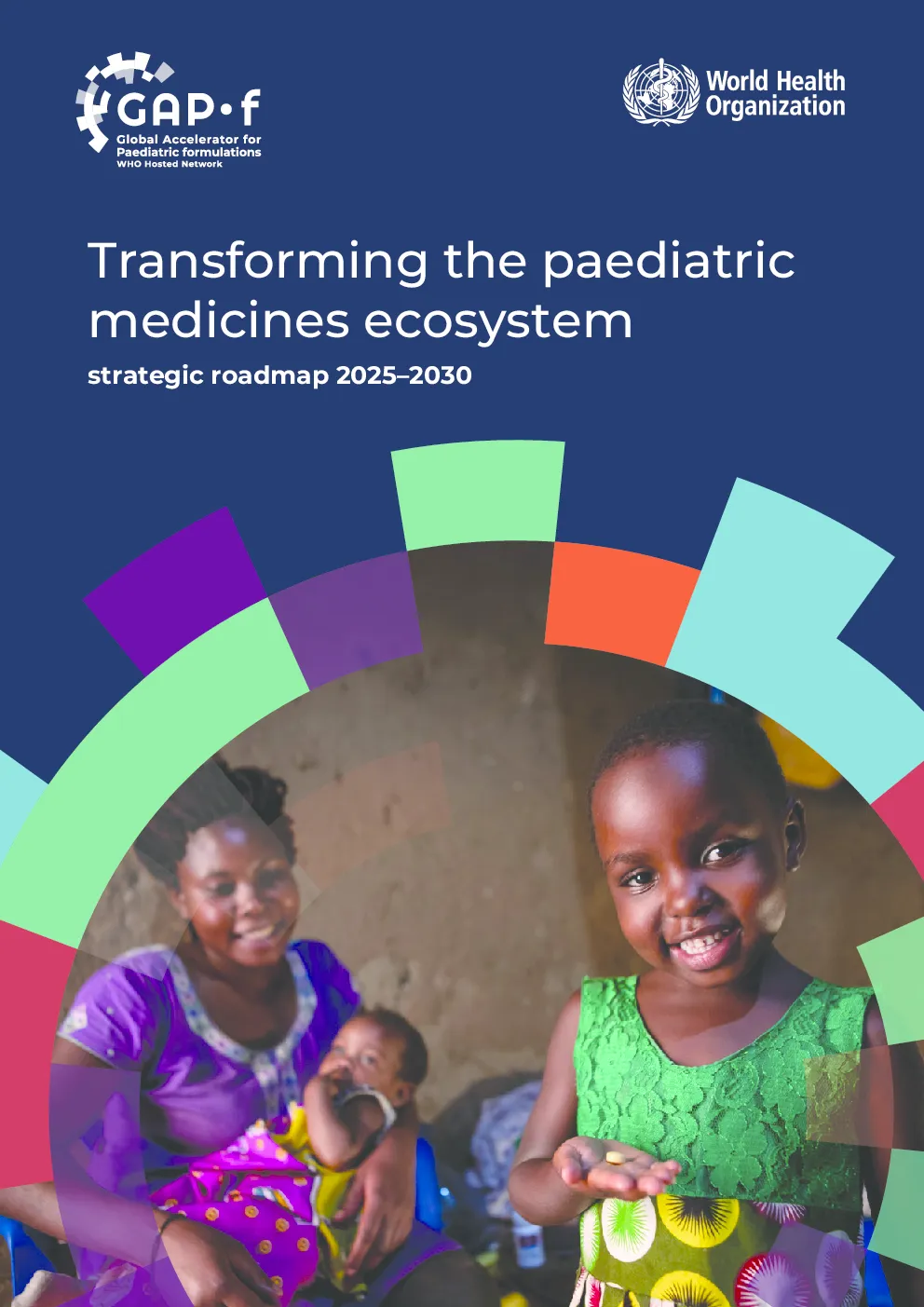
Transforming the paediatricmedicines ecosystem strategic roadmap 2025–2030 Transforming the paediatricmedicines ecosystem strategic roadmap 2025–2030 Transforming the paediatric medicines ecosystem: strategic roadmap 2025–2030 ISBN 978-92-4-011063-2 (electronic version)ISBN 978-92-4-011064-9 (print version) © World Health Organization 2025 Some rights reserved. This work is available under the Creative Commons Attribution-NonCommercial-ShareAlike 3.0 IGO licence (CC BY-NC-SA 3.0 IGO;https://creativecommons.org/licenses/by-nc-sa/3.0/igo). Under the terms of this licence, you may copy, redistribute and adapt the work for non-commercialpurposes, provided the work is appropriately cited, as indicated below. In any use of this work, thereshould be no suggestion that WHO endorses any specific organization, products or services. The useof the WHO logo is not permitted. If you adapt the work, then you must license your work under thesame or equivalent Creative Commons licence. If you create a translation of this work, you shouldadd the following disclaimer along with the suggested citation:“This translation was not created bythe World Health Organization (WHO). WHO is not responsible for the content or accuracy of thistranslation. The original English edition shall be the binding and authentic edition”. Any mediation relating to disputes arising under the licence shall be conducted in accordance withthe mediation rules of the World Intellectual Property Organization (http://www.wipo.int/amc/en/mediation/rules/). Suggested citation. Transforming the paediatric medicines ecosystem: strategic roadmap2025–2030. Geneva: World Health Organization; 2025. Licence:CC BY-NC-SA 3.0 IGO. Cataloguing-in-Publication (CIP) data.CIP data are available athttps://iris.who.int/. Sales, rights and licensing.To purchase WHO publications, seehttps://www.who.int/publications/book-orders.To submit requests for commercial use and queries on rights and licensing, seehttps://www.who.int/copyright. Third-party materials.If you wish to reuse material from this work that is attributed to a third party,such as tables, figures or images, it is your responsibility to determine whether permission is neededfor that reuse and to obtain permission from the copyright holder. The risk of claims resulting frominfringement of any third-party-owned component in the work rests solely with the user. General disclaimers.The designations employed and the presentation of the material in thispublication do not imply the expression of any opinion whatsoever on the part of WHO concerningthe legal status of any country, territory, city or area or of its authorities, or concerning thedelimitation of its frontiers or boundaries. Dotted and dashed lines on maps represent approximateborder lines for which there may not yet be full agreement. The mention of specific companies or of certain manufacturers’ products does not imply that theyare endorsed or recommended by WHO in preference to others of a similar nature that are notmentioned. Errors and omissions excepted, the names of proprietary products are distinguished byinitial capital letters. All reasonable precautions have been taken by WHO to verify the information contained in thispublication. However, the published material is being distributed without warranty of any kind, eitherexpressed or implied. The responsibility for the interpretation and use of the material lies with thereader. In no event shall WHO be liable for damages arising from its use. Editing, design and layout by Inis Communication Cover photo: The mother ensures that her daughter takes her paediatric HIV medicine at the sametime every day. © UNICEF/UNI211839/Schermbrucker Contents Forewordiv Abbreviationsv A longstanding problem, a timely solution1 From proof of concept to impact:the founding of GAP-f2 2025–2030 strategy — 30 by ‘30:Align,activate, accelerate6 Agileprioritization of therapeutic areas15 Our implementation approach17 References18 Acknowledgments20 Annex. Theory of change:monitoring our collective progress towards 203021 Foreword Every child deserves the chance to grow uphealthy, with timely access to the medicinesand care they need to survive, thrive and reachtheir full potential. Yet even as the pace ofscientific and medical advancement accelerates,children continue to be left behind. Whether itis clinical trials that are designed without themin mind, regulatory pathways that are slowto accommodate paediatric needs, or healthsystems that struggle to deliver suitable childformulations of essential medicines, childrenare too often an afterthought. This has createdboth waste and delays in getting medicines tochildren. As GAP-f enters its consolidation phase, a refreshin its strategic approach is thus both timelyand necessary. What we have proven over thepast five years is that greater alignment andcollaboration leads to greater efficiency andspeed in getting needed medicines to childrenthe world over,