您的浏览器禁用了JavaScript(一种计算机语言,用以实现您与网页的交互),请解除该禁用,或者联系我们。[贝莱德]:2025全球经济展望 - 发现报告

2025全球经济展望

2025-01-14-贝莱德x***
AI智能总结
查看更多
2025全球经济展望

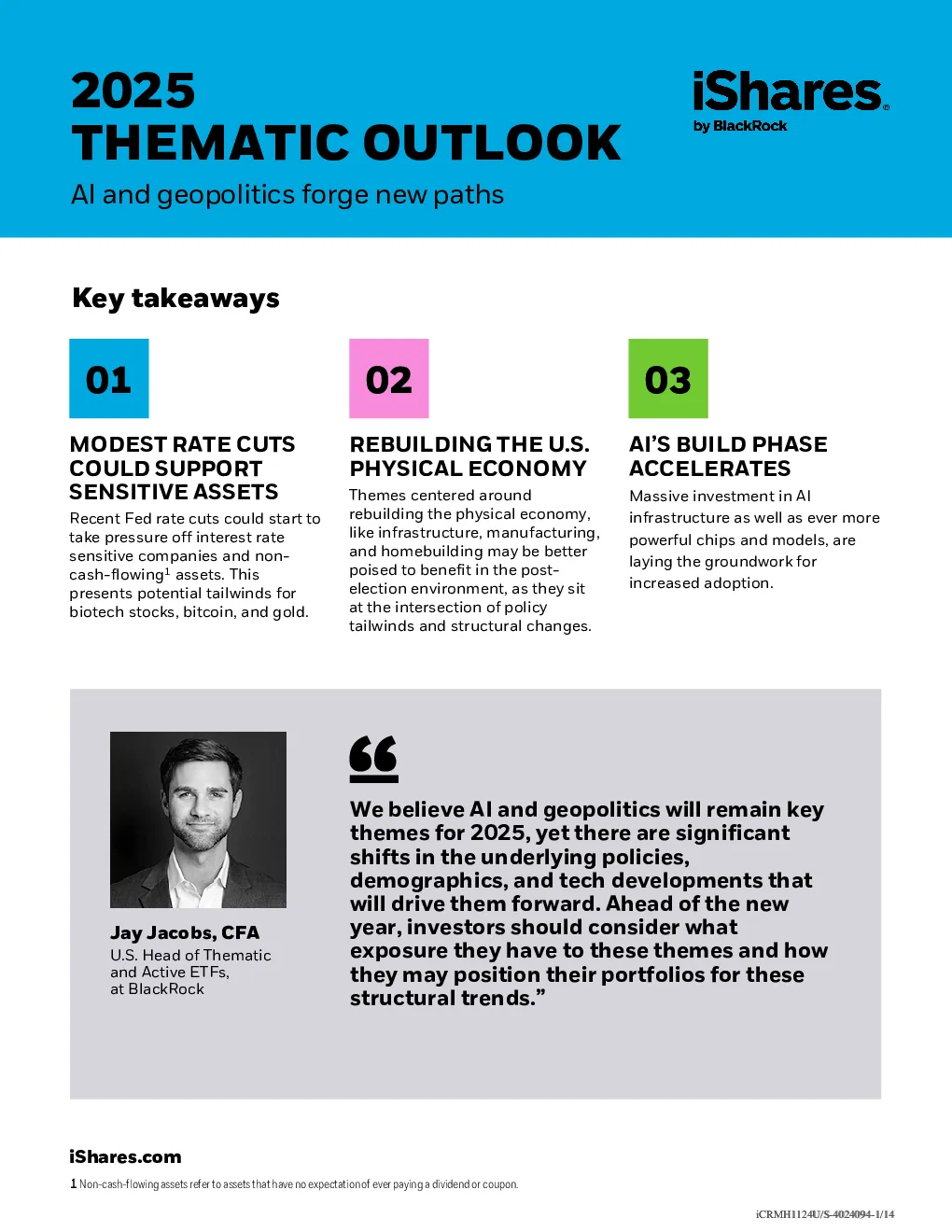
AI and geopolitics forge new paths Key takeaways 03 01 MODEST RATE CUTSCOULD SUPPORTSENSITIVE ASSETS AI’S BUILD PHASEACCELERATES REBUILDING THE U.S.PHYSICAL ECONOMY Themes centered aroundrebuilding the physical economy,like infrastructure, manufacturing,and homebuilding may be betterpoised to benefit in the post-election environment, as they sitat the intersection of policytailwinds and structural changes. Massive investment in AIinfrastructure as well as ever morepowerful chips and models, arelaying the groundwork forincreased adoption. Recent Fed rate cuts could start totake pressure off interest ratesensitive companies and non-cash-flowing1assets. Thispresents potential tailwinds forbiotech stocks, bitcoin, and gold. “We believe AI and geopolitics will remain keythemes for 2025, yet there are significantshifts in the underlying policies,demographics, and tech developments thatwill drive them forward. Ahead of the newyear, investors should consider whatexposure they have to these themes and howthey may position their portfolios for thesestructural trends.” Jay Jacobs, CFAU.S. Head of Thematicand Active ETFs,at BlackRock iShares.com 1Non-cash-flowing assets refer to assets that have no expectation of ever paying a dividend or coupon. MODEST RATE CUTS COULDSUPPORT RATE-SENSITIVECOMPANIES AND ASSETS01 From March 2022 to September 2024, the marketsentered a period of quickly rising and elevatedinterest rates, bringing the federal funds rate to itshighest levels since 20012. This environmentpunished rate-sensitive investments on two fronts: 1.Companies with long paths to profitability sawvaluations contract given higher discount rates,and; “Structural demand in thehealthcare sector, drivenby an aging population,combined with rapidinnovation in medicaltechnology and drugdevelopment, provides astrong foundation forpotential growth.” 2.Firms dependent on floating rate debt or thathad to roll over maturing debt were hurt by higherfinancing costs Additionally, non-cash-flowing assets like bitcoin andgold faced pressure from rising opportunity costscompared to holding interest-paying assets likebonds. Now these headwinds could abate; TheFederal Reserve has cut rates by 75 basis points3asof November 2024, and while rates may not return topre-pandemic levels, a path of additional modest ratecuts is anticipated by the market for 2025.4 Dr. Erin XieLead Portfolio Manager, Health Sciences,BlackRock Fundamental Equities Medical innovation gets a shot in the arm Such innovation couldn’t come at a more criticaltime; ageing populations, particularly in developedmarkets, are bolstering demand for many drugs andtreatments in categories that disproportionatelyimpact seniors. Breakthroughs like personalizedcancer vaccines,6treatments that could eliminate theneed for insulin therapy in diabetics,7andintravenous antibody treatments that could slow therate of cognitive decline with Alzheimer’s patients8appear to be on the horizon. These revolutionarytreatments could also drive a surge in mergers andacquisitions. Large pharmaceutical companieslooking to refresh their product offerings amid ananticipated major patent cliff9for existingblockbuster drugs could further support biotechvaluations. Higher rates have had a particularly negative impacton biotech firms by shrinking valuations and drivingup borrowing costs, causing many companies toreduce R&D spending. Should rates continue to fall, itcould reduce financing costs and potentially givebiotech firms more confidence to expand R&Dbudgets. Increased spending combined with thepotential introduction of AI to the discovery and trialprocess, could lead to a surge in drug development.AI is already being tested in drug discovery to predictprotein structures and chemical reactions, as well asto conduct drug trials in automated labs and digital“in-silico” experiments. By 2025, over 30% of newdrugs are expected to be discovered using generativeAI techniques, potentially saving biotech companies25% to 50% in time and costs from discovery topreclinical stages.5 Modest rate cuts could support rate-sensitive assets Demographic trends are likely to continue regardless of theeconomic environment Proportion of population 65 or older1 Healthcare spending as a percentage of GDP3 20%| 2030e 20%Of the U.S.population will be+65 years by 20301 3xSpent onhealthcare when+65 years vs <65 years2 Investors interested in biotechnology may consider theiShares Health Innovation Active ETF (BMED). Lower interest rates may enhancebitcoin’s near-term attractiveness For example, the sharpincreasein real interest ratesduring 2022 was a contributing factor to the 67%correction in bitcoin that year. Now, amid rate cuts,real interest rates could fall. This could causeinvestors to view bitcoin as increasingly attractiverelative to other assets. Bitcoin is an emerging assetwith unique demanddrivers stemming from its properties as a finitesupply, alternative monetary asset that is digitall