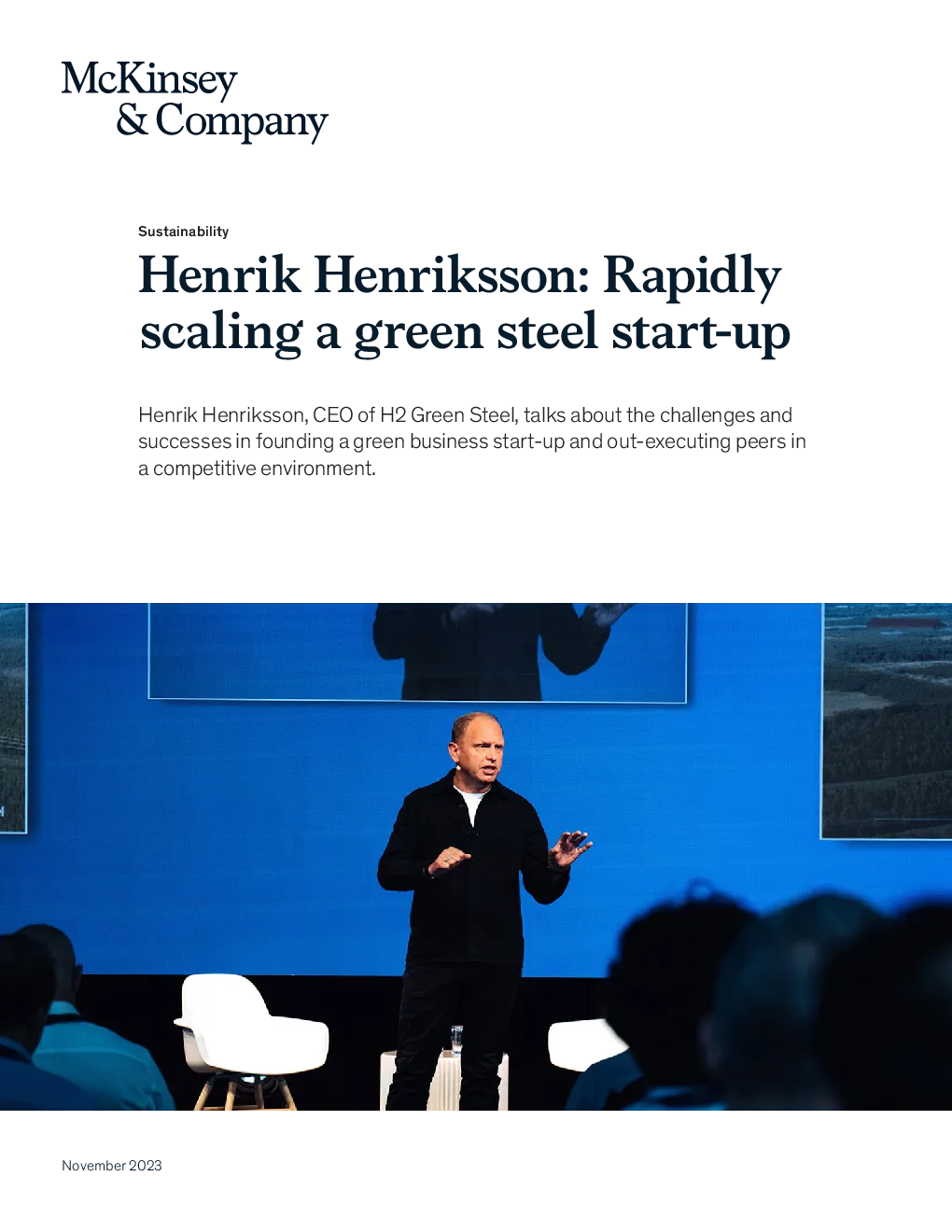
Henrik Henriksson, the CEO of H2 Green Steel, discussed the company's rapid scaling efforts in the green business sector during the Green Business Building Summit in Stockholm. H2 Green Steel, established two years ago, focuses on the steel industry, which accounts for approximately 10% of global CO2 emissions. The company produces green hydrogen using renewable energy, converts it to green iron, and then either ships the green iron to existing steel companies or uses it in their own steel mill to produce green steel. This process significantly reduces CO2 emissions.
H2 Green Steel's flagship project is in Boden, Sweden, with a €5.5 billion investment. The company plans to replicate this model in various geographical locations worldwide. With a goal to reduce the time and cost of each subsequent project by half, H2 Green Steel aims to scale its operations annually, demonstrating a high level of scalability.
Key to H2 Green Steel's success lies in its modernization principles, utilizing digitalization, creating a scalable blueprint, and leveraging partnerships with banks and investors. By pre-selling half of its production to major automotive companies like BMW and Mercedes, the company secures significant funding. These commitments serve as collateral for debt funding, while equity investments come from venture capital, private equity, and product financing firms.
Despite the economic challenges of raising capital, H2 Green Steel's green steel business model has gained traction due to its reliance on renewable energy and the rising costs of gas. The company focuses on building trust with customers by thoroughly understanding their target markets and ensuring alignment with decarbonization targets. The premium price of green steel reflects its scarcity and the potential increase in carbon pricing, making it a strategic investment for customers.
To out-execute competitors, H2 Green Steel emphasizes building a strong company culture, engaging the right partners, identifying locations with abundant renewable energy, and maintaining a competitive cost position through modern, automated, and digitalized operations. Looking back, Henriksson suggests earlier engagement with partners and a quicker incorporation of critical competencies as lessons learned.
For other green companies seeking to scale, Henriksson advises prioritizing speed, focusing on scalable platforms, securing robust funding structures, and fostering sustainability alongside profitability. This approach ensures the development of a resilient business capable of growth and adaptation in the face of environmental challenges.