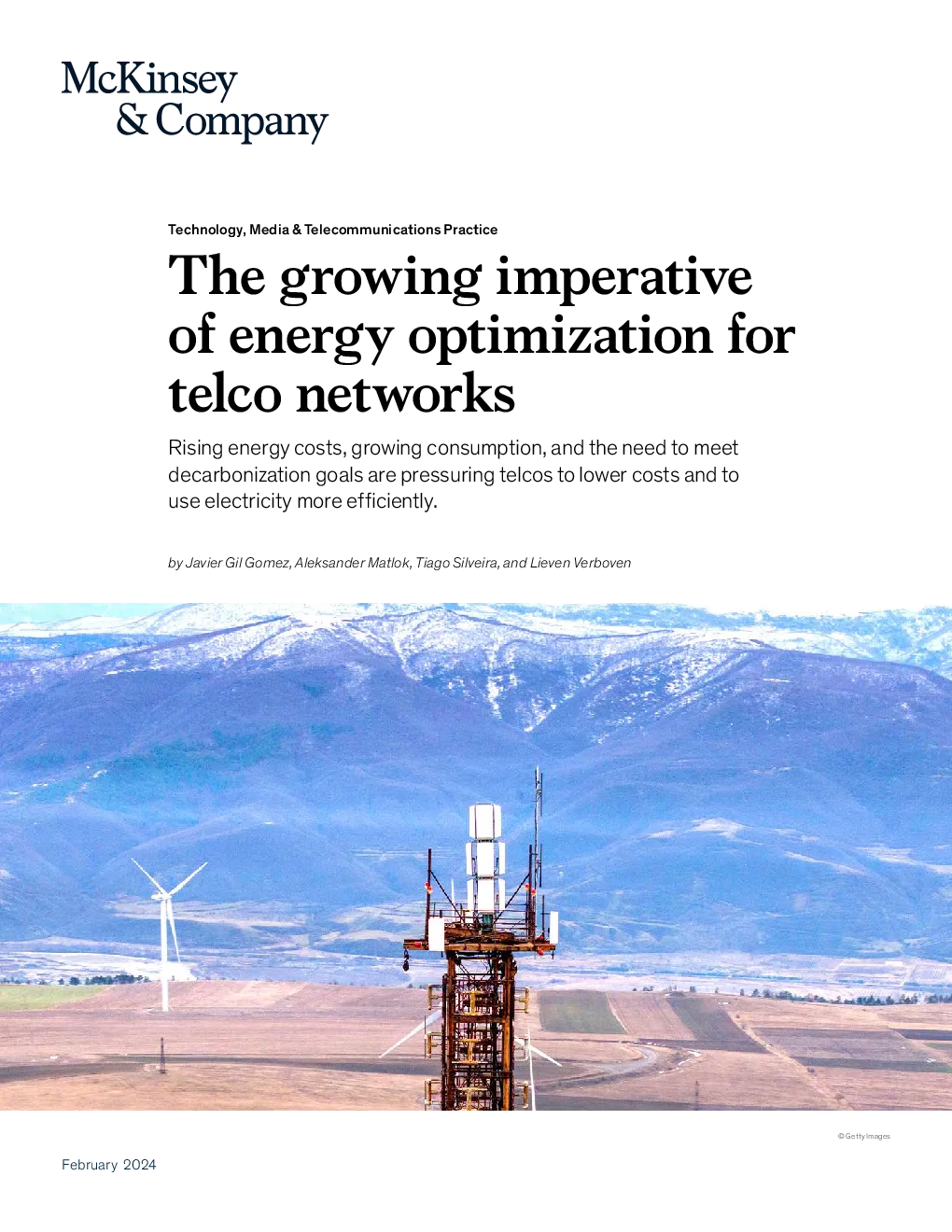
The Growing Imperative of Energy Optimization for Telco Networks
Overview:
The telecommunications sector faces escalating energy costs, driven by rising electricity prices, increased energy consumption from network expansion and traffic growth, and the transition away from traditional technologies. This situation is exacerbated by the geopolitical pressure and demand for decarbonization, leading to significant financial impacts on telecom operators.
Key Pressures:
- Geopolitical Pressure: Expected to maintain high electricity prices due to ongoing geopolitical tensions and increased demand.
- Demand Growth: Forecasted mobile traffic growth at over 20% annually until 2030, driving up energy consumption and costs.
- Site Densification: Increased deployment of new wireless technologies like 5G (and future 6G) necessitates higher energy usage.
- Fiber Rollout: Although fiber is being rolled out, it's still necessary to support less energy-efficient legacy systems until full migration.
- Decarbonization Commitments: Operators are under pressure to reduce their carbon footprint to meet net-zero targets by 2050 or earlier, impacting operational strategies.
Industry State:
- Concerns and Accelerated Efforts: Over 67% of surveyed telecom leaders have significantly stepped up cost-optimization efforts in the past two years, primarily due to economic and geopolitical uncertainties.
- Limited Ability to Mitigate Costs: Challenges include managing complex, geographically dispersed networks, lack of real-time energy monitoring tools, and difficulties in implementing strategic energy reduction measures like digital twins and self-optimizing networks.
- Focus on Tactical Solutions: Operators predominantly focus on immediate consumption reduction and procurement strategies rather than strategic long-term solutions.
- Wholesale Power Agreements: Only 33% of surveyed operators source most of their energy consumption through wholesale power purchase agreements (PPAs), indicating reliance on dynamic market rates.
Opportunity for Improvement:
- Zero-Based Design: Enhancing new network site design for optimal energy efficiency.
- Analytics for Energy Use Optimization: Leveraging data analytics to improve energy consumption patterns and efficiency.
- Strategic Energy Pricing and Sourcing: Implementing more strategic approaches to energy procurement and pricing.
- Decommissioning Legacy Systems: Phasing out older, less energy-efficient networks to reduce overall energy consumption.
Conclusion:
Telecom operators face a significant challenge in optimizing their energy consumption to cope with rising costs and decarbonization pressures. By addressing these challenges through strategic planning, technological advancements, and organizational improvements, operators can achieve substantial savings in energy costs, contributing to a more sustainable and efficient telecommunications sector.