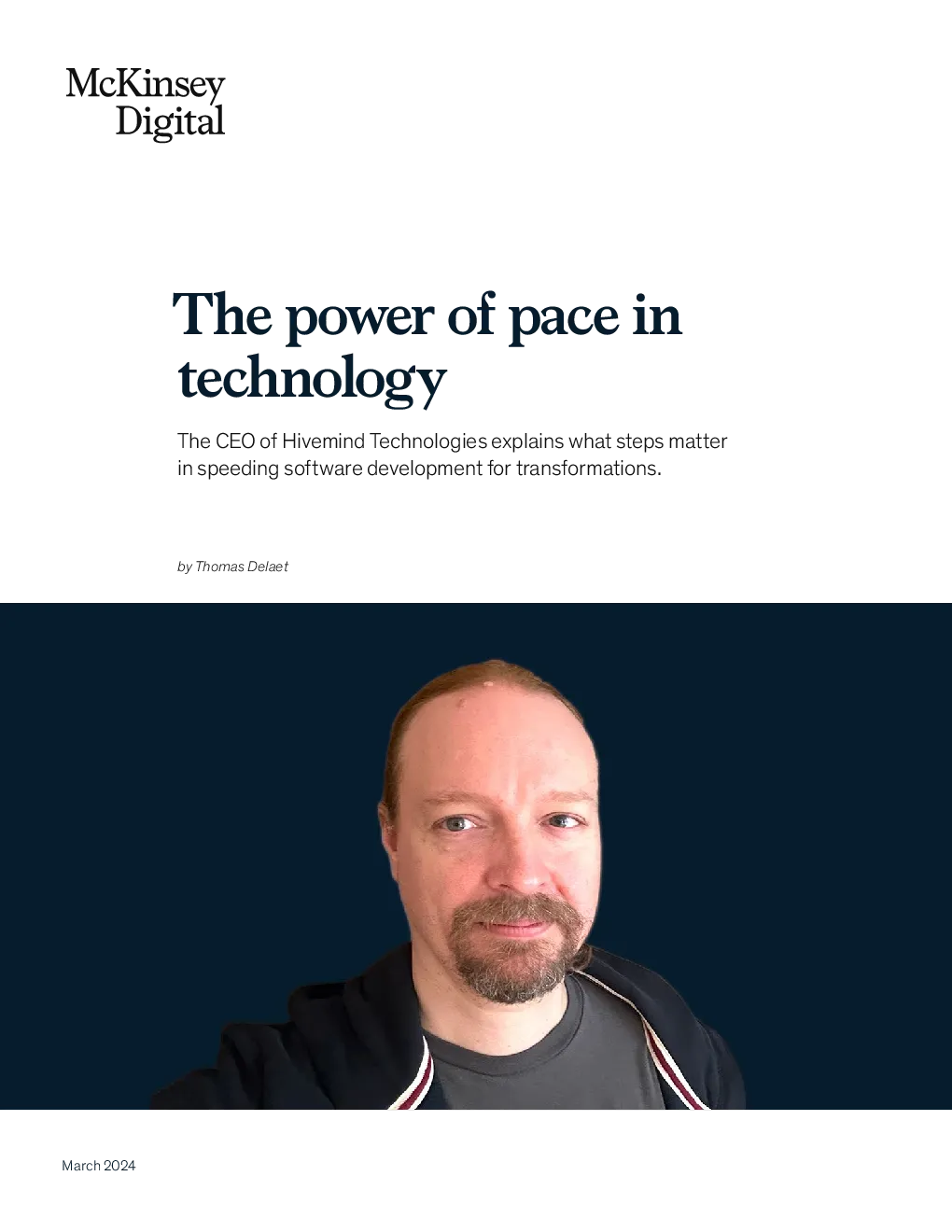
Hivemind Technologies' CEO, Erik Schmiegelow, emphasizes the critical role of speed in digital transformations. Hivemind's strategy hinges on delivering software via small, incremental releases to promptly validate assumptions and minimize risks associated with software development. This approach contrasts with traditional, slower methods, which can lead to delayed issue identification and extensive planning for uncertain features.
Speed is paramount due to the complexity of modern IT environments and the need for rapid feedback to adapt to changes. By continuously releasing small updates, Hivemind ensures immediate detection and resolution of issues, enhancing overall project security and efficiency.
Security considerations are integrated throughout the fast-delivery process through the SecDevOps model, which places "Sec" (security) before "DevOps." This reinforces security as an integral component, with each step involving security checks, audits, and design considerations. Continuous testing and automation are relied upon to maintain tight coupling with the DevOps process, mitigating vulnerabilities that could otherwise overwhelm a single, traditional audit.
In addressing inefficiencies in brownfield situations, Schmiegelow identifies disconnects between teams and product development, as well as between teams and operational environments. This leads to a lack of communication and feedback, resulting in delayed issue identification and potential delays in market entry. Fast-delivery teams, with self-organized structures and control over the entire value chain, can mitigate these issues by making informed decisions and receiving timely user feedback.
Public cloud plays a significant role in software delivery transformations. While cost considerations must be balanced, migrating to the cloud often leads to benefits such as reduced operating costs for databases and improved scalability. However, organizations must also consider the impact on existing teams and the need for adaptation to cloud-native development practices. The successful migration and adoption of cloud services require a shift towards fast-delivery methodologies and a reevaluation of application design.
The integration of generative AI (gen AI) promises substantial improvements in developer productivity. By assisting with mundane tasks, gen AI can significantly reduce the time developers spend on debugging and repetitive coding, leading to increased productivity. The application of gen AI in assistive coding represents the most impactful use case, offering substantial returns on investment by freeing developers to focus on more creative and strategic tasks.