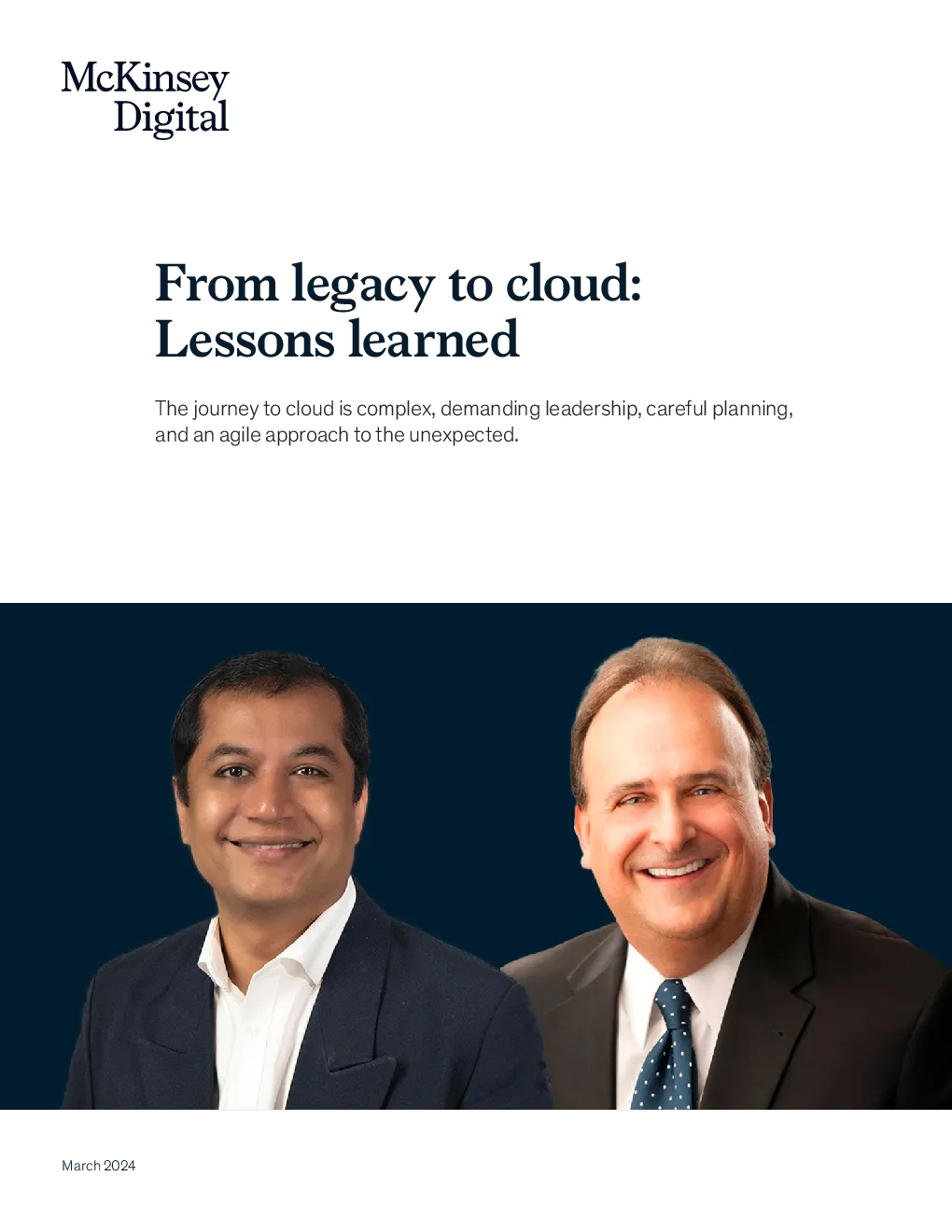
Lincoln Financial Group underwent a significant transformation to migrate its legacy systems to the cloud, aiming to reduce operational costs, address the high expenses associated with specialized software licensing, and transition to a more modern and flexible environment. This ambitious project, completed within two years, involved the transition of 120 complex systems and required a comprehensive risk mitigation strategy, a robust planning approach, and strong leadership.
Key Drivers and Objectives:
- Cost Reduction: The primary driver was the need to reduce overall operating costs.
- Flexibility and Agility: The desire to move away from a fixed-cost legacy setup towards a more adaptable and efficient infrastructure.
- Decision-Making Empowerment: Shifting decision-making power from IT to the business side by implementing a model that prices technology services usage, allowing each line of business to align spending with its business goals.
Getting Senior Management Support:
- Alignment with Strategic Goals: Positioning the cloud transition as a significant expense-saving measure with clear business benefits.
- Risk Mitigation: Addressing the inherent risks of the program through a detailed risk-mitigation strategy.
- Focus on Quality: Ensuring flawless operations during the transition to avoid disruptions to internal businesses and customer experiences.
Team Assembly and Planning:
- Leadership and Technical Acumen: Satyendra Kumar's leadership was pivotal in driving the program's success.
- Adaptive Planning: An iterative approach was adopted to handle the complexities of transitioning from decades-old systems, emphasizing frequent reassessment and agile responses.
- Organizational Alignment: Transparency, stakeholder involvement, and clear objectives built confidence among senior management and the broader team.
- Collaborative Environment: The hub-and-spoke model ensured effective communication and collective engagement across the organization.
Planning and Execution:
- Multiprovider, Multipartner Strategy: Bringing together partners early and fostering collaboration was critical.
- Security Focus: Close cooperation with all key partners ensured understanding of legacy security nuances and compliance with current standards.
- Playbook Creation: A comprehensive playbook democratized information sharing and prioritized applications based on business needs.
- Agile Mindset: Adopting an agile approach despite initial challenges with date shifting, emphasizing adaptability and consistent delivery.
- Stakeholder Engagement: Seamless interfacing of applications to synchronize with migration schedules, ensuring a smooth transition for business users.
Challenges Faced:
- Legacy Security Measures: Overcoming authentication without authorization issues required early engagement with the CISO and fostering a strong relationship with the CISO's team.
- Mindset Shift: Navigating the transition from multiple environments to a cost-efficient, consumption-driven cloud structure.
- Data Migration: Overestimating the time required for moving large volumes of data, especially across extensive policy engine platforms.
- Code Conversion and Gaps: Challenges in converting code, particularly in technologies tied to specific partners, and dealing with missing source code.
- Identifying Technology Blind Spots: Addressing outdated technologies and functionalities required careful identification and resolution.
Performance in the Target State:
- Early indicators show promise in environment stability, meeting service levels, and optimized costs, with positive feedback from business leaders on minimal disruptions.
- However, the organization has not yet accumulated enough data to comprehensively assess efficiency, focusing instead on initial positive signs for both external customers and internal business users.
云之旅是复杂的,需要领导力,仔细的计划以及应对意外情况的敏捷方法。
我们的业务性质;现代化的大范围,包括120
此访谈已更新,以表彰外部贡献者.
复杂的系统;以及不到两年的加速时间框架来完成整个计划。
使遗留系统和平台现代化可以通过实现更快的创新、更大的敏捷性和更低的成本来推动显著的业务价值。组织采取各种现代化方法,通常基于其特定情况,例如投资的当前状态、风险偏好和时间范围。在这次采访中,我们强调了这样一种方法,即林肯金融集团在两年内将其相当大的传统足迹过渡到云计算。负责终身、年金和分销的高级副总裁兼部门首席信息官RobKlacza,副总裁兼执行发起人和计划负责人SatyedraKmar,讨论了林肯金融集团从数十年历史的传统平台到动态的基于云的架构的转型历程,在此过程中吸取的教训,以及他们对具有类似目标的其他人的建议。
SatyendraKumar:另一个关键目标是推动决策通过实施对技术服务消耗定价的模型,从IT到业务方面的力量。现在,每个业务线都可以根据其业务目标酌情增加或减少其支出。
麦肯锡:您是如何获得高级管理层的支持和支持的?
RobKlaczak:过渡到基于云的系统并获得高级管理层的支持的决定是基于三件事的战略融合。首先是接地技术投资
麦肯锡:是什么促使你进行这种转变?
在成本效益分析中,与组织对效率和成本效益的承诺保持一致。我们将云过渡定位为具有切实业务效益的重要节省费用措施。
RobKlaczak:LincolnFinancial迁移其遗留足迹的主
度定制的系统
配置)到云的重点是三个目标:降低整体运营成本,解决与某些专业软件许可相关的高额费用,以及过渡到更现代和更灵活的环境。
其次,过渡涉及管理12至15个政策管理引擎,这些引擎对林肯金融在生活,年金和退休方面的核心业务至关重要。对过渡成功的信心取决于全面的风险缓解策略。认识到该计划固有的高风险性质,我们制定了一个强有力的风险缓解计划。
现代化的需求和摆脱我们固定成本的传统设置的愿望一直是这种迁移的关键驱动因素。在像我们这样的保险公司的背景下,无论是管理一百万份保单还是仅管理少量保单,与我们的传统平台相关的成本在很大程度上是固定的,这构成了财务挑战。
第三,团队的执行策略专注于在整个过渡过程中保持完美无瑕的运营。尽管时间表加快,但重点一直放在确保高质量的产品上避免对内部业务和外部客户体验造成干扰。我们的
我们承担了我们的计划来解决这些挑战,这些挑战是复杂的,因为
麦肯锡:对于如此重大的迁移,您是如何进行总体规划的?
计划包括细致的检查,多个验证过程,业务验收测试和团队进行的并行生产运行,以确保无缝过渡。
SatyendraKumar:我们专注于许多关键领域。首先,我们采用了多提供商,多合作伙伴的过渡战略。尽早将合作伙伴聚集在一起并鼓励超越组织边界的合作的必要性至关重要。安全性也是这是一个关键的考虑因素,我们与所有关键合作伙伴密切合作,以确保我们了解遗留系统中安全性的细微差别,并符合目标状态的现行标准。
麦肯锡:你是怎么组建团队来完成这件事的?
RobKlaczak:我们努力的成功来自强大的领导力,适应性计划,彻底的尽职调查和有效的组织设计。Satyedra的领导风格,技术敏锐度和承诺是推动该计划成功的核心。我们的运营模式还强调领导协调,建立组织支持,并实施敏捷方法来克服过渡过程的复杂性。
创建全面的维基百科风格的剧本,使整个组织的数据收集和信息共享民主化。我们根据业务需求对应用程序进行了优先级排序,考虑了处理时间和应用程序敏感性等因素,并采用了动态方法来计划,混合自动化和手动流程。
A significant aspect of the transition strategy involvesadaptive planning. Traditional program management office(PMO) approaches are inadequacy for dealing with thecomplexitiesof systems that have been in place for over 50 years.We therefore adopted an iterative方法,强调频繁的评估、重新规划和对不断变化的需求的敏捷响应。
Lincoln Financial ’ s successful in execution an敏捷approach, despite initiative challenges with shiftingdates, was due to the敏捷mindship, which wasessential for adapting to unknowns, buildingconfidence, and consistently deliving results. We alsodrawn sp
获得组织各级别的支持和协调至关重要。决策的透明度、不同利益攸关方的参与以及明确的目标有助于在高级管理层和更广泛的团队之间建立信任。
强调对未知的准备和快速调整计划的能力。
设计健壮的组织运营和参与模型至关重要。轮毂模型将核心团队(集线器)连接到业务和IT(辐条)的各个部分,以确保有效的沟通,信息流和集体参与。重点是避免孤立,营造协作环境,以应对挑战并集体庆祝成功。
Leadership played a critical role in instillingconfidence through successful deliveries and atransparent,敏捷approach. Positive feedback frombusiness leaders highlighted the program ’ ssuccessful with minimum disruptions. Build andexecution a robust cloud在获得整个组织的支持,我们赋予团队决策权,这有助于我们避免
“分析瘫痪”,并适应短期策略。我们还与利益相关者和领导层紧密接触,以连接应用程序,以便他们自己的功能发布计划与迁移计划同步,以确保业务用户的无缝体验。
耗时的障碍。我们还面临与代码转换相关的挑战,特别是在与特定合作伙伴相关的技术方面,这需要专业知识
在某些利基语言中。搜索源代码并解决缺少源代码的应用程序增加了复杂性。
麦肯锡:主要的技术或非技术挑战是什么?
识别和处理某些技术和功能过时的技术盲点也很困难。
RobKlaczak:有了这样的计划,人们应该期待很多挑战,唯一的出路就是克服这些挑战。其中一些包括遗产
麦肯锡:在目标状态下的性能如何?
安全措施-未经授权的身份验证构成了重大挑战。与首席信息安全官(CISO)的早期接触以及与CISO团队的牢固关系对于导航安全复杂性至关重要。
SatyendraKumar:虽然该组织尚未积累足够的数量来全面评估效率,但有早期的积极指标。诸如环境稳定性,满足服务级别以及以优化的成本运行之类的参数已显示出有希望的结果。最初的轶事证据表明,外部客户和内部业务用户的绩效都得到了改善。尽管云环境很复杂,但由于云技术的进步,它的效率更高。到目前为止,周期时间的显着改进,据报道提高了20%至30%,以及对基于云的系统的可靠性,可扩展性和性能的肯定。
我们还专注于思维方式的根本转变,从在传统足迹中创建多个环境到优化成本效益在基于云的,消费驱动的结构中。强调思想领导力并适应更有效的方法来协调流程是必要的。
SatyendraKumar:该计划对技术专业人士来说非常令人兴奋,但对高级管理人员构成了重大挑战,因为有很多未知因素涉及超过1亿行代码,各种旧技术以及底层数据结构和格式的根本变化。解决方案涉及进行等效性测试,保护数据以及利用压缩和解压缩技术。
麦肯锡:有哪些重要的经验教训,你对别人有什么建议吗?
SatyendraKumar:仔细而详细的计划,以及特警团队识别和解决未知因素的方法,对成功至关重要。您还需要使整个组织保持一致,并清楚地布置每个团队需要扮演的角色。在
低估移动大量数据所需的时间成为一个重大挑战。在广泛的策略引擎平台上迁移数据
渴望为这一具有挑战性和激动人心的倡议做出贡献。该计划的统一目标和一千个人的集体努力有助于克服障碍并取得成功。
组织并与供应商合作伙伴建立意识并建立一个高度参与的团队。
RobKlaczak:这样的努力需要高级管理层的坚定支持。我们也感谢团队成员和合作伙伴的奉献精神以及他们的热情和
RobKlaczak是林肯金融集团的高级副总裁兼部门首席信息官,负责终身、年金和分销,在那里SatyendraKumar是副总裁、执行发起人和项目负责人。这次采访由科林·冈特麦肯锡亚特兰大办事处的合伙人;SanjayKaniyar,波士顿办事处的合伙人;YashRajyaguru,华盛顿特区办公室云交付的主要负责人;以及MayukhSamajder,斯坦福德办公室的首席建筑师。
作者希望感谢林肯金融集团的Chris Cahill,Navnith Jayaram和Alan Lin对本次采访的贡献。