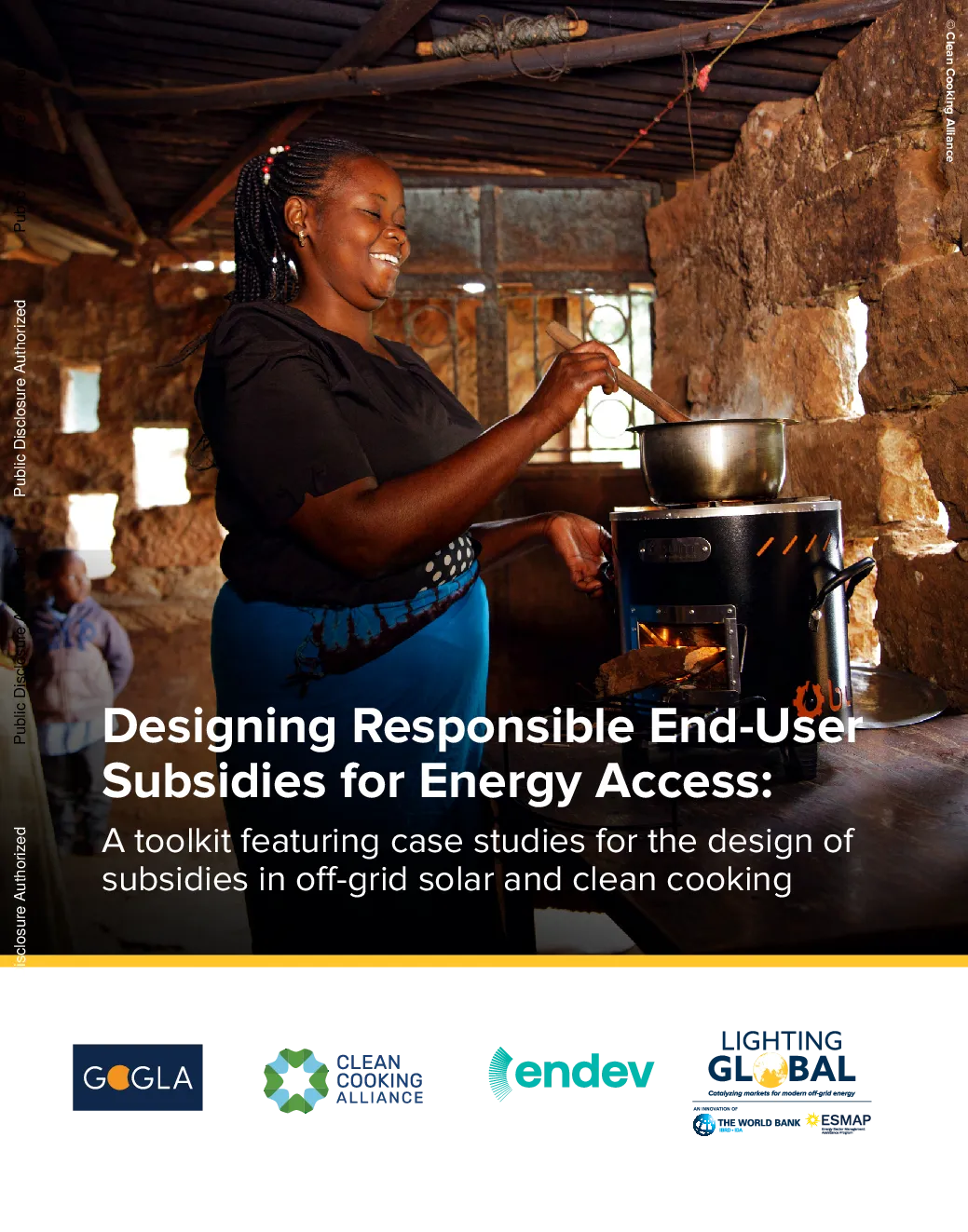
End-User Subsidies for Energy Access: A Toolkit
Key Definitions
This toolkit serves as a comprehensive guide for designing responsible end-user subsidies aimed at enhancing energy access, particularly in off-grid solar and clean cooking sectors. It integrates insights from multiple stakeholders including government agencies, private sector entities, development partners, and end-users.
Executive Summary
The toolkit addresses the pivotal role of decentralized energy in achieving universal energy access and highlights the challenges and interventions necessary to bridge the energy access gap. It underscores the importance of end-user subsidies as a critical tool to tackle affordability issues, emphasizing the need for effective program design.
Introduction
- Decentralized Energy's Role: Essential for meeting the energy needs of the un-electrified population globally.
- Energy Access Gap: Challenges persist despite progress, necessitating targeted interventions.
- Affordability Challenge: End-user subsidies are identified as a means to improve access by making energy more affordable.
Design Framework for Responsible End-User Subsidies
Pre-Design Elements
- Market Analysis: Understanding the local energy market dynamics and user needs.
- Policy Context: Aligning subsidy programs with national and international policies.
- Financial Feasibility: Ensuring the subsidy scheme is financially viable and sustainable.
Beneficiaries and Targeting Mechanisms
- Identification of High-Priority Groups: Focus on underserved and low-income communities.
- Fair Allocation: Implementing mechanisms that ensure subsidies reach intended beneficiaries equitably.
Eligible Products and Subsidy Level
- Product Selection: Choosing appropriate energy solutions (off-grid solar, clean cooking appliances).
- Subsidy Magnitude: Determining optimal levels to enhance affordability without compromising quality.
Delivery of Subsidy
- Efficient Implementation: Utilizing innovative delivery channels (e.g., digital platforms, community-based distribution).
- Partnerships: Collaboration among various stakeholders to maximize impact.
Verification
- Quality Assurance: Regular monitoring to ensure compliance with quality standards.
- Impact Assessment: Evaluating the effectiveness of subsidies in improving energy access and usage patterns.
Exit Strategy
- Phasing Out: Developing a clear plan for reducing subsidies as beneficiaries become self-reliant or alternative energy sources become more accessible.
- Transition Support: Providing assistance to end-users as they move towards sustainable energy practices.
Conclusion
The toolkit provides a structured approach for policymakers and implementers to design and implement end-user subsidies effectively, ensuring they are tailored to local contexts, economically viable, and sustainable over time. By addressing the multifaceted aspects of subsidy design, this resource aims to catalyze significant progress in expanding energy access and promoting clean energy adoption worldwide.