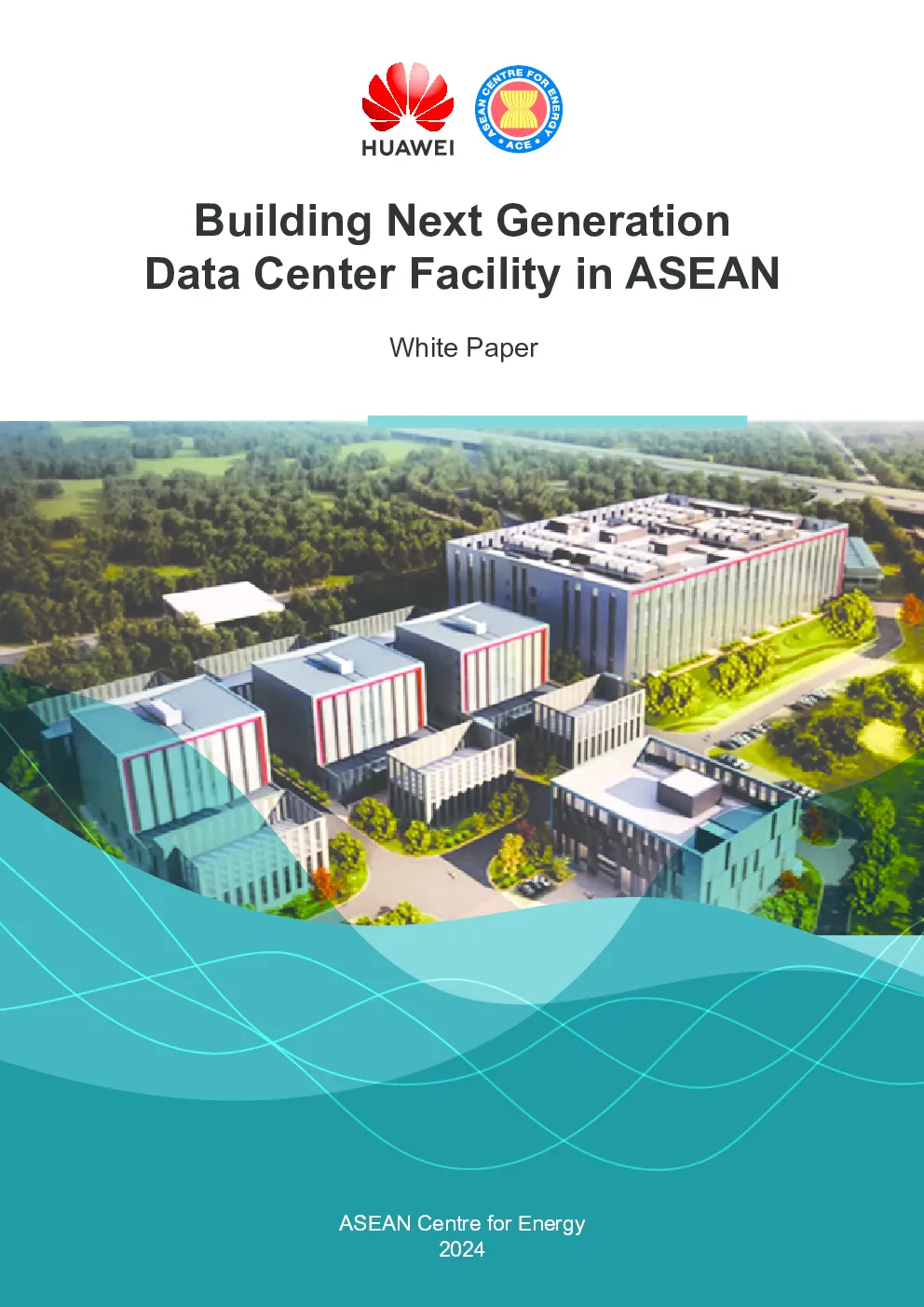
Building Next Generation Data Center Facilities in ASEAN
ASEAN is witnessing a surge in digital transformation, driving rapid growth and evolution of digital services and a significant rise in data center operations. As a result, the ASEAN region's data center markets are developing, offering promising prospects for investors.
However, the growth comes with challenges. Data centers contribute to substantial increases in energy consumption due to server operations and constant-cooling systems. This rise in consumption leads to higher energy costs and motivates businesses to explore ways to reduce operational hours. To tackle this issue, improvements in system efficiency and adoption of cleaner energy sources are essential.
To transition towards a low-carbon economy while balancing environmental protection and economic growth, ASEAN countries aim to align with the ASEAN Plan of Action for Energy Cooperation (APAEC). This plan emphasizes energy efficiency and conservation, guiding data center transformations towards greener practices.
The White Paper titled "Building Next Generation Data Center Facilities in ASEAN" highlights the trends in data centers across the ASEAN region and globally. It discusses technologies and methods that ASEAN countries can adopt to achieve ambitious targets for energy efficiency.
The paper addresses challenges in data center installations and operations, focusing on technology trends and strategies for addressing energy consumption, cost savings, and environmental responsibility. It also provides policy recommendations for both mature and emerging data center markets.
The collaborative effort between the ASEAN Centre for Energy and Huawei aims to provide insights into the current state and future trends of data centers in the ASEAN region. It introduces major challenges and innovative technology applications, proposing policy and standard recommendations to support sustainable development in the ASEAN data center industry.
With the rapid development of computing power and data becoming key production factors, the ASEAN region presents opportunities for data center markets. However, achieving sustainable data centers requires serious commitment to meet low-carbon requirements.
Huawei Digital Power invests in digital and power electronics technologies to develop solutions for various data center sizes and critical power systems. They assist customers and partners in building sustainable and intelligent data centers throughout the design, construction, and operation phases.
After years of effort, Huawei has partnered on over 1000 data center projects, delivering capacities exceeding 14 GW across multiple industries. Their vision for the future is centered around GSSR: green, simplified, smart, and reliable data centers.
This White Paper serves as a valuable resource for the energy technology sector, offering innovative products and solutions alongside recommendations for policymakers.