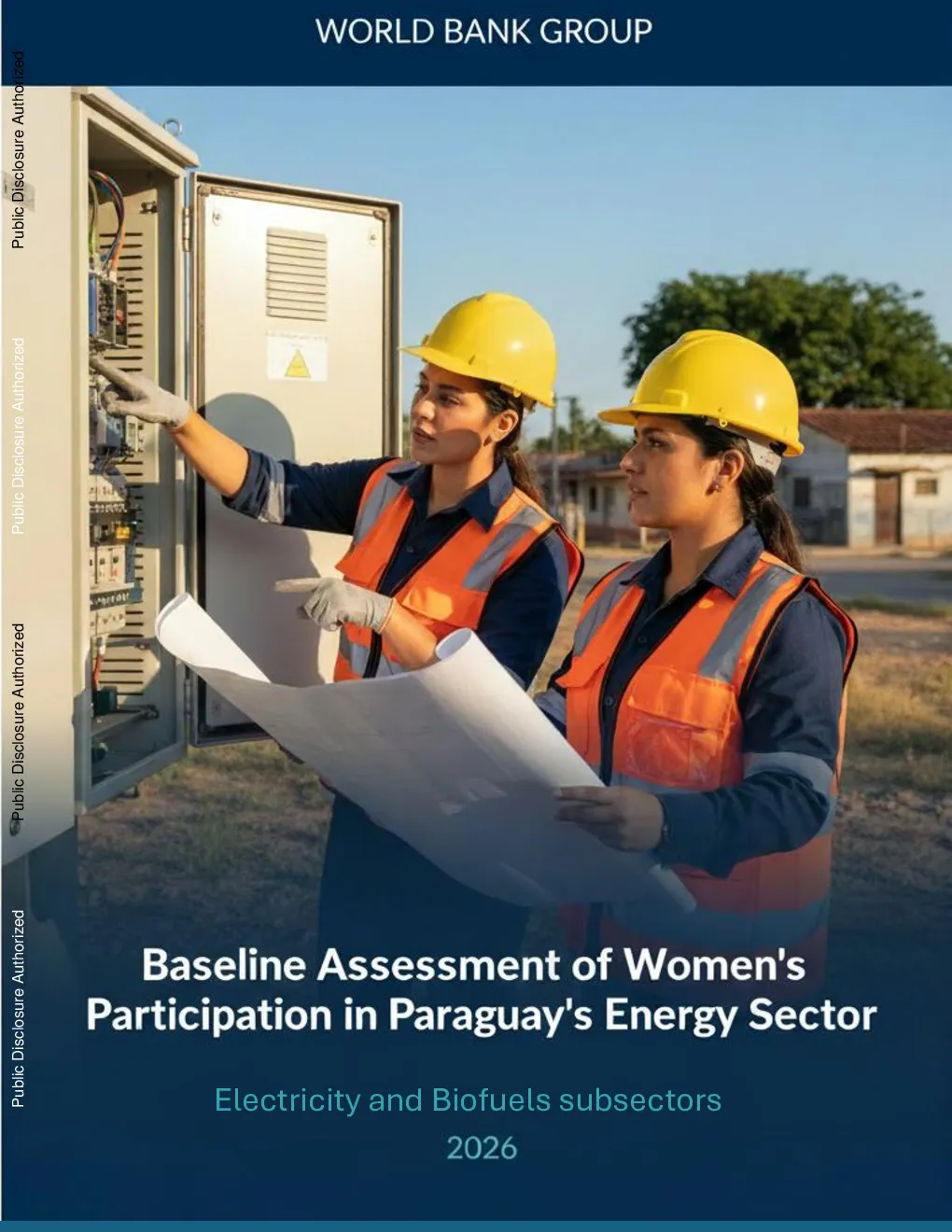
Paraguay’s energy sector, while one of the cleanest in the world with 99.6% of electricity generated from hydropower, faces challenges in achieving gender parity, especially in technical roles. The sector's expansion, driven by the ANDE’s Generation Master Plan 2024–2043 and increasing private investment, presents both opportunities and risks for inclusive growth. This baseline assessment, using an Employer Survey and a Worker Survey across seven major companies in electricity generation and biofuel production, reveals persistent gender gaps.
Key Findings:
- Underrepresentation: Women constitute 21% of the total workforce, 12% of technical/STEM roles, and 28% of leadership positions. Representation is particularly low in technical roles within public and binational entities.
- Educational Disconnect: Despite strong female participation in higher education, women are underrepresented in STEM fields, limiting their entry into technical energy roles.
- Policy Gaps: While most firms report having gender-related policies (maternity protection, anti-harassment), implementation depth varies. Gender equality is not embedded as a cross-cutting priority, and policies often focus on work-life balance rather than addressing structural barriers.
- Perceived Barriers: Worker surveys indicate that 53% believe women face barriers in the energy sector, citing stereotypes, limited visibility of female role models, and informal workplace dynamics. Mentorship, leadership development, and professional networks are identified as key areas for improvement.
- Institutional Context: Large state-owned enterprises and binational entities, with their specific governance arrangements, influence hiring practices, career pathways, and reform incentives, contributing to the observed disparities.
Research Questions Addressed:
- Current level of female participation in the workforce of selected energy companies.
- Representation of women in leadership and decision-making roles.
- Women’s participation in technical and STEM-related positions.
- Institutional mechanisms promoting gender equality within firms.
- Workers’ perceptions of barriers to women’s entry, retention, and advancement.
Policy Implications and Next Steps:
The assessment identifies opportunities for action across the participation pipeline:
- Attraction: Increase visibility of women in technical energy careers, strengthen partnerships with training institutions, and enhance career awareness initiatives.
- Recruitment: Review entry pathways for technical positions, increase transparency in hiring processes, and integrate gender-disaggregated indicators into corporate reporting.
- Retention: Address workplace culture and infrastructure gaps, strengthen internal mobility and transparent promotion systems, and expand family-friendly policies.
- Advancement: Expand mentorship, leadership development programs, and professional networks to strengthen pipelines into decision-making roles.
- Sector Coordination: Establish regular, harmonized monitoring of gender-disaggregated workforce indicators and strengthen collaboration between firms, government agencies, and training institutions.
The findings underscore the need for coordinated actions across the education, training, and industry demand spectrum to ensure the energy sector's expansion contributes to inclusive growth and leverages the full talent pool, including women.