如果更好的减肥药物不断改善,消费者健康将重塑——GLP-1肥胖药物及消费者健康新轮动展望
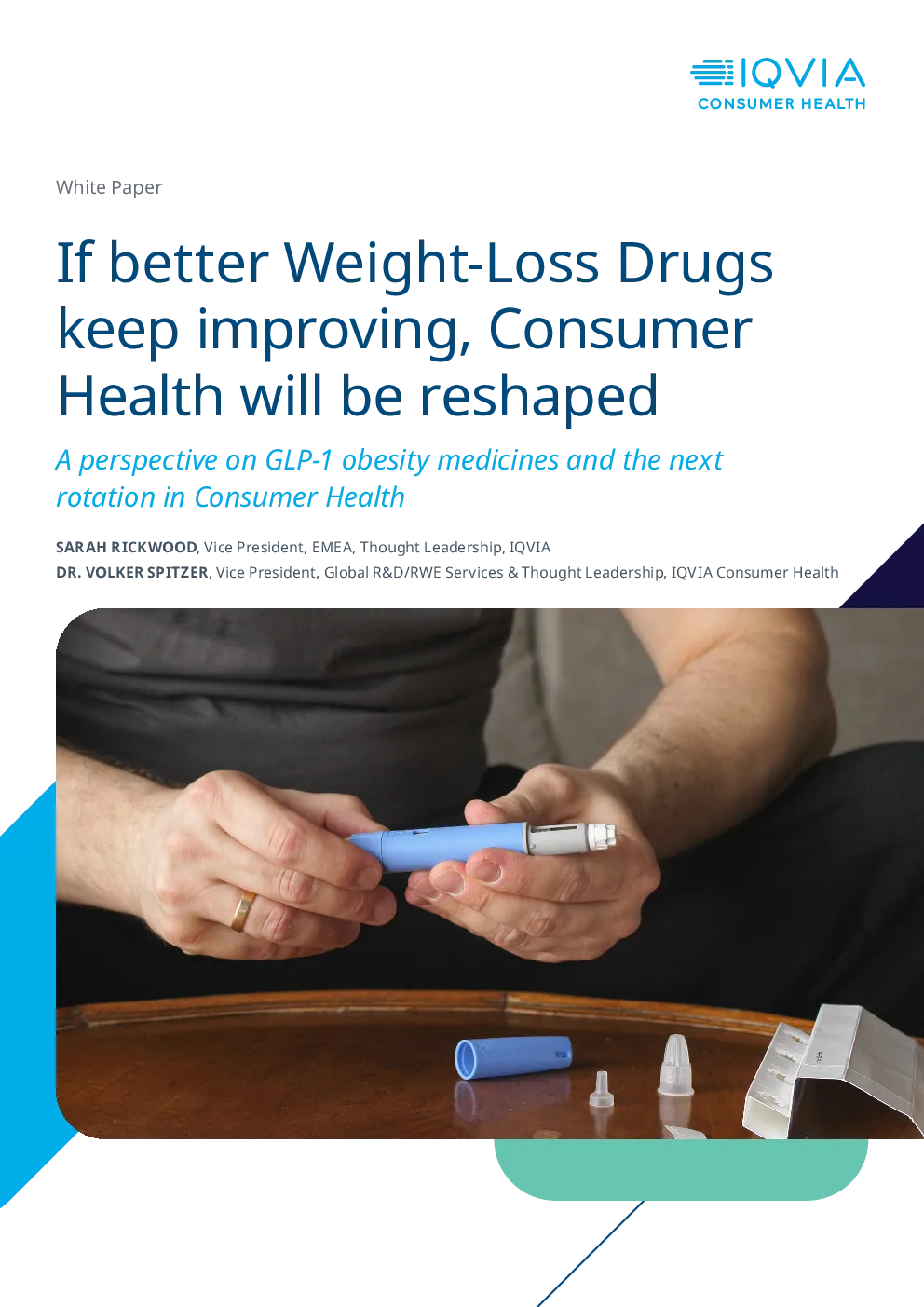
Ifbetter Weight-Loss Drugskeepimproving, ConsumerHealthwill bereshaped A perspective on GLP-1 obesity medicines and the nextrotation in Consumer Health SARAH RICKWOOD, Vice President, EMEA, Thought Leadership, IQVIADR. VOLKER SPITZER, Vice President, Global R&D/RWE Services & Thought Leadership, IQVIA Consumer Health Table of contents Executive summary1Obesity is already a mass-market condition2The disease footprint is wider than the weight-loss conversation3The new medicines reset what is possible, but the caveats remain3The realistic future is better control, not a solved problem5The consumer-health thesis: Rotation, not collapse6High-confidence winners: Products closest to the treatment journey6Protein, nutrient density and muscle preservation6Gastrointestinal support, hydration and electrolytes6Pharmacy-led counselling and adherence support6Moderate opportunities: Credible, but not all equally structural7Multivitamins and micronutrient coverage7Hair, skin, nails and post-weight-loss body care7Joint health, mobility and recovery7Categories under pressure: Weak weight-loss propositions and9mixed symptom categoriesTraditional weight-loss supplements and detox products9Classic low-calorie diet products9Antacids, indigestion and reflux products9Products tied to the physical burden of excess weight9Acne and oily-skin products9Strategic implications for consumer-health companies10References11About the authors15 Core thesis:GLP-1 and related obesity medicines will not simply disruptthe weight-loss market. They will redraw the consumer-health map aroundmedically supported weight loss. Demand is likely to move away from weakappetite-control and slimming claims and toward products and servicesthat help people preserve muscle, manage gastrointestinal (GI) side effects,maintain nutritional quality, protect appearance and stay on therapy. Executive summary Obesity is no longer a peripheral public-health issue or a niche commercial category. In many affluent markets, amajority of adults are already overweight or living with obesity. The arrival of highly effective GLP-1 and GIP/GLP-1medicines changes the commercial baseline because clinically meaningful weight loss is now possible at scale, atleast for people who can access, tolerate and remain on treatment. •The next decade is unlikely to “solve” obesity. A more realistic scenario is better control in high-access markets,with a meaningful share of adults moving out of the highest-risk obesity ranges. •The decisive constraints are no longer efficacy alone. They are affordability, reimbursement, supply, tolerability,persistence, maintenance after weight loss and the service infrastructure needed to support long-term treatment. •For Consumer Health, the larger story is rotation, not collapse. The opportunity is less in products that try tocompete with highly efficacious prescription medicines, and more in products that make prescription obesitytreatment easier to start, tolerate and sustain. •The highest-confidence opportunities are likely to be those with a clear role in treatment support: musclepreservation, adequate protein and nutrient intake, gastrointestinal tolerance, hydration, micronutrientcoverage, skin and hair support, counselling, adherence and dose-escalation support. •The most exposed categories are those whose value proposition still depends on weak weight-loss narratives:detox products, poorly substantiated appetite-control claims, and products implying weight-loss efficacywithout convincing evidence. Obesity is already a mass-market condition most deprived areas.2In the United States, obesityprevalence is meaningfully higher among adultswithout a college degree than among those with abachelor’s degree or more.3That matters commerciallybecause access to treatment will shape not only whobenefits clinically, but also which consumer segmentsparticipate in the new support categories that emergearound obesity medicines. The first commercial point is scale. Obesity is nota cosmetic concern affecting a small minority; it isa baseline condition that now shapes healthcaredemand, consumer spending, workplace productivityand public budgets. Across OECD countries, more thanhalf of adults were overweight or obese in 2023 usingself-reported data, and the share rises to about 60%where measured data are used.1In England, 64.5% ofadults were overweight or living with obesity in 2023to 2024, including 26.5% living with obesity.2In theUnited States, adult obesity prevalence reached 40.3%during August 2021 to August 2023.3This populationscale is now translating into a major therapeutic andcommercial market: IQVIA estimates that the globalobesity medicines market reached $66 billion in list-price sales in 2025 and will continue to expand sharplyover the remainder of the decade.4 The economic burden is already substantial. The CDChas estimated direct annual medical costs of adultobesity in the United States at roughly $173 billionin 2019 dollars.5OECD modelli