您的浏览器禁用了JavaScript(一种计算机语言,用以实现您与网页的交互),请解除该禁用,或者联系我们。 [NTT]:创新生态系统:原则和最佳实践工具包 - 发现报告

创新生态系统:原则和最佳实践工具包

信息技术 2026-06-01 NTT 睿扬
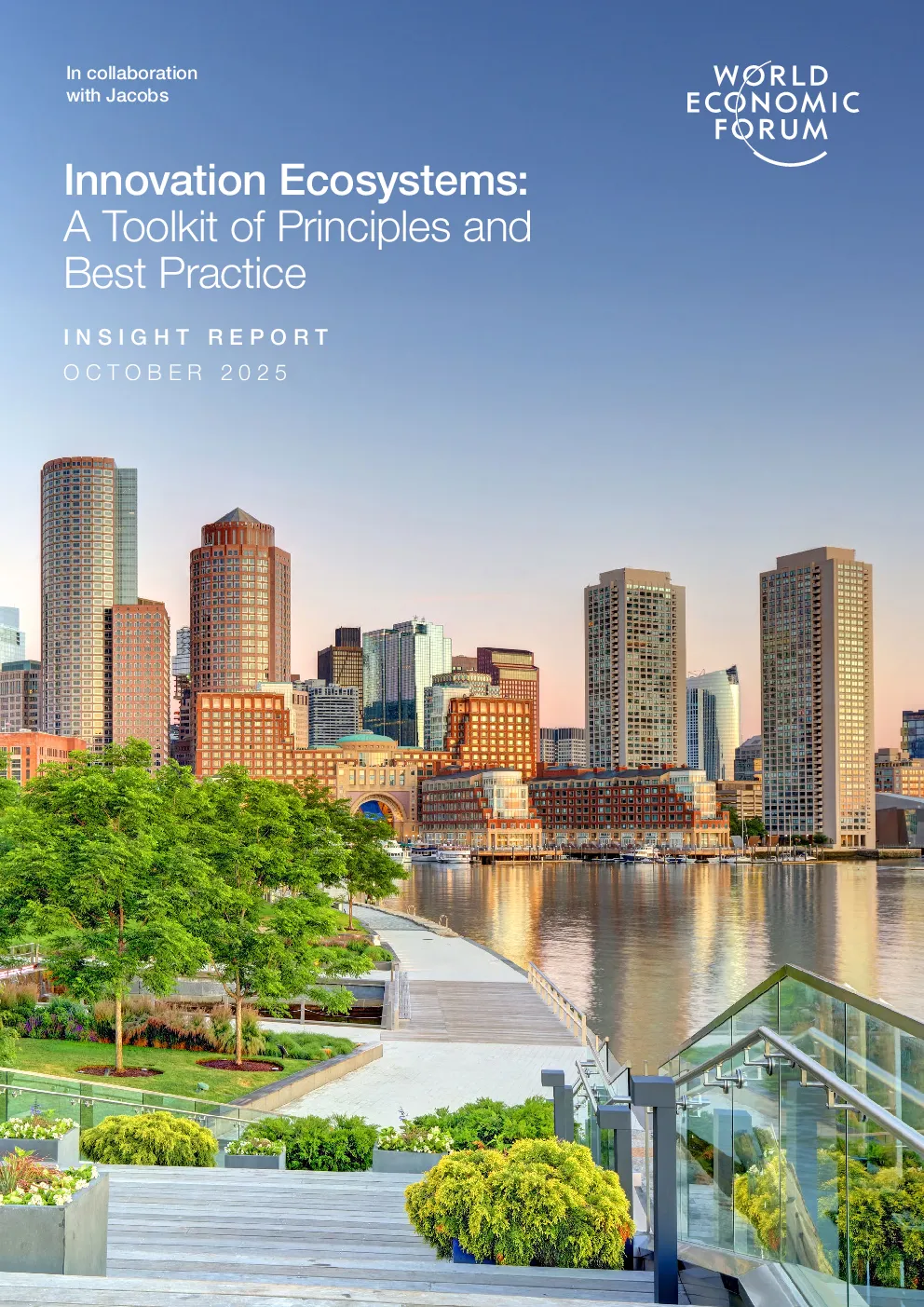
报告封面

Innovation Ecosystems:A Toolkit of Principles and I N S I G H TR E P O R T Images:Getty Images Contents Foreword3 Executive summary5 1Principle-based framework for responsible innovation 2Collaborative governance and stakeholder engagement 2.1Delivering on the principles: collaboration across the three lifecycle stagesof innovation districts2.2Set-up and early stage 3Human-centric design and sustainable places 23 3.1Delivering on the principles: three components of good placemakingfor innovation districts3.2Designing spaces that drive innovation 4.1Delivering on the principles: three components of digital infrastructure344.2Foundations: connectivity, assets and infrastructure364.3Data sharing and digital services394.4Demonstration and enablement41 5From principles to practice 5.1Eight actions for innovation districts to deliver the eight principles Contributors48 Endnotes49 Disclaimer This document is published by the World Economic Forumas a contribution to a project, insight area or interaction.The findings, interpretations and conclusions expressedherein are a result of a collaborative process facilitated and ©2025 World Economic Forum. All rights reserved. No part ofthis publication may be reproduced or transmitted in any formor by any means, including photocopying and recording, or by Foreword Jeff MerrittHead of Centre forUrban Transformation, Cities are living laboratories of human ambition.Within their boundaries, we witness the continuousinterplay between tradition and transformation,between the communities we’ve built and thefutures we imagine. Today, as urban populations challenges. When designed thoughtfully, theybecome crucibles where diverse talents converge,where established institutions collaborate withemerging start-ups, where global knowledge meets Innovation districts cannot succeed throughtechnology or capital alone. They require principledapproaches that balance multiple imperatives –economic vitality with environmental sustainability, The rapid proliferation of innovation districtsworldwide, from Singapore to São Paulo andDetroit to Dhahran, reflects an urgent search fornew models of urban development. Yet amid thisinvestment surge, a fundamental question persists: The path forward demands courage to movebeyond conventional approaches and wisdom tolearn from both successes and failures. It requiresus to see innovation districts not as isolated This challenge becomes more pressing as the paceof technological change accelerates. The averagelifespan of companies has plummeted from 67 yearsto just 15 over recent decades, forcing organizationsand cities to reimagine their approaches to By embracing the principles and practices outlinedin this toolkit, we can create environments whereinnovation serves not as an end in itself, but asa means to address humanity’s most pressingchallenges. The choices we make today about howwe design, govern and operate innovation districts Innovation districts represent our best opportunityto prototype solutions to these interconnected Andrew CollingeDirector, Smart Places andDigital Infrastructure, Jacobs It has been a pleasure to work with the WorldEconomic Forum on this report and with thecreators of innovation districts around the world,who have been especially generous with theirknowledge and experience. In a world where urbanpopulations are projected to grow by 2.5 billionpeople by 2050, where more than one billionare estimated to be at risk from coastal climate and driving dramatic change. Innovation districtsneed to plan how this digital infrastructure will feedinnovation and emerging forms of value creation – This toolkit is organized around three components –governance, placemaking and digital infrastructure.It defines best practice and actions to overcomecommon challenges. And it draws on casestudies that testify to the tenacity of innovation The paper concludes with eight key actions thattranslate the World Economic Forum’s eight guidingprinciples for responsible innovation into practicalsteps that innovation districts can adopt to scaleup their impact – ensuring the benefits of innovation There is an ever-growing body of research andinspiring examples of innovation districts globally.This report distils best practice and tangible lessonslearned to uncover what truly works in practice – While governance has been widely discussed, it isreported as one of the core reasons why up to 50%of innovation districts fail.3With increasing globalcompetition for talent and growing evidence of theimportance of proximity for collaboration, imaginativeplacemaking and design are fundamental. Urban areasin the United Kingdom account for just 9% of land, Innovation districts are not just buildings andspaces – they need to be talent magnets inincreasingly competitive and shifting labourmarkets. In a world of accelerating technologicalprogress and disruption, they are catalysts for thenext generation of game-changing innovations.Abov