用AI开启一线护理的下一个时代(英)
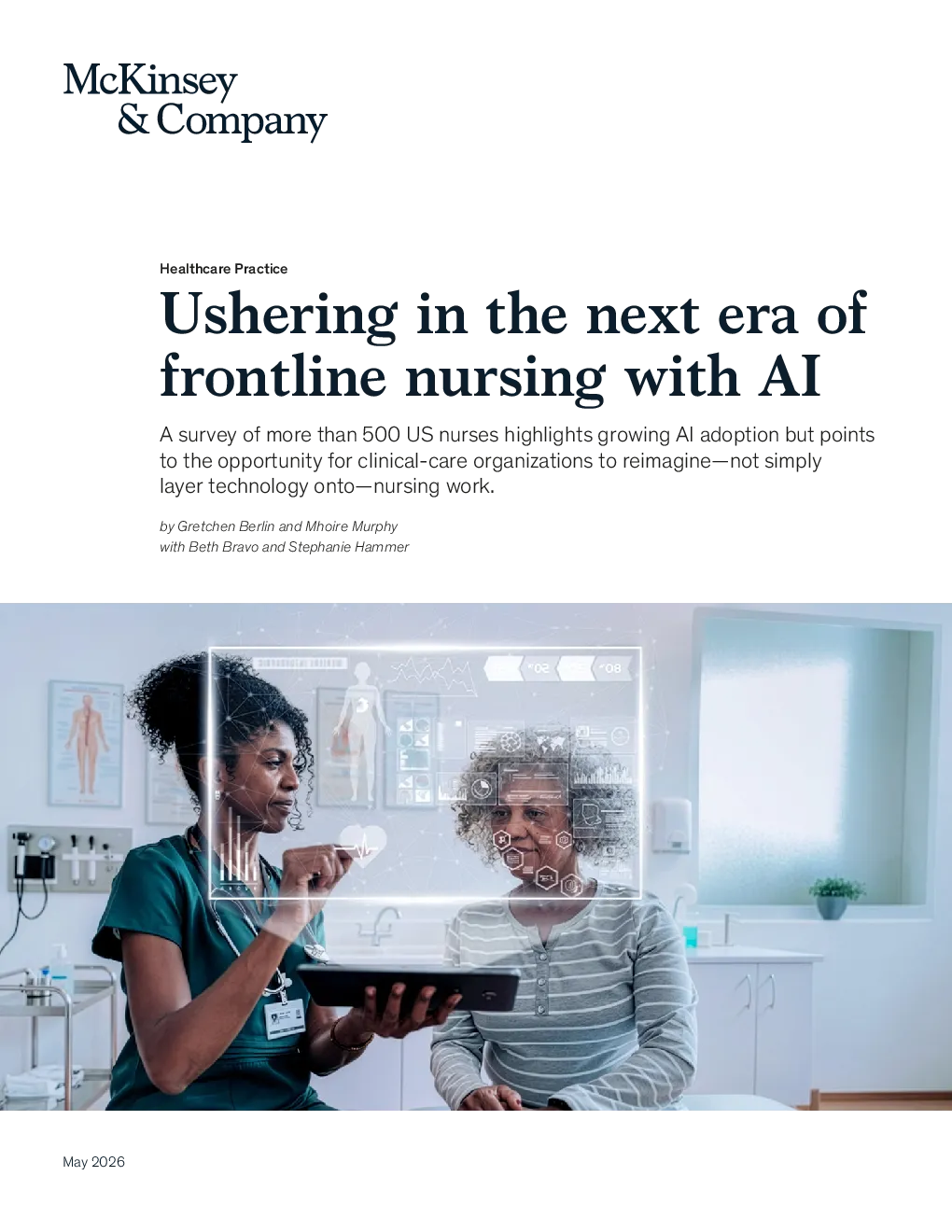
纪元 一项针对500多名美国护士的调查突显了人工智能的日益普及,但同时也指出了临床护理组织在重塑护理工作——而非简单叠加技术——方面的机遇。 由格蕾琴·贝尔林和莫莉尔·墨菲与贝丝·布拉沃及斯蒂芬妮·哈默合著 人工智能已进入护理楼层——但主要作为辅助工具,而非颠覆者。尽管应用日益广泛,迄今为止它并未根本改变护理服务的核心。正如我们早期的研究所示,护士们持续表达对人工智能潜力的强烈信念,但这种信念尚未转化为广泛应用。我们最新对500多名美国护士的调查洞察表明,真正的变革并非来自简单地部署更多人工智能工具,而是来自临床护理组织对护理工作实际执行方式的整体重新设计(参见侧边栏“研究方法”)。 研究方法 麦肯锡一直致力于研究,以帮助医疗机构更好地理解新兴技术(包括人工智能)如何塑造医疗服务模式。本文重点介绍了麦肯锡2026年护理人工智能洞察调查的结果,该调查探讨了护士当前对人工智能的使用情况、对其影响的认知以及对人工智能在未来临床实践中所扮演角色的期望。这些结果并非旨在完全代表所有护士;相反,它们提供了关于经验、态度和采用趋势的方向性见解,旨在为医疗保健领导者和利益相关者在将人工智能整合到医疗服务中时提供参考。 2026年麦肯锡护理人工智能洞察调查涵盖了全美521名一线注册护士,于2026年2月17日至3月17日进行实地调研。2024年美国护士基金会护士调查与麦肯锡联合开展,涵盖了全美7200名一线注册护士,于2024年3月进行实地调研。两次调查均在线进行。两份调查的样本均聚焦于在不同环境中提供直接患者护理的护士,包括医院和急症护理、门诊和门诊护理、长期护理和康复、精神健康和物质使用障碍、社区健康以及美国退伍军人事务部和军事医疗系统。调查问题探讨了护士对人工智能在临床工作流程和患者护理中应用的认知、当前使用情况、感知的益处与风险以及相关期望。所有答案均基于受访者个人的经验和观点。所有问题均为可选,因此各问题的回答数量可能有所不同。 全美各临床护理机构已将人工智能视为解决一系列熟悉挑战的潜在方案:持续的人力短缺、患者病情加重和需求上升,以及日益增长的行政负担。人工智能正开始普及:近65%的受访护士报告称,如今使用的人工智能工具比一年前更多,这表明发展势头强劲。然而 采用情况仍不均衡:23%的护士报告从未使用,而仅有约2%的人表示AI已融入他们所做的一切。护理环境也影响着采用的深度。与在急性护理医院工作的护士(5%)相比,来自医师诊所的护士受访者中,超级用户1(21%)的比例更高。这表明某些工作流程、技术投资或组织结构可能更有利于AI集成,而更广泛的采用则取决于系统层面的赋能和工作流程整合,而不仅仅是个人 initiative。 然而,对人工智能潜力的信念十分普遍。超过80%的人表示人工智能至少能在一定程度上帮助改善患者护理,其中包括16%的人认为它能产生显著效果。信念与采纳之间的差距凸显了一个更广泛的机会:不仅仅是部署人工智能,而是要重新构想一线护理工作如何设计及提供。如果做得好,人工智能将有助于提升护理体验,并增强护士提供高质量患者护理的能力。 人工智能的采用范围广但分散。 调查结果显示,人工智能的使用并非局限于少数热情的早期采用者。相反,其使用已分布在整个劳动力队伍中,但通常处于低至中等水平(见展位1)。超过四分之三的护士受访者表示他们在日常工作中使用人工智能,但采用程度各不相同。只有极少数人,大约占10%,是重度用户。 图1 尽管使用深度有限,护士们表示他们相信AI在改善患者护理方面的潜力(见展位2)。这表明主要制约因素并非护士的意愿,而很可能是临床护理组织尚未充分融入AI,以根本性地改变工作流程。 附件2 信任,而非意识,是主要障碍。 与普遍假设相反,根据我们的调查,缺乏意识或培训并非美国护士采用人工智能的主要障碍。事实上,在2024年的调查中,知识缺乏曾是第三大最受关注的问题(占36%),而在2025年的调查中已降至第六位(占22%)。相反,2025年调查中最常被提及的担忧是信任人工智能输出的准确性(33%),其次是缺乏人际互动(18%)和数据隐私(16%)(参见第3号展品)。 解决这些问题可能需要超越培训。它还将涉及以下方面:在现实场景中证明安全性和有效性、明确的治理机制以界定责任和监督、关于人工智能工具如何运作和生成输出的透明解释,以及周到的整合以确保与以患者为中心的工作流程保持一致(见附图4)。 附件3 图4 人工智能必须从任务自动化发展到角色重塑。 今天的采用仍然集中在文档管理和药品管理等工作流程中(参见展位5)。这些工作流程结构高度清晰且可重复,因此非常适合AI工作流程集成。 第 5 号证据 更复杂、更依赖系统且面向患者的应用程序,如排班、劳动力优化和患者参与等,则相对滞后。这些领域在互操作性、信任和工作流程设计方面面临更严峻的挑战;每个应用程序都需要重大的变革和风险管理,这使得进展本身变得困难。这些领域指明了真正的角色演变和下一波价值将需要出现的方向。 然而,当我们将AI超级用户与调查中的其他人进行比较时(参见展位6),其使用模式差异显著。与他们的同行相比,超级用户更倾向于使用高风险工作流程,例如药物管理和临床决策支持(分别为77%对27%和70%对20%)。这种差异表明,虽然许多护士正在尝试使用AI,但较小的一部分人已经开始将其整合到高价值、决策密集型的活动中。 综合来看,这些发现强化了医疗保健领域一个为人熟知的现实:仅采纳技术很少能产生实际影响。通常只有在围绕新技术重塑工作流程时,才能充分实现其价值。护理工作流程中的AI也是如此。真正的机遇在于重新配置护士、更广泛的护理团队和数字工具之间工作分配的方式——这些变化需与临床实践保持一致,并得到培训的支持。要实现这一潜力,临床护理组织需要超越单一的解决方案,转向对角色和工作流程进行系统级的重新设计。 若运用得当,人工智能有潜力让护士减少在行政工作上的时间,更专注于临床判断和患者互动,并能更持续地在其执照范围内进行实践。梅瑞健康(Mercy Health)实施了由人工智能赋能的护理工作流程,以简化护理协调,重新思考团队和不同护理场景中的工作方式。通过与 Epic 合作部署生成式人工智能护理计划,该系统将护士记录交接班笔记的时间缩短了83%;该计划的实施由一线护士主导,并在30天内实现了全系统的85%采用率。 如何以AI为核心重塑一线护理 临床服务机构不应将人工智能的实施与采纳视为孤立举措。相反,应将其视为重新设计一线护理交付的更大机遇的一部分。 该框架聚焦企业能力的三个领域:数字化转型的重新思考方法、价值对齐、交付和变革管理。它为临床护理组织如何利用人工智能为其组织创造价值(包括在护理领域)提供了一个实用的视角。 图6 通过跨角色和技术的重新分配工作来对齐价值 临床服务机构可以重新设计端到端的业务流程,以摆脱在任务层面使用点解决方案。重塑护理工作流程需要高级管理层,包括护理总监,在明确的转型使命和战略上达成一致。有了这种协同一致,机构可以将战略转化为行动,通过重新评估任务层面的工作方式来实现。这始于明确界定患者护理需求,并明确护士——也只有护士——能做什么,其他护理团队成员可以提供哪些支持,以及人工智能或其他数字工具和赋能者如何帮助改进。 例如,医疗机构可以继续依靠护士的经验进行实践性评估,依靠他们的临床判断进行决策,以及依靠他们与患者建立关系的能力。人工智能可以通过识别患者早期的临床预警信号、提取相关的患者病史和医疗信息,以及实现更加个性化和响应性的互动来支持护士,从而增强患者的信任。斯坦福医院报告称,他们使用人工智能作为一个实时连接层,预测患者风险,并提示更早、更协调的医护患干预措施,以改善结果。3护士直接在医院现有的电子健康记录(EHR)系统中接收人工智能生成的风险评分警报,该系统每15分钟自动提取患者数据,并将通知推送给护理团队。另一个例子是HCA医疗集团,其人工智能赋能的护士排班系统自动化了人员配置决策,以节省行政时间,更好地将技能与患者需求相匹配,并让护士领导者能够专注于支持员工和提高护理质量。4 通过治理和一线员工输入提升交付能力 成功将人工智能嵌入新的运营模式,取决于临床护理组织建立强有力的治理机制,以增强信任并解决隐私问题。明确的责任主体和保障措施有助于缓解怀疑情绪,并建立对人工智能赋能护理交付的信心。此外,让一线员工直接参与人工智能工具的设计、选择和优化,以确保其相关性和可用性,对于实现有意义的采纳和产生实际影响至关重要。梅奥诊所实施了一个战略性的生成式人工智能框架,该框架包含人机协同监督、护理领导层批准以及“由护士,为护士”的原则,同时将其护士虚拟助手直接嵌入电子健康记录系统,以整合患者数据并简化临床工作流程。 确保护理工作队伍具备人工智能熟练度,以增强变更适应能力 尽管认知度高,但仍需加强能力建设以支持高级和临床应用。梅奥诊所也在培训并让护士参与生成式AI的部署,通过使用AI消息传递和虚拟助手等工具来建设人才队伍能力。 收养尚未带来根本性改变 人工智能不再是护理工作中的假设部分。与以往研究结果一致,大部分护理人员已开始使用人工智能,且其应用正在增长。然而,当前人工智能在护理领域的应用往往呈现出碎片化、差异化和深度不足的特点。下一阶段的应用将不再由新工具的引入来定义,而是由临床护理组织能否将发展势头转化为对一线护理进行有意义的重塑来决定。 成功的关键组织将重新构想,在人工智能时代,护理工作的结构、支持及服务如何构建、支持与提供。人工智能在护理领域的未来,并不仅仅是算法;它关乎构建一个能够充分赋能其核心人群的照护模式。 3 罗伯特·J·加利博士等,“基于人工智能的干预措施在检测临床恶化方面的有效性”,《美国内科学会杂志》,2024年3月25日;阿娜希·阿米塔奇,“人工智能如何改善医护协作”,斯坦福大学医学部,2024年4月15日。4 “更智能、更安全的医院:HCA医疗如何利用人工智能重新定义患者安全”,美国医院协会,2025年10月16日。5 切尔西·科内塔-里克,“利用技术革新梅奥诊所的护理服务”,在波士顿(马萨诸塞州)举行的护理世界大会上的口头报告,2025年10月22日至24日。6切尔西·科内塔-里克,“利用技术革新梅奥诊所的护理服务”,在波士顿(马萨诸塞州)举行的护理世界大会上的口头报告,2025年10月22日至24日。 格蕾琴·伯林(Gretchen Berlin),注册护士(RN),是麦肯锡公司华盛顿特区办事处的资深合伙人;贝丝·布劳沃(Beth Bravo),注册护士(RN),是该办事处的一名顾问;莫莉·墨菲(Mhoire Murphy)是波士顿办事处的一名合伙人;而斯蒂芬妮·哈默(Stephanie Hammer),注册护士(RN),是丹佛办事处的一名助理合伙人。 作者感谢前线的护士、医生和员工,他们照顾病人和社区,也感谢临床领导者,是他们促成了这项工作。他们还感谢Anwesha Roy为本文做出的贡献。 本文由纽约分社高级编辑Querida Anderson编辑。 由生成式人工智能辅助创建的图像。