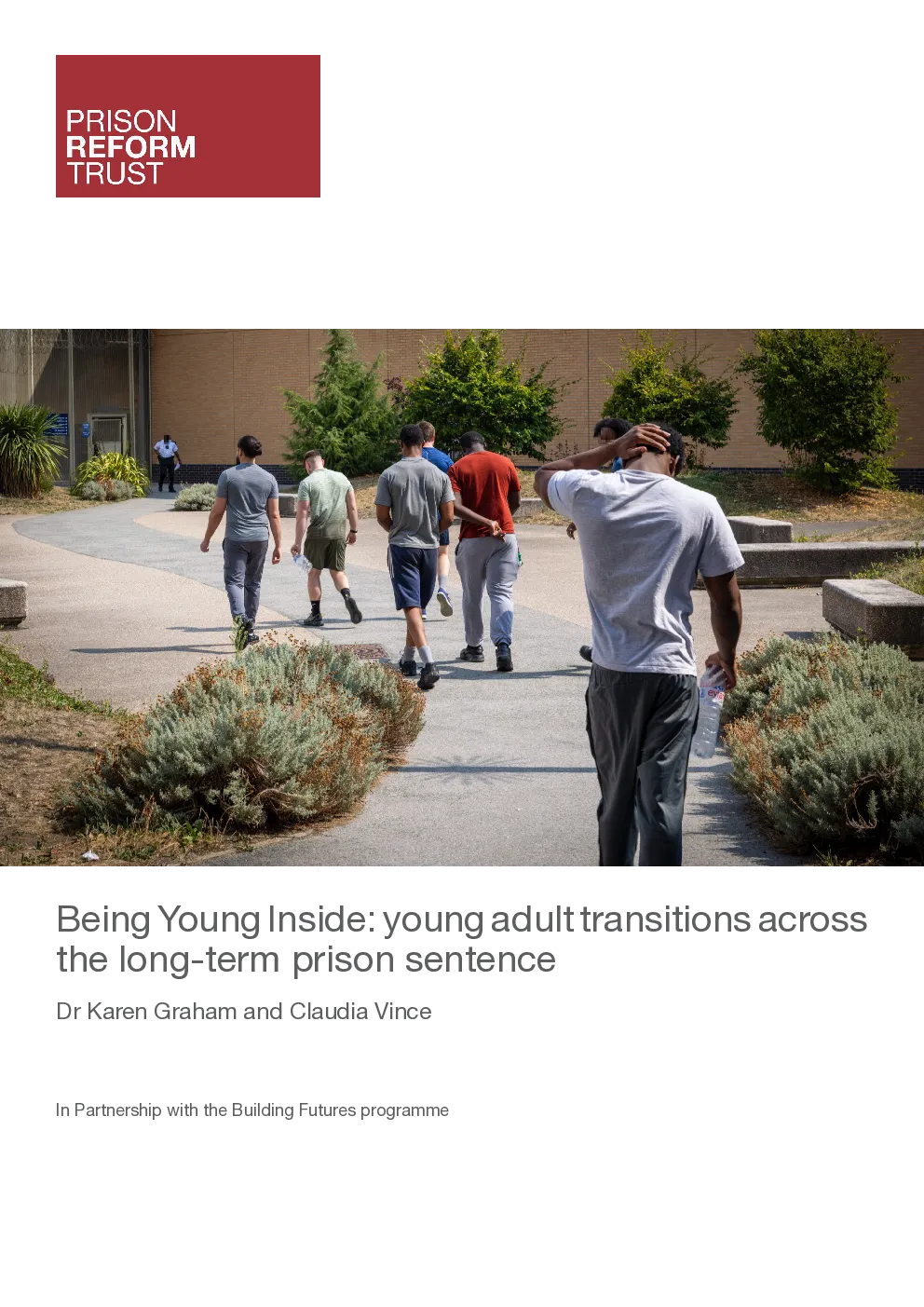
Dr Karen Graham and Claudia Vince In Partnership with the Building Futures programme The Prison Reform Trust (PRT) PRT is an independent UK charity working to create a just, humane and effective penal system. It wasfounded in 1981 to inform and influence public debate on prison conditions and the treatment of prisoners,amidst concerns about a projected prison population of 48,000 by 1984. With the prison population inEngland and Wales approaching 88,000 and projected to rise to at least 95,700 by 2029, PRT remains asimportant to civic society today as it was over 40 years ago. We are one of the few organisations willingand equipped to hold the state to account for its treatment of vulnerable people in prison. Our reputation,built over four decades of knowledgeable, reliable analysis and presentation of the facts, gives us influencebehind the scenes that few organisations can match. PRT’s main objectives are: Reducing unnecessary imprisonment and promoting community solutions to crime.Improving treatment and conditions for prisoners and their families.Promoting equality and human rights in the justice system. We do this by inquiring into the workings of the system, informing prisoners, staff and the wider public, andby influencing Parliament, government and officials towards reform. Whilst often working alongside theprison service and maintaining close links with government departments including the Ministry of Justice(MoJ), His Majesty’s Treasury (HMT), and the Home Office, to retain its independence, PRT does not seekor accept government funding. The structure and rigour of our programmes are agreed with the trusts andfoundations that fund our work. prisonreformtrust.org.uk/project/building-futures Acknowledgments We are grateful to the people who participated in this consultation. Particular thanks are extended to the menwho participated in the in-person consultation groups in HMPs Frankland, Isis, Swinfen Hall and Swaleside.Their honesty, candour and motivation to contribute to improving the system were deeply valued. We are grateful to Jayne Price for support reviewing the literature on this subject, and to the prisonmanagement and staff who enabled the consultation groups to take place, including Martha Morey, PeterBuckle, Jennifer Stimson, EJ Dillury and Hannah Didgeons. The group facilitators were Karen Graham, VickiKerr, David Maguire and Claudia Vince. We are also grateful to Tara Benedetti, Daria Przybylska and Paul Walker for their support. Contents Recommendations.........................................................................................................................2About this report............................................................................................................................4The Building Futures programme..................................................................................................4The purpose of this report.............................................................................................................4Methods.........................................................................................................................................5Who contributed to this consultation?..........................................................................................5Report structure............................................................................................................................6 Understanding the experiences of young adults serving long prison sentences.....................6The context....................................................................................................................................6Sentencing, coping and adaptation...............................................................................................8Identity, rehabilitation and adaptation......................................................................................8Neurodiversity..........................................................................................................................9Institutional factors...................................................................................................................9Purposeful activity......................................................................................................................10Relationships...............................................................................................................................10Staff........................................................................................................................................10Inter-prisoner relationships....................................................................................................11Outside contact......................................................................................................................12Imagined futures.............................................