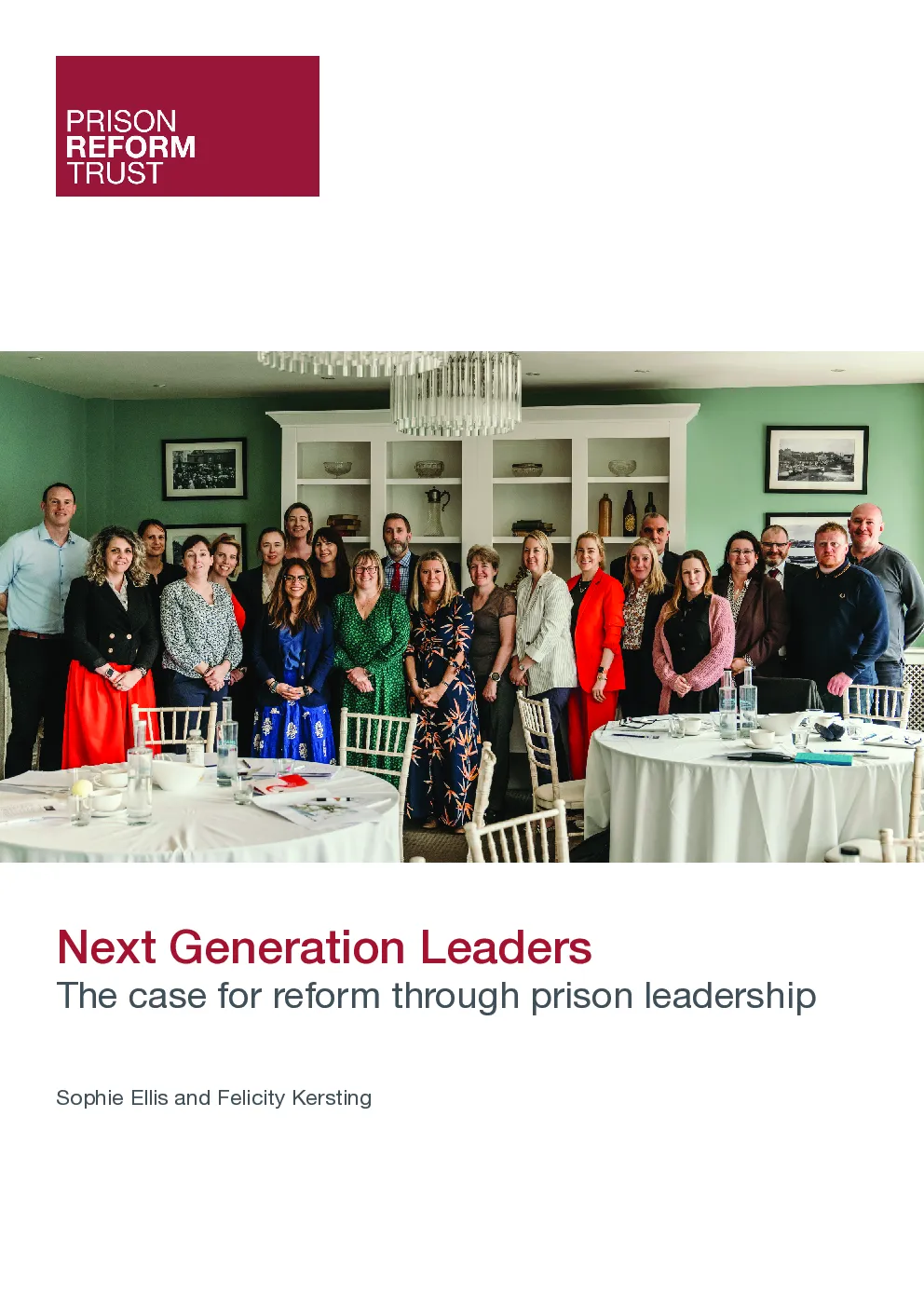
Sophie Ellis and Felicity Kersting Prison Reform Trust Prison Reform Trust (PRT) is an independent UK charity working to create a just, humane and effective penalsystem. It was founded in 1981 to inform and influence public debate on prison conditions and the treatmentof prisoners, amidst concerns about a projected prison population of 48,000 by 1984. With the prisonpopulation in England and Wales approaching 88,000 and projected to rise to at least 95,700 by 2029. PRTremains as important to civic society today as it was over 40 years ago. We are one of the few organisations willing and equipped to hold the state to account for its treatment ofpeople in prison. Our reputation, built over four decades of knowledgeable, reliable analysis and presentationof the facts, gives us influence behind the scenes that few organisations can match. PRT’s main objectivesare: •Reducing unnecessary imprisonment and promoting community solutions to crime.•Improving treatment and conditions for prisoners and their families.•Promoting equality and human rights in the justice system. We do this by inquiring into the workings of the system, informing prisoners, staff and the wider public, andby influencing Parliament, government and officials towards reform. Whilst often working alongside theprison service and maintaining close links with government departments including the Ministry of Justice(MoJ), His Majesty’s Treasury (HMT), and the Home Office, to retain its independence, PRT does not seekor accept government funding. The structure and rigour of our programmes are agreed with the trusts andfoundations that fund our work. Acknowledgements Our biggest thanks go to our truly inspiring first group of Next Gen Leaders, for their continual dedicationand effort to improve prisoners’ lives. We have been very privileged to work with them and we look forwardto being their critical friends for many years to come as they rise further in the Prison Service. Next Gen was founded by PRT CEO Pia Sinha and co-facilitated by Erika Clegg, values-based leadershipconsultant. The Next Gen Leaders were very clear that their energy, passion, inspiration, support, and beliefin the next generation is what made all the difference. The in-house process evaluation was led by Sophie Ellis but delivered by a trained team of PRT colleagueswho were not involved in Next Gen’s frontline delivery: Zoe Burton; Emily Evison; Alex Guthrie; EllaHumphreys; and Alice Stevens. It could not have been delivered without their commitment, enthusiasm andintegrity in good measurement and data collection. The project reviews were led by Sophie Ellis with assistance from Felicity Kersting in sifting, compiling,summarising and early drafting of key themes and evidence. We are very grateful to Porticus, J Leon and the Hadley Trust whose funding makes Next Generation Leaderspossible. Contents Executive summary5The case for reformist leadership in prisons7Putting aspiring prison leaders in context9The Next Generation Leaders programme11Key aims, principles and targets11Why aspiring leaders?11 The first Next Gen Leaders Overview of the cohortKey characteristicsEstablishment representationMeasures of key programme targetsChanges over the course of the programmeThemes in leaders’ experiences of the programmeMotivations for applyingPositive environment for reflection/growthMentoring and coachingLessons learned and plans for the future Case studies of reform on the ground The projects HMP and YOI BrinsfordHMP BristolWomen’s EstateHMP Guys MarshHMP WaylandHMP BureHMP ColdingleyHMP HighpointHMP Hollesley BayKent, Surrey and Sussex regionHMP OnleyHMP StaffordHMP & YOI StyalHMP UskHMP PrescoedHMP Wandsworth Executive summary Next Generation Leaders is a programme—and network—that aims to put aspiring prison leaders at theheart of reform. PRT wants to create an effective alliance of reformers on the inside and the outside, tomore effectively drive forward changes that benefit prisoners. Next Gen’s core purpose is to: Grow and connect the next generation of prison leaders, who are empowered to reform from theinside If prison reform is to be meaningful and lasting, it must happen not only through national policy andexternal scrutiny, but through the daily decisions, values and relationships shaped by leaders insideprisons. For 45 years, thePrison Reform Trusthas used multiple levers to pursue change: evidence,advocacy, challenge, coalition-building and critical friendship. Next Gen represents a further step inthat work. It reflects a conviction that prison practitioners—especially aspiring governors—are not onlysubjects of reform, but can also be catalysts of it. They are often best placed to improve daily life in prisonnow, while wider legal and policy change takes time. Such efforts are not straightforward. Reformist leaders face operational pressures, isolation, bureaucracy,limited autonomy, and the difficulty of trying to change an institution while remaining ac