您的浏览器禁用了JavaScript(一种计算机语言,用以实现您与网页的交互),请解除该禁用,或者联系我们。 [万宝盛华]:2026年医疗保健与生命科学工作展望 - 发现报告

2026年医疗保健与生命科学工作展望

医药生物 2025-10-31 - 万宝盛华 灰灰
报告封面

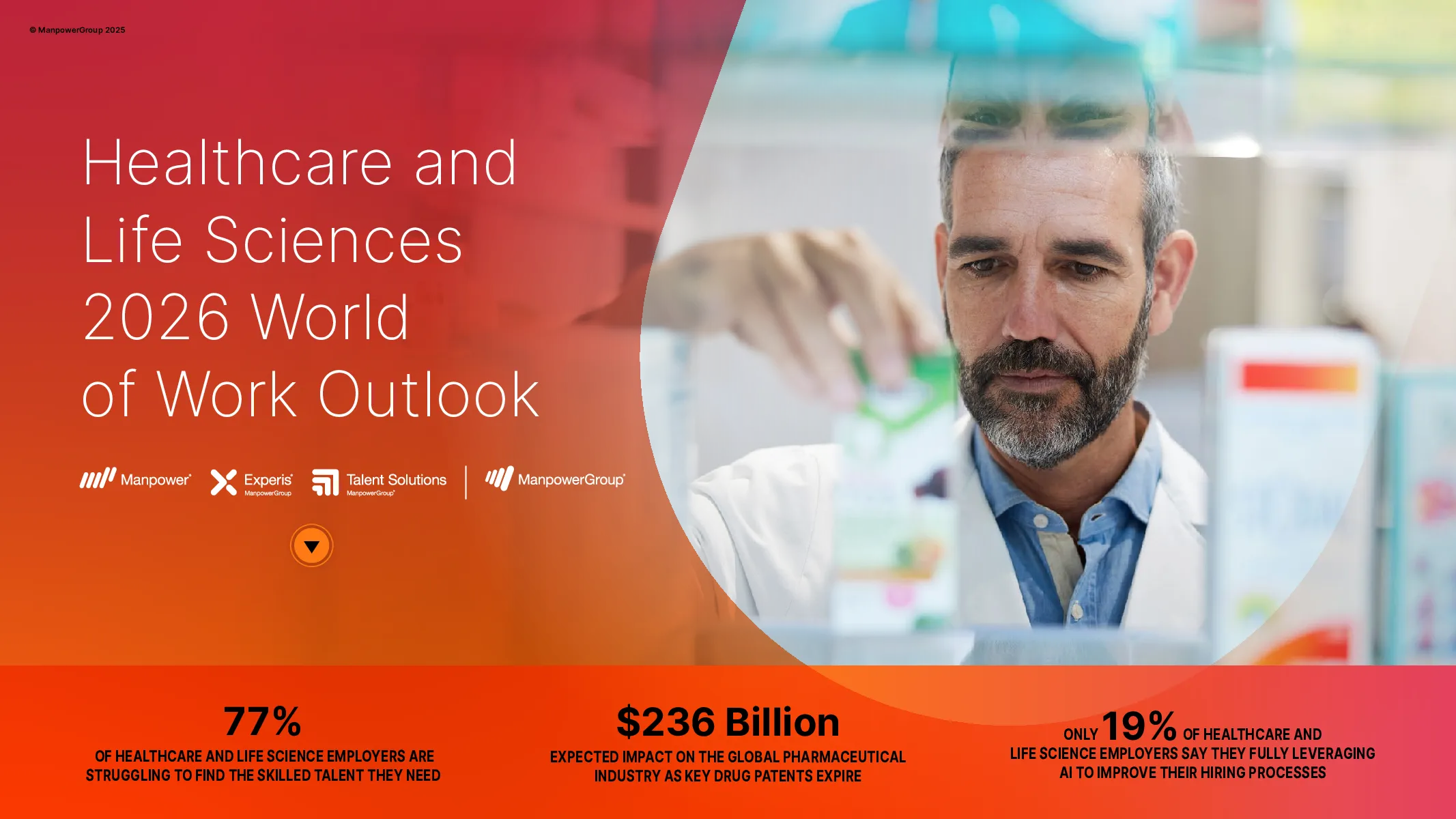
$236 BillionEXPECTED IMPACT ON THE GLOBAL PHARMACEUTICALINDUSTRY AS KEY DRUG PATENTS EXPIRE 77%OF HEALTHCARE AND LIFE SCIENCE EMPLOYERS ARESTRUGGLING TO FIND THE SKILLED TALENT THEY NEED ONLY19%OF HEALTHCARE ANDLIFE SCIENCE EMPLOYERS SAY THEY FULLY LEVERAGINGAI TO IMPROVE THEIR HIRING PROCESSES The global outlook for Healthcare & Life Sciences is cautiously optimistic despite macroeconomic challenges aroundthe world. Key drivers include AI innovation, which is anticipated to reshape operations, enhance productivity, andunlock new opportunities across the value chain. R&D remains a central priority, with companies rethinking strategiesto improve productivity and exploring technologies like digital twins and AI to accelerate drug development. This WorkIntelligence Lab report is for business leaders seeking to understand the following workforce challenges: •What are the key trends that will influence strategic workforce planning in 2026? •How do business leaders overcome talent shortages for in-demand roles such as nurses or data scientists? •What strategies can employers use to recruit and retain the best talent? Workforce Implications: The Rx is AIAcceleration •There is still a significantopportunity to scale AI to improvetalent acquisition in this sectoraround the world.•Continuous workforce educationwill be key as this technologycontinues to rapidly evolve.•AI upskilling is important butimproving difficult to automatesoft skills are also a differentiationopportunity for both healthcareemployers and workers. AI adoption in the global healthcare and life sciencessector is accelerating rapidly, transforming everythingfrom diagnostics to drug discovery. Hospitals areincreasingly integrating AI for early diagnosis, remotemonitoring, and surgical assistance. This surge reflectsa broader shift toward data-driven, personalized, andefficient care models, positioning AI as a cornerstone offuture health systems. •Increasing adoption:More than half of executives in the life science sector (60%) say they planto increase their generative AI investments across their value chains.1 •Growing talent acquisition use:Healthcare and life science adoption of AI for talent acquisitionis still scaling. While 32% of employers in this sector are currently using these tools, only 19% saythey are fully leveraging the technology for their hiring processes.2 ONLY19%OFHEALTHCARE & LIFESCIENCE EMPLOYERSAREFULLYLEVERAGING AITO IMPROVE THEIRHIRINGPROCESSES. •Difficult to Automate Skills:However, there are limits to automation. Healthcare and life scienceemployers say ethical judgement (33%), patient service (33%) and communications skills (29%)are the most difficult to replace or augment with AI.2 Cost Cutting MOST HEALTHCARE & LIFE SCIENCEEMPLOYERS(46%) PLAN TO KEEPHEADCOUNT FLATTO MITIGATEGROWING COST PRESSURES. Amidst ongoing economic pressures and the ever-increasing cost of research, development,and regulatory compliance, the healthcare and life science industry must cut costs withoutcompromising quality, safety, or innovation. Managing workforce costs is particularly importantas employers balance the needs of workers with increasing business costs. Workforce Implications: •Rising supply chain costs:More than 80%of pharma R&D leaders anticipate supplierspending to rise by 10-30% over the nexttwo to five years.1 •Hiring is more selective andfocused on either high skill orfrontline roles. •Global talent sourcing enablesorganizations to access a broaderpool of skilled professionals,streamline workforce expenses,and maintain competitivenesswhile effectively managingoperational costs. •Geopolitical uncertainty:Most (65%)employers in the healthcare and life sciencesector say global trade uncertainty is havinga moderate or significant impact on theirhiring decisions.2 •Hiring Caution:In Q4 2025, hiring managersin this sector were still cautious. Many (35%)still planned to increase hiring but mostanticipated keeping headcount flat (46%) ordecreasing staff (16%).3 •Optimizing your contingentworkforce strategy also offersopportunities to mitigate risks andreduce costs. M&A Prognosis Workforce Implications: •One-third (33%) of M&A failures aredue to cultural clashes, key talentloss and a lack of engagement, so HRhas an important role to play.4 Global life sciences M&A (merger andacquisition) activity is driven by the need tooffset patent losses and strengthen pipelines,focusing on smaller deals in high-growth areaslike oncology, immunology, and AI therapeutics.Although deal values have decreased, steadydeal volume and available capital suggest largerdeals are possible. This trend requires proactiveworkforce planning to integrate specialized R&Dtalent and address skill gaps after mergers. •Effective strategic workforceplanning is critical to avoid workforcedisruptions during the transition. •Contingent workforce optimizationand outplacement services forimpacted roles are some examplesof important considerations for H