您的浏览器禁用了JavaScript(一种计算机语言,用以实现您与网页的交互),请解除该禁用,或者联系我们。 [万宝盛华]:2024年医疗保健和生命科学工作世界展望 - 发现报告

2024年医疗保健和生命科学工作世界展望

医药生物 2024-07-10 - 万宝盛华 M.凯
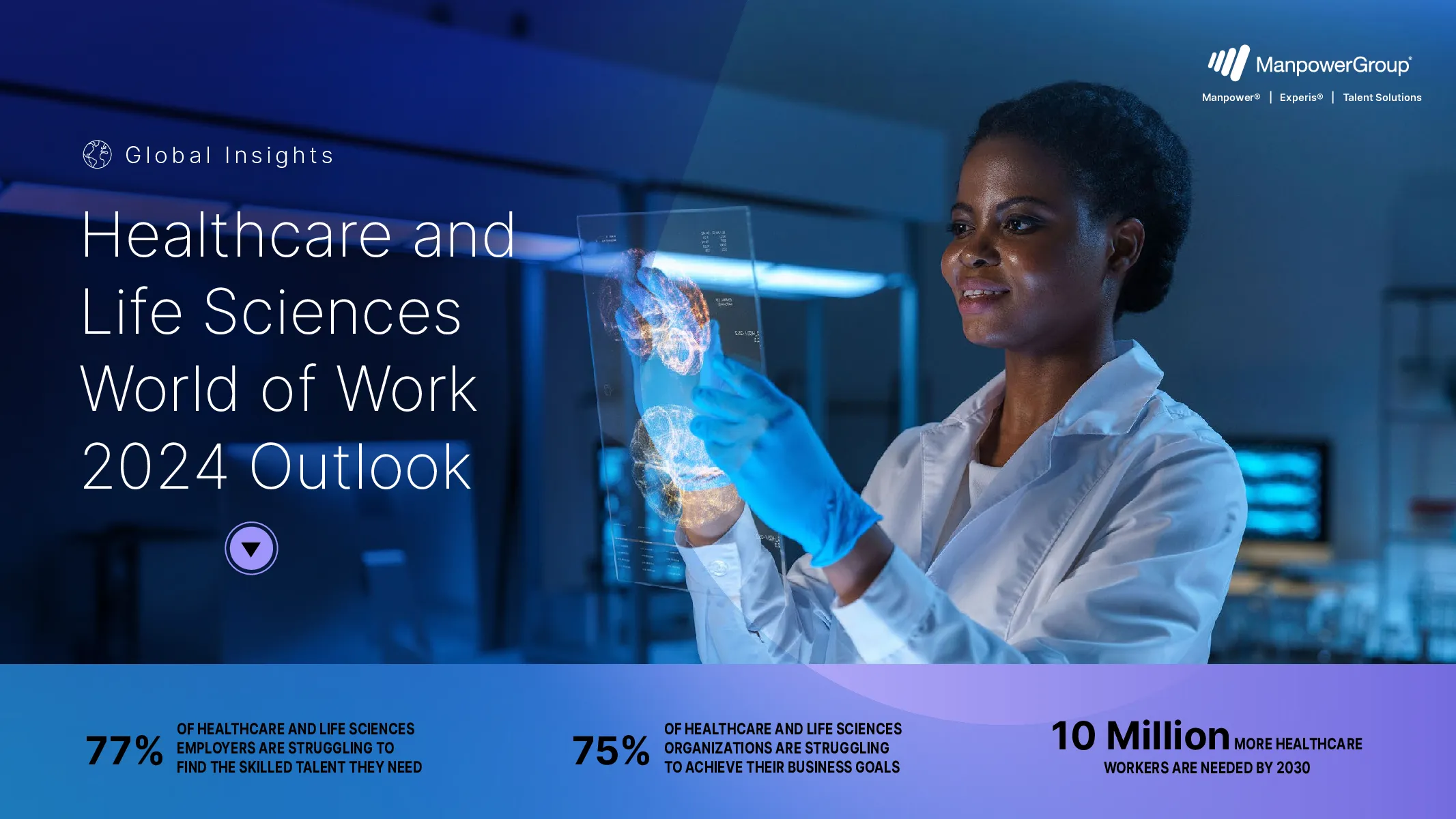
报告封面

75% 77% FIND THE SKILLED TALENT THEY NEED TO ACHIEVE THEIR BUSINESS GOALS Transformation within the healthcare and life sciences sector continues to be driven by technologicaladvancements and changing consumer behaviors. As we move further into 2024, these trends areshaping the industry in new and exciting ways. We will explore how global industry leaders will leverage •How will accelerating AI adoption impact the future of healthcare innovation and required workforce skills? •How can the industry scale up to meet the growing healthcare demands of aging populations around the world? •What is the impact of increasing global macroeconomic and supply chain complexity on the future of work in this industry? A Prognosis of •Relative AI pessimism within thissector offers an opportunity to This shift towards AI-driven healthcare is expectedto improve efficiency, accelerate drug development, •The right skilled talent can helpovercome the privacy and regulatory care, especially in underserved areas. However, the integration of AI also demands a workforce that isadept at working alongside advanced technologies, necessitating ongoing education and adaptation. •A focus on managing strategicworkforce planning fundamentals (e.g.,upskilling and reskilling, contingent •The Opportunity is Now:Today, only 38% of employers in the healthcare and life sciences sectorglobally say they are using conversational AI tools such as ChatGPT, which is well below the averagecurrent adoption rate (48%) for all industries. But the race is on with 22% of healthcare and life •Employers Identify Top Adoption Barriers:Healthcare and Life Sciences employers say high costs(34%), concerns about privacy or regulation (34%) and current employee skills gaps (31%) are thetop challenges as they seek to accelerate AI adoption within their business. Employers in this sector HEALTHCARE AND LIFE SCIENCESEMPLOYERS ARELESS OPTIMISTICABOUT AITHAN OTHER INDUSTRIES,BUTMOST (51%) STILL BELIEVE •A “Wait and See” Diagnosis:When employers were asked to predict the impact of AI on keyoutcomes such as business performance, employee engagement and headcount, healthcare and life Coming of Age The aging of the world’s population is exerting aprofound impact on global healthcare systems. Aslife expectancy increases and birth rates decline,the proportion of older populations is rising rapidly. Workforce Implications: •Employers and policymakersaround the world must innovateto educate, train, hire, and deploy •The Golden Years:As life expectancy increases and birth rates decline, the proportion ofolder populations is rising rapidly, with those aged 60 and over expected to double from 12% •Workers in the healthcare and lifesciences sector say they experiencemore daily stress than any other •An Aging Workforce:By 2030, workforce aging will mean 150 million jobs will be now filled byworkers over the age of 55. That figure is nearly equal to the entire working population of the US.In the Group of Seven (G7), experienced workers in these countries will comprise a quarter of the •Growing Talent Needs:The global healthcare sector is facing a critical shortage of workers. By2030, the World Health Organization (WHO) estimates the shortfall will grow to 10 million and •A focus on diversity, equity, inclusionand belonging is not just the rightthing to do in this sector, it's anecessity to maximize talent pipelines Inoculating Against Workforce Implications: •Growing supply chain complexitynecessitates skilled professionals The healthcare and life sciences industry is revamping its supply chainsto be more resilient in the face of disruptions. This includes a shifttoward localization –– bringing production of critical materials closer tomanufacturing sites. Additionally, companies are embracing digitalization •Demand for expertise in dataanalytics, digital technologies, •Location strategy is an importantconsideration. New research fromCBRE4encourages employers to •Growing Momentum in the Americas:In 2022, reshoring and foreign direct manufacturing jobannouncements in the U.S. reached the highest rate ever recorded, with a total of 360,000+ new •Europe Takes Action:The European Commission recently formed a Critical Medicines Allianceto identify medicines vulnerable to global supply chain disruptions and identify opportunities to •Pharma-Focused:The overall Net Employment Outlook (NEO)—the net of employers planning tohire vs. those planning headcount reductions— improved slightly by 1%, totaling 27% for Q3 2024. RESHORINGANDLOCALIZATIONTHEMEDICAL SUPPLY CHAINWILL BE A Workforce Implications: Second Opinions •If today’s current businessuncertainty follows historical The current outlook for healthcare and life sciences offers a future of bothunprecedented opportunity and uncertainty. Advancements in AI, genomics,and digital health technologies point toward a future of personalized medicine, •Despite potential regulatoryuncertainty, an aging populat