鼓励可持续旅游实践手册
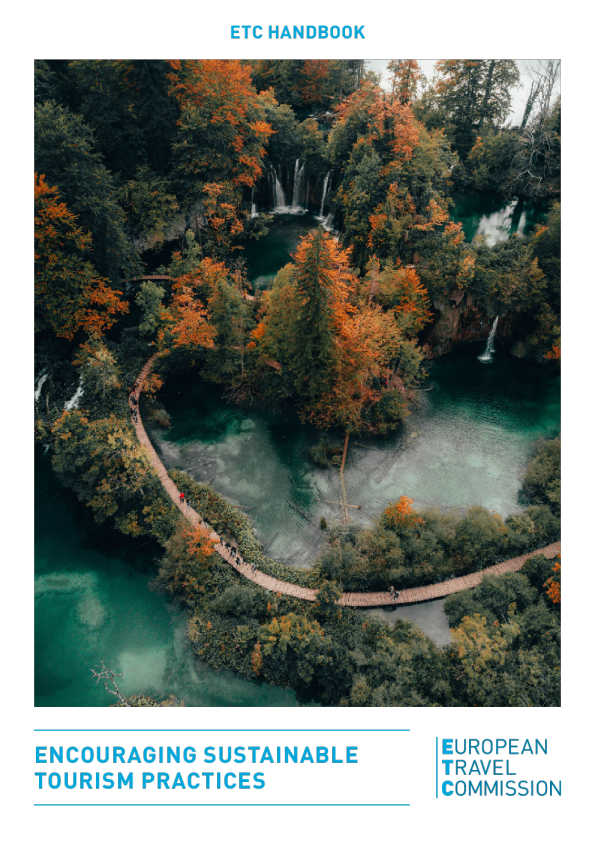
ENCOURAGING SUSTAINABLETOURISM PRACTICES ENCOURAGINGSUSTAINABLE TOURISMPRACTICES A report produced forthe European Travel Commissionby TOPOSOPHY Ltd Copyright © 2021 European Travel Commission (ETC) ENCOURAGING SUSTAINABLE TOURISM PRACTICES All rights reserved. The contents of this report may be quoted, provided the source is given accurately and clearly. Dis-tribution or reproduction in full is permitted for own or internal use only. While we encourage distribution via publiclyaccessible websites, this should be done via a link to ETC’s corporate website (www.etc-corporate.org), referring visitorsto the Research/publications section. The designations employed and the presentation of material in this publication do not imply the expression of any opinionswhatsoever on the part of the Executive Unit of the European Travel Commission. This report is based on research conducted by TOPOSOPHY Ltd (www.toposophy.com) and should be interpreted byusers according to their needs. Published by the European Travel CommissionRue du Marché aux Herbes, 61, 1000 Brussels, BelgiumWebsite:www.etc-corporate.orgEmail:info@visiteurope.com ISBN No:978-92-95107-52-6 This report was compiled and edited by:TOPOSOPHY Ltd. Cover: green-colored lakesLocation: Plitvice Lakes, CroatiaCopyright: Peter Jan Rijpkema ACKNOWLEDGEMENTS This study was prepared by Toposophy Ltd for the European Travel Commission (ETC). ETC would liketo place on record its gratitude to the ‘Toposophers’ for their creativity, commitment, and profession-alism. This report forms part of ETC’s ongoing Market Intelligence Programme and was carried out underthe supervision of Barbara Zmrzlikar, Nataša Hočevar and Maša Klemenčič (Slovenian Tourist Board),Jennifer Iduh (ETC Executive Unit), Lyublena Dimova (ETC Executive Unit), and James Arnold (ETCExecutive Unit) on behalf of ETC’s Market Intelligence Group (MIG). We thank them for their input anddedication to this project. FOREWORD The COVID-19 pandemic has left worldwide tourism facing a crisis like no other with global tourismplummeting 83% in 2020 compared to 2019. The silver lining of the global pandemic has been widelydiscussed, with common ground found regarding a stronger commitment to sustainability, a great op-portunity for destinations to reshape their tourism strategies. Consequently, it has become of utmostimportance to build a tourism sector of tomorrow that is economically, socially, and environmentallyviable in the long-term through the implementation of more sustainable and solid models. Information and knowledge sharing among destinations have become essential approaches to miti-gate the social and economic impact of the pandemic. While working together to rebuild the sector itis crucial to consider not only how to make people travel in a safer, sustainable and more responsibleway, but also to think about how the tourism sector can contribute even more positively to society andhave a reduced impact in the environment. For this reason, ETC believes that enabling a platform that brings together successful tourism cas-es from different entities and destinations worldwide that encourage sustainable tourism practicesamong consumers and the industry overall will support destinations on their path to recovery andadaptation to the new tourism ecosystem. Destinations have a crucial role to play in strengthening Europe’s position and leading the trans-formation to a post-pandemic world. To this end, ETC expects this handbook will foster knowledgesharing and act as a vehicle for National Tourism Organisations (NTOs) and Destination ManagementOrganisations (DMOs) to make their destinations more sustainable and resilient in the long-term. Thishandbook is expected to provide a platform for sharing evidence-based case studies and actions thatcould potentially be implemented by destinations to encourage both the tourism supply and demandsides to act responsibly. We believe that this handbook will support European destinations in their efforts to build a tourismsector that is more respectful of the environment and that will equally benefit local economies andcommunities in the years to come. Luís AraújoPresidentEuropean Travel Commission (ETC) TABLE OF CONTENTS ACKNOWLEDGEMENTSFOREWORDEXECUTIVE SUMMARYINTRODUCTIONCHAPTER 1 – INTRODUCTORY OVERVIEW: UNDERSTANDING SUSTAINABILITY0405091112 1.2A FRESH LOOK AT CONSUMER ATTITUDES: TO WHAT EXTENT COULDCONSUMER DEMAND PROVIDE THE INCENTIVE TO MAKE CHANGES?18 1.2.2Consumer attitudes towards sustainability in travel20 1.2.3Summary of key demand-driven sustainability trends in travel24 1.2.4How do attitudes towards sustainable travel differ by source marketand traveller segment?29 1.2.5Exploring the ‘value-action gap’: comparing consumer sentiment with actionon sustainable travel practices36 1.3.1Supply-side analysis: how seriously is the tourism industry taking sustainability?40 TABLE OF CONTENTS CHAPTER 2 – FOSTERING SUSTAINABLE TOURISM PRACTICES