您的浏览器禁用了JavaScript(一种计算机语言,用以实现您与网页的交互),请解除该禁用,或者联系我们。 [联合国]:数字教育与AI战略:突破传统数字化 - 发现报告

数字教育与AI战略:突破传统数字化

2026-02-03 - 联合国 Elaine
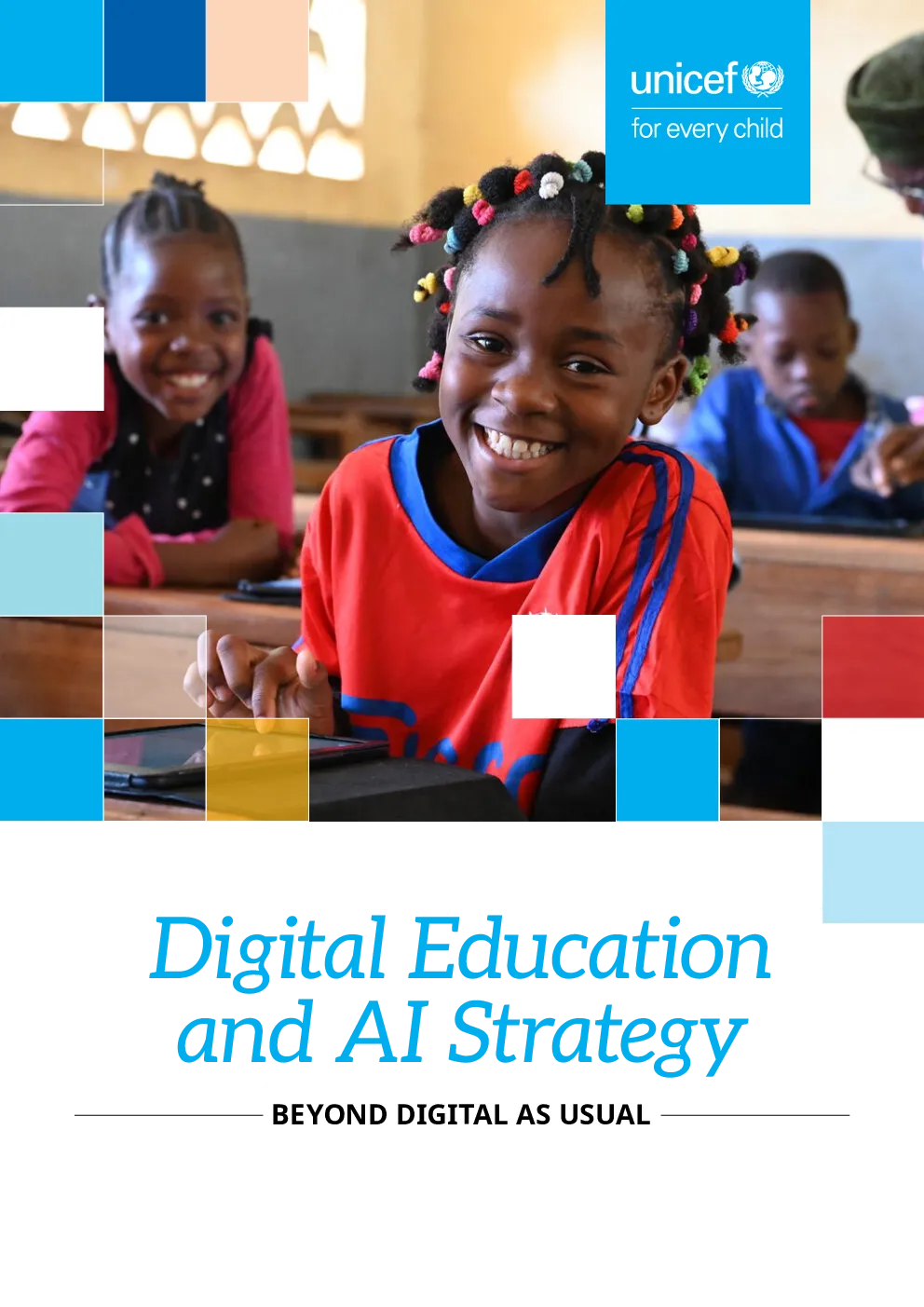
报告封面

BEYOND DIGITAL AS USUAL Contents The urgency and promise of digital transformationin education. . . . . . . . . . . . . . . . . . . . . . . . . . . . . . . . . . . . . . . . . . . . . . . . . . . . . . . . . . . . . . . . . . . . . . . . . . . . . . . . . . . . . . . . . . . . . . . . . . . . . . . . . . . . . . . . . . . . . . . . . . .4UNICEF’s vision for digital education. . . . . . . . . . . . . . . . . . . . . . . . . . . . . . . . . . . . . . . . . . . . . . . . . . . .6A model for sustainable and accelerated impact. . . . . . . . . . . . . . . . .8Five focus areas addressing critical education challenges and bottlenecks. . . . . . . . . . . . . . . . . . . . . .8 Core drivers of the Strategy. . . . . . . . . . . . . . . . . . . . . . . . . . . . . . . . . . . . . . . . . . . . . . . . . . . . . . . . . . . . . . . . . . . . . . . . . . .16 Outcomes and evidence-based approaches. . . . . . . . . . . . . . . . . . . . . . . . . . . . . . . . . . . . . . . . . . . . . . . . . . . . . . . . . . . . . . . . . . . . . . . . . .17Standards, monitoring and KPIs. . . . . . . . . . . . . . . . . . . . . . . . . . . . . . . . . . . . . . . . . . . . . . . . . . . . . . . . . . . . . . . . . . . . . . . . . . . . . . . . . . . . . . . . . . . . . . . .17Teachers as a systemic entry point. . . . . . . . . . . . . . . . . . . . . . . . . . . . . . . . . . . . . . . . . . . . . . . . . . . . . . . . . . . . . . . . . . . . . . . . . . . . . . . . . . . . . . . . . . .19 SECTION 1 The urgency and promise of Learning and skills are acquired across the life course, starting in early childhoodand through adolescence, with three key transitions identified: early learning (age5); learning the basics/foundational learning (age 10); and learning for life and A huge challenge within the education sector is the shortage of teachers: an estimated44 million additional teachers will be needed for primary and secondary education to The Urgency Alongside this, education is severely underfunded in many countries. Some factorsleading to crises are internal to the education sector, such as lack of access to quality,inclusive schools. Other factors are external to the sector, but weigh upon it, such as 272Mchildren are out Two-thirdsof 10-year-oldscannot read with We are living in an era of cutting-edge digital technologies with immense potentialto accelerate progress in addressing the multiple educational crises. Thesetechnologies offer much needed solutions in reshaping the future of learning.The world is experiencing a seismic shift, with disruptive innovations like artificialintelligence, automation, and increased access to smartphones opening up new 234Mchildren inemergencies needurgent education 44M additionalteachersare neededworldwide However, despite good intentions, education technology is too often misapplied –converting traditional materials to digital formats without addressing the deeperbarriers to learning. There is also often an expectation that distribution of devices The time is now for UNICEF to take a global leadership role within the educationcommunity, acting as a positive disruptor and championing a holistic vision fordigital transformation in education. This vision unites UNICEF’s diverse expertise,leverages its unique strengths, and capitalizes on its comparative advantages. By This document outlines UNICEF’s vision for digital education – moving beyond“digital as usual” to ensure approaches add real value by breaking down barriersand accelerating learning, rather than replicating traditional pedagogy with a digitallayer. It begins with an overview of the Strategy’s purpose, followed by detailed SECTION 2 UNICEF’s vision for digital education The purpose of the new Digital Education Strategy (henceforth, the “Strategy”)is todramatically accelerate results for learning and the global impact ofUNICEF’s work on learning gains and skills acquisition. To achieve major globalprogress, all the digital education work of UNICEF will move to a focus onimprovinglearning outcomes through evidence-based approaches, in alignment with The Strategy is centred on the use of digital to promote learning and skills, buildingon the latest science of teaching and learning, and facilitating effective learning fromanywhere and everywhere. There are five priority areas within the Strategy and thesewill be the focus of UNICEF’s work in digital education:empowering teachers and UNICEF’s vision is to transform education by having scaled impact in these fivepriority areas with a strong focus on measurable impact. Billions of dollars in annualglobal investments in digital transformation are not yet having a meaningful impact The Strategy will be implemented in a manner that builds on UNICEF’s strengths,the proven capacity for implementation and system strengthening. UNICEF willshift from building and leveraging internally sourced and developed products toidentifying and leveraging the best products for learning ou