罗马尼亚的艺术与残疾:从零散的实践到国家框架
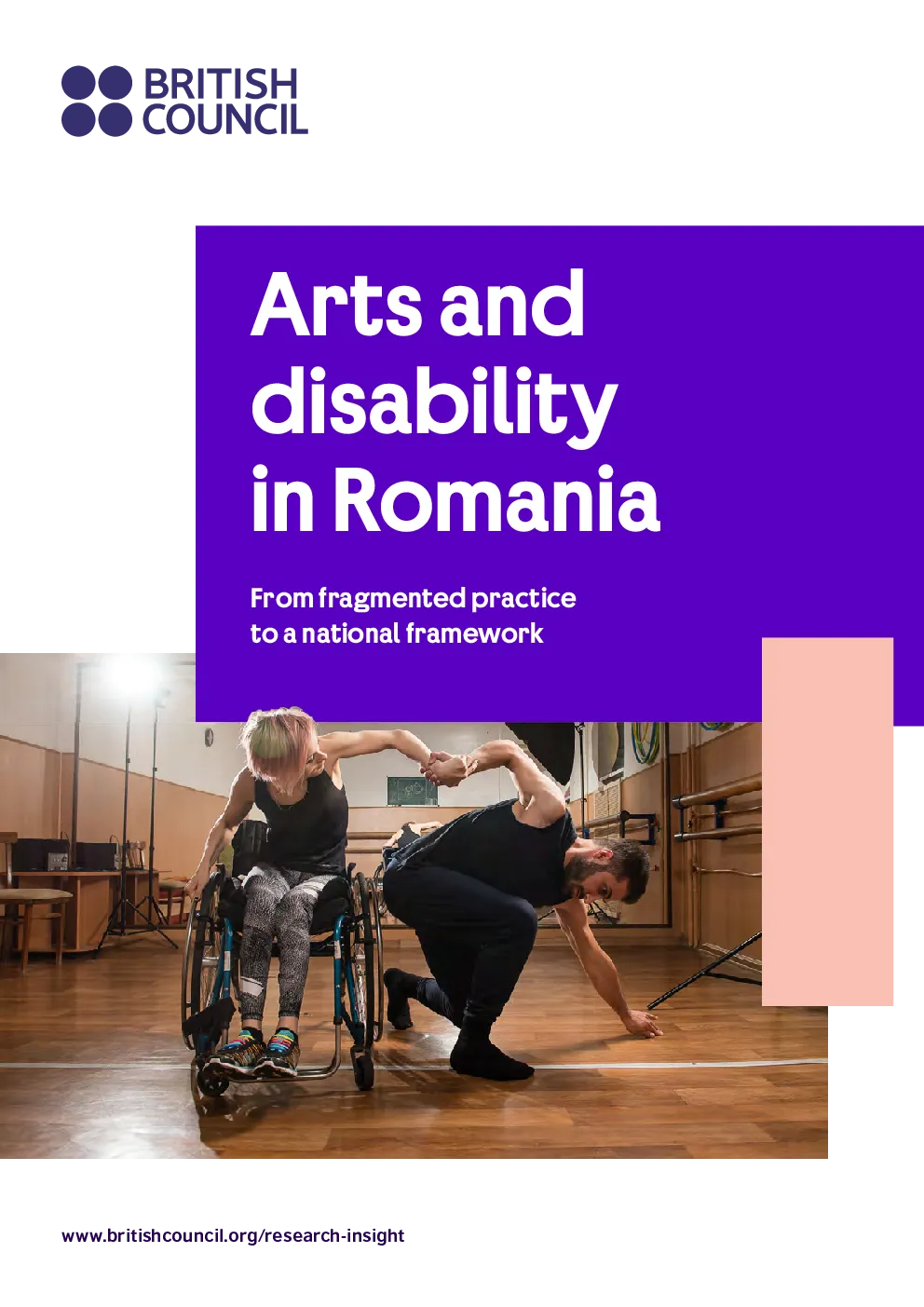
From fragmented practice Copyright © British Council 2026, licensed under aCreative Commons AttributionNon-Commercial 4.0 International Licence Macrinici, O., & Meth, J. (2026).Arts and disability inRomania. British Council. https://doi.org/10.57884/728E-8X32 Acknowledgements Report authors Olga Macrinici Disabled playwright, theatre director, dramaturg and drag kingPhD student, Camberwell, Chelsea and Wimbledon College of Arts, Jonathan Meth Founder and Director, The Fence international theatre networkLecturer in Arts Management and Cultural Policy, Goldsmiths, University of LondonExpert Adviser, Ambitious about Autism, the national UK charity standing with Romanian experts in the field Ruxandra Mateescu President/Founder Supereroi printre noiSpecialist in cultural accessibility and social inclusion Iris Popescu Founder and President of AMAISPh.D. Architect, specialised in inclusive design and accessibility British Council Tamina BojoancăArts Manager, British Council RomaniaIlinca CristianProject Co-ordinator, British Council RomaniaAbdi Hassan Design Andrei Tache, Fabrica de Design Proofreading Laurence Mccarthy, Teacher, British Council Translation Daniela Radler– Romanian version Foreword There are people for whom contact with artistic creation can be analternative way of perceiving the world and being present within it. Andyet, for many of them, the path to art remains difficult or even impossible.Not because of a lack of interest, talent, or desire, but because ofobstacles that are often invisible to others, yet extremely concrete for The way a society structures access to art and culture says a great dealabout its true values. It reveals how willing it is to create spaces forgenuine encounters, rather than merely proclaim generous principles.It shows whether diversity is truly embraced or remains an abstract Accessibility does not mean only technical adaptations or isolatedsolutions. Above all, it means people and relationships. It meanshow someone is welcomed, whether they feel genuinely included ormerely tolerated, whether their voice is heard or fades away like an Today, Romania has a solid legislative framework regarding the rightsof persons with disabilities, and the commitments undertaken at bothnational and international levels are clear. Nevertheless, everydayexperience shows that the application of these principles is uneven, and of specific expertise within cultural institutions, and a public discoursethat oscillates between compassion and avoidance. Under these This study is grounded in the conviction that access to art and culturefor all is, first and foremost, a fundamental right and a prerequisite fora society that values competencies rather than differences. Peoplewith disabilities are not merely beneficiaries of inclusion policies. They At the same time, accessibility cannot be built unilaterally. Culturalinstitutions have the responsibility to open their doors, adapt theirpractices, and invest in long-term skills and strategies. But this processequally requires dialogue and the active involvement of people with This study does not propose quick fixes or universal recipes. It bringstogether voices, experiences, and diverse perspectives, all of whichare necessary to understand the complexity of the field. Between thelegislative framework and lived reality, between good intentions and Above all, this report is an invitation addressed to authorities, culturalinstitutions, artists, educators, funders, civic organizations, and thegeneral public to view accessibility not as a formal obligation, but as anopportunity to enrich the cultural life of all. An invitation to move from There are already people who care. There are initiatives that work. There isa sincere desire to do things better. This study aims to bring them together,to offer a common language and a solid starting point for the next steps – Adriana-Elena BorunăAdvisor Executive This scoping study examines the current landscape ofarts and disability in Romania and sets out an evidence-based foundation for strengtheningcultural participation, representation, and professional pathwaysfor disabled people. Commissioned by the British Council, the studydraws on national legislation, international frameworks, and qualitativeresearch undertaken with both disabled and non-disabled artists, cultural The study seeks to understand how disabled people currently experiencecultural life in Romania, both as audiences and as creators, and to identifythe structural barriers and enabling conditions that shape participation.Three core questions run throughout the report. The first considers The report is organised across ten chapters, moving from national contextand public discourse to sector-specific analysis, and concluding witha proposedNational Arts and Disability Framework. Each chapter Context and methodology Romania has a well-established legal framework for disability rights,including constitutional pr