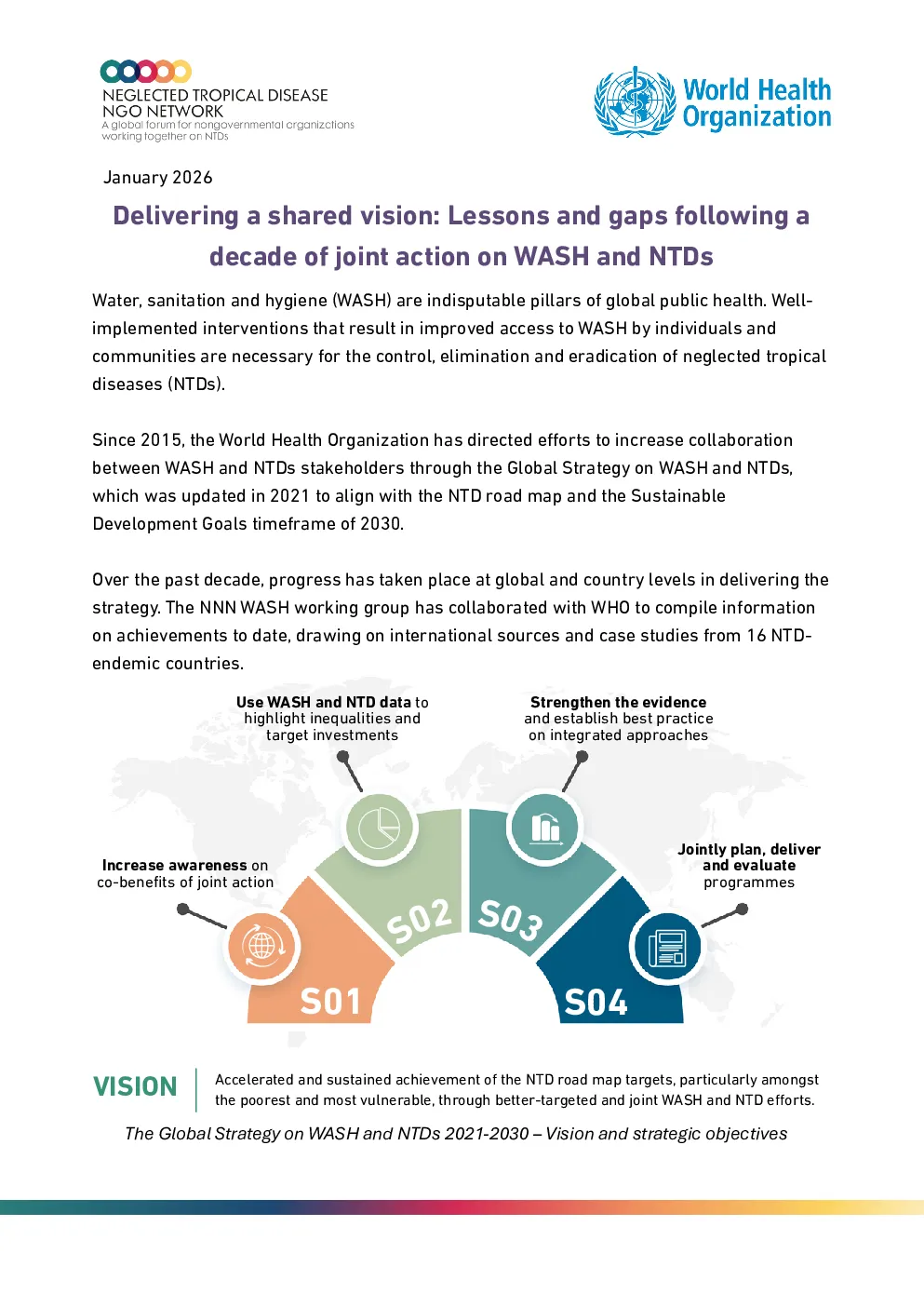
Delivering a shared vision: Lessons and gaps following adecade of joint action on WASH and NTDs Water, sanitation and hygiene (WASH) are indisputable pillars of global public health. Well-implemented interventions that result in improved access to WASH by individuals andcommunities are necessary for the control, elimination and eradication of neglected tropical Since 2015, the World Health Organization has directed efforts to increase collaborationbetween WASH and NTDs stakeholders through the Global Strategy on WASH and NTDs,which was updated in 2021 to align with the NTD road map and the Sustainable Over the past decade, progress has taken place at global and country levels in delivering thestrategy. The NNN WASH working group has collaborated with WHO to compile information Increase awareness of the co-benefits of joint action and engagementon WASH and NTDs by sharing experiences and evidence throughout S01 To bring sectors together, countries convened cross-sector high-level political meetings andensured that the NTD agenda was included in national WASH celebrations such as WorldWater Day, Global Handwashing Day and World Toilet Day. Alongside these public events, Case studies: report in2017, case study series onWHO website Two regional training series(East Africa and Latin Open WHO and WHOAcademy course on WASHand NTDs Use WASH data in NTD programmes and NTD data in WASHprogrammes to highlight inequalities, target investment, and track S02 Several countries have created formal WASH/NTD data sharing mechanisms, with threecountries (Ethiopia, Kenya and Nigeria) developing data merge platforms. Some countrieshave created district-level dashboards or maps overlaying district level WASH access anddisease distribution. WASH data from the WHO UNICEF Joint Monitoring Programme was Building on available information, WASH-NTD data is increasingly used in joint planning andresource allocation processes. Data on trachoma, soil transmitted helminths andschistosomiasis has been used to prioritise WASH investment at sub-national level in Strengthen evidence and establish best practices on integratedapproaches to NTDs based on robust documentation and analysis and Significant efforts have been made to embed collaboration and integration into nationalguidelines and strategies. National frameworks on WASH and NTDs have been adopted byseveral countries, with Ethiopia publishing its framework in 2019, later also publishing adistrict level WASH and NTDs training toolkit. Uganda, Kenya and Nigeria have also Since 2015, a total of 130articles on WASH and NTDshave been published inpeer-reviewed journals. the issue, while the rest were country specific. With almost 30 articles, Ethiopia has seenthe highest number of peer-reviewed articles on the topic, followed by Kenya and Timor Jointly plan, deliver and evaluate programmes to enhance theaccountability, sustainability and equity of programme impact. S04 Several countries have established national coordination platforms, with structures andprocesses defined by the national institutional landscape. These include technical workinggroups and joint task forces, and sub-national (state, region or county) coordination forums.In countries such as Gambia and Namibia, such coordination has been brought undernational One Health platforms as part of broader cross-sector coordination efforts. Where Remaining gaps and priorities towards 2030