您的浏览器禁用了JavaScript(一种计算机语言,用以实现您与网页的交互),请解除该禁用,或者联系我们。[印度品牌价值基金会]:塑造印度的增长:印度沙龙景观 - 发现报告

塑造印度的增长:印度沙龙景观

AI智能总结
查看更多
塑造印度的增长:印度沙龙景观

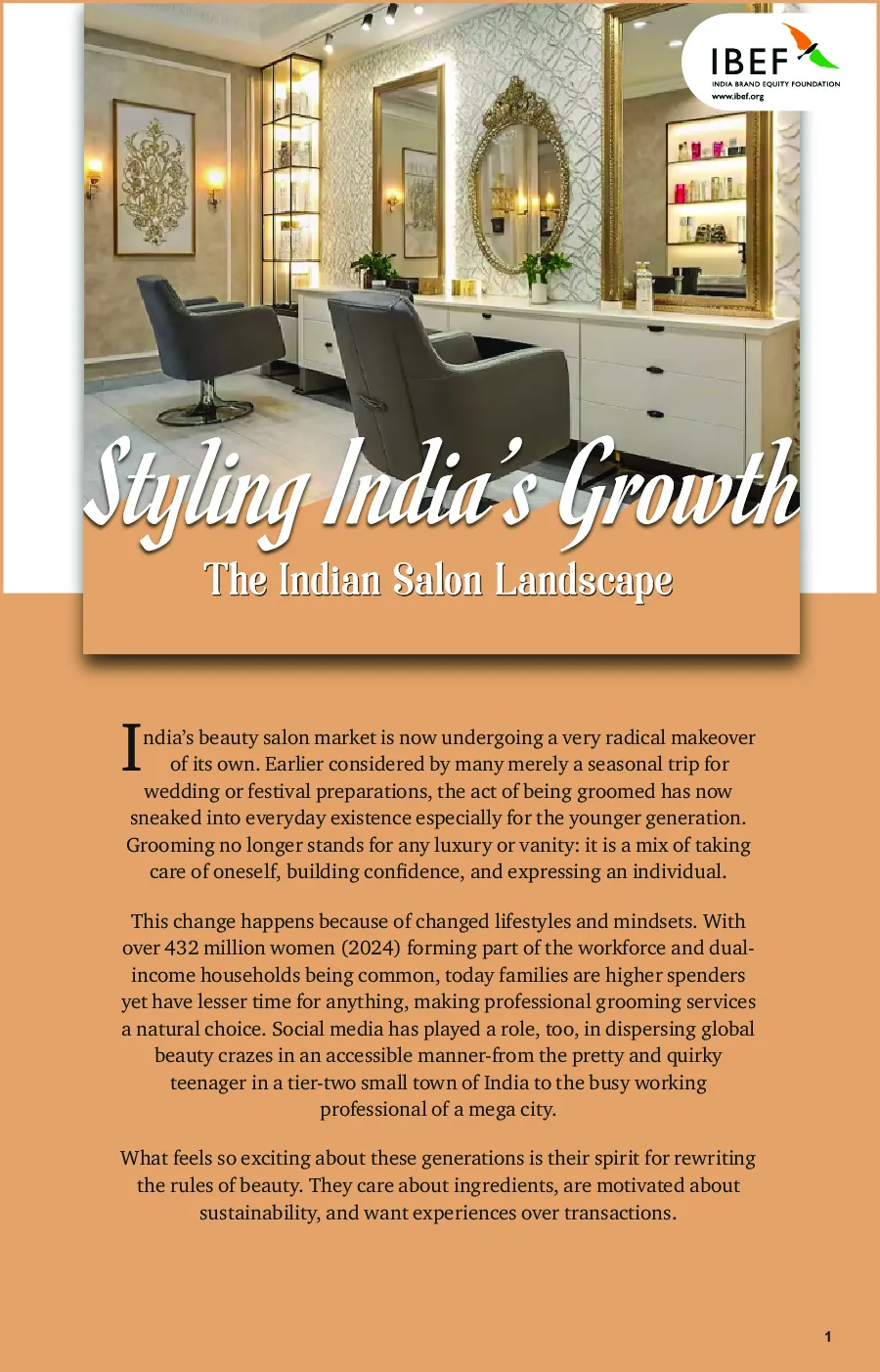
The Indian Salon LandscapeThe Indian Salon LandscapeThe Indian Salon LandscapeThe Indian Salon Landscape ndia’s beauty salon market is now undergoing a very radical makeoverIof its own. Earlier considered by many merely a seasonal trip for wedding or festival preparations, the act of being groomed has nowsneaked into everyday existence especially for the younger generation.Grooming no longer stands for any luxury or vanity: it is a mix of takingcare of oneself, building confidence, and expressing an individual. This change happens because of changed lifestyles and mindsets. Withover 432 million women (2024) forming part of the workforce and dual-income households being common, today families are higher spendersyet have lesser time for anything, making professional grooming servicesa natural choice. Social media has played a role, too, in dispersing global What feels so exciting about these generations is their spirit for rewritingthe rules of beauty. They care about ingredients, are motivated about They don't just ask for a haircut anymore;they're asking for clean beauty products,cruelty-freetreatments,inclusivity,andtech-leveltreatments for skin analysisp ower e db y A I a nd p er s on a l i s e d 190 cities with over 450 outlets. The very technology that has brought all ofthese processes together is the beauty of itall.From digital appointments toconsultations to visibility on social media,salonsare connecting with clients well And it’s not just the big cities driving thisgrowth. Tier-two and tier-three cities arebuzzingwith demand,thanks to risingdisposableincomes and aspirations tomatch.Many local entrepreneurs,oftenwomen trained through beauty education SECTOR OVERVIEW India’sbeauty salon sector is booming,drivenby rising incomes,urbanisationandchanging lifestyles.The broaderbeauty and personal care (BPC) market isprojected to reach about Rs. 2,97,534 crore 22.99 billion)by 2033(CAGR~7.9%).Thesefigures underscore the market’srapidexpansion,with salons no longerbeingrare indulgences but part ofeverydayconsumer habits.Industryanalysts note that India is experiencing abeautyrevolution.Rising disposable Movement to cities and exposure to globalfashion and media have altered attitudestoward beauty. NCERT analysis confirmsthat urban migration and advertising havemadeIndians more eager to lookpresentable. Salons have expanded frombasichaircuts to full-fledged beauty Several key factors are fuelling this surgeinconsumer interest in beauty and •C h a n g i n gd e m o g r a p h i c s a n dworkforce:With roughly 432 millionIndian women employed as of 2024, morehouseholdshave dual incomes.Surveysindicate about 240million people in Indianow actively engage in personal grooming •Rising affluence:Only about 4% ofIndia’sworking-age population(roughly60 million people) currently earn morethan Rs. 8,73,059 (US$ 10,000) per year.However, this relatively affluent cohort isgrowing at ~12 % annually. Projectionss u g g e s t“ A f fl ue nt I nd i a ”w i l l h i t Premiumisation and niche services:India’syounger generations(millennials andGen-Z)are aspirational spenders.There is a notable shift from mass-marketp r o d u c t st o w a r d p r e m i u m ,dermocosmeticand functional beautybrands. Urban salons now offer high-endfacials,anti-ageing treatments and evendermatology-backedservices.Specialtysegments–notably bridal makeup are intersectionof several powerful trends.Consumers now view grooming as part ofdailywellness,supported by risingpurchasingpower,urban lifestyles and E V O L U T I O NO F T H E S A L O N TheIndian salon industry has evolveddramaticallyfrom its traditional roots.Traditional salons – originally known asbeauty parlours offered basic services suchashaircuts,shampooing,nail care andsimple skincare. These were often small,family-run shops. Over time, larger beautycentresand unisex salons emerged to •Digitaland cultural influence: Digital media and online commerce arereshapingconsumer behaviour.Socialinfluencers and celebrities on platformslikeInstagram are influencing beautytrends. Moreover, stereotypes around malegrooming are changing. Men’s grooming,oncean under-penetrated category,isgrowing fast – startups such as ‘Bombay In comparison, contemporary salons areverytechnologically advanced andexperienceoriented.The present-daychains and boutiques use digital tools atall customer touchpoints. An example is models have accelerated this spread: bystandardising services and training, brandscan replicate their business quickly in newlocations.Digital marketing,often vialocal social media influencers, helps these websites, without calling or visiting them.Paymenthas also become digital withtransactions being contactless and walletbased.The back-end functions are runt h r o u g hc u s t o m e r r e l a t i o n s h i p Whilehome-service salons(beauticiansvisiting clients’ homes) are an emergingtrend in India, our sources focus on thewider industry, so the exact impact of thismodel is