全球金属与采矿行业2026年展望:锂市情绪正缓慢改善……但2026年并非如此
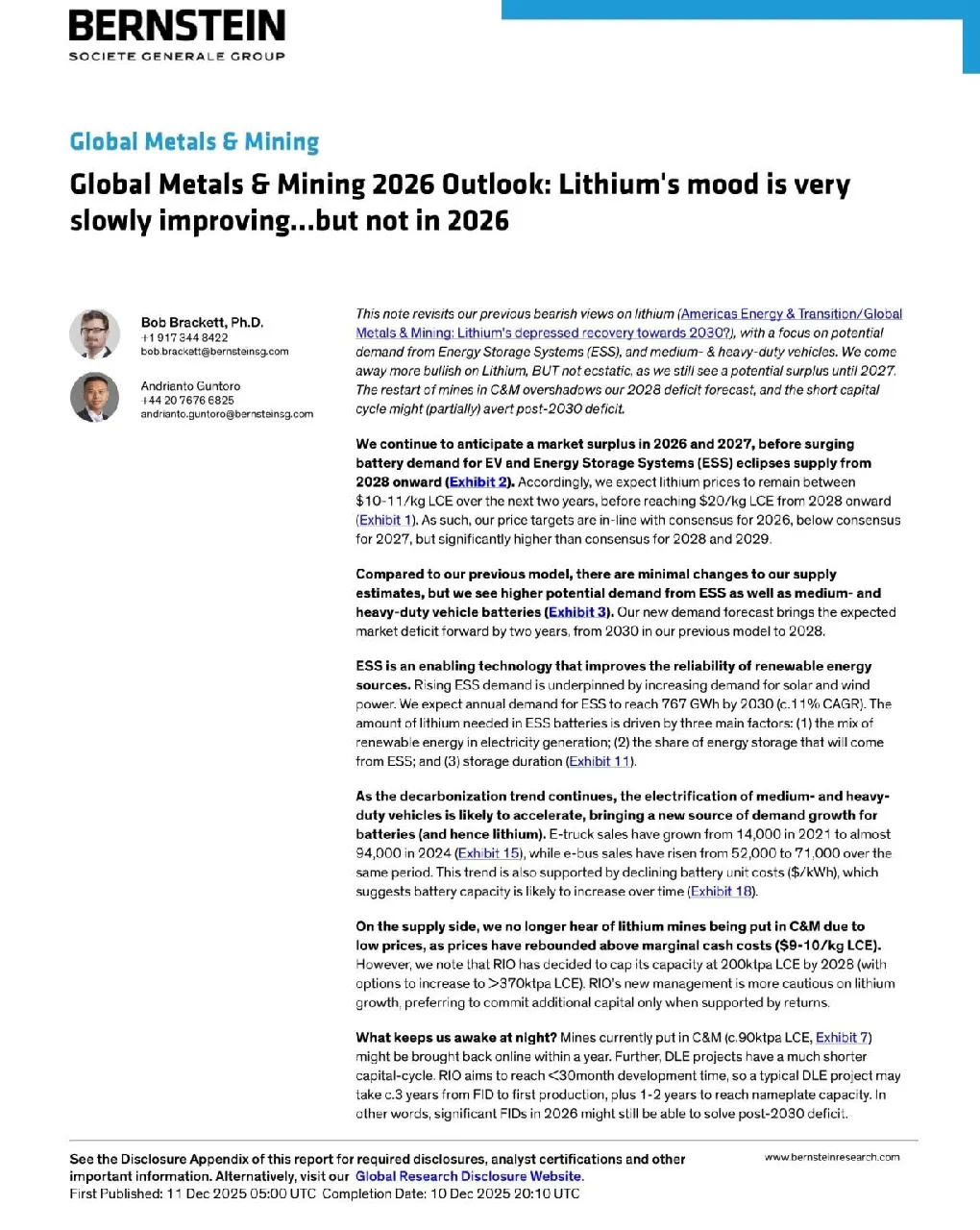
Global Metals&Mining2026Outlook:Lithium'smood isveryslowlyimproving...butnotin2026 This note revisits our previous bearish views on ithium (Americas Energy & Transition/GlobalMetals & Mining: Lithium's depressed recovery.towards 20302J, with a focus on potentialdemand from Energy Sforage Systems (ESS), and medium- & heavy-duty vehicles. We comeaway more bulish on Lithium, BUT nof ecstatic, as we stil see a pofentia/ surplus untir 2027.The restarf of mines in C&M overshadows our 2028 deficit forecast, and the shorf capitacycle might (partialy) averf posf-2030 deficit. Bob Brackett, Ph.D.+1 917 344 8422 Andrianto Guntoro+44 20 7676 6825andrianto.quntorogbernsteinsg.com We continue to anticipate a market surplus in 2026 and 2027, before surgingbattery demand for EV and Energy Storage Systems (ESS) eclipses supply from2028 onward (Exhibit 2). Accordingly, we expect lithium prices to remain between$10-11/kg LCE over the next two years, before reaching $20/kg LCE from 2028 onward(Exhibit 1). As such, our price targets are in-line with consensus for 2026, below consensusfor 2027, but significantly higher than consensus for 2028 and 2029. Compared to our previous model, there are minimal changes to our supplyestimates, but we see higher potential demand from ESS as well as medium- andheavy-duty vehicle batteries (Exhibit 3). Our new demand forecast brings the expectedmarket deficit forward by two years, from 2030 in our previous model to 2028. ESS is an enabling technology that improves the reliability of renewable energysources, Rising ESS demand is underpinned by increasing demand for solar and windpower. We expect annual demand for ESS to reach 767 GWh by 2030 (c.11% CAGR). Theamount oflithium needed in ESS betteries is driven by three main factors: (1) the mix ofrenewable energy in electricity generation; (2) the share of energy storage that willcomefrom ESS; and (3) storage duration (Exhibit 11). As the decarbonization trend continues, the electrification of medium-and heavyduty vehicles is likely to accelerate, bringing a new source of demand growth forbatteries (and hence lithium). E-truck sales have grown from 14,000 in 2021 to almost94,000 in 2024 (Exhibit 15), while e-bus sales have risen from 52,000 to 71,000 over thesame period. This trend is also supported by declining battery unit costs ($/kwh), whichsuggests battery capacity is likely to increase over time (Exhibit 18). On the supply side, we no longer hear of lithium mines being put in C&M due tolow prices, as prices have rebounded above marginal cash costs ($9-10/kg LCE).However, we note that RIO has decided to cap its capacity at 200ktpa LCE by 2028 (withoptions to increase to >370ktpa LCE), RIO's new management is more cautious on lithiumgrowth, preferring to commit additional capital only when supported by returns. What keeps us awake at night? Mines currently put in C&M (c.90ktpa LCE, Exhibit 7)might be brought back online within a year. Further, DLE projects have a much shortercapital-cycle. RIO aims to reach <30month development time, so a typical DLE project maytake c.3 years from FID to first production, plus 1-2 years to reach nameplate capacity. Inother words, significant FIDs in 2026 might stll be able to solve post-2030 deficit. BERNSTEINTICKERTABLE INVESTMENTIMPLICATIONS In our coverage, RIO (Outperform) has significant exposure to lithium while XOM (Outperform) and CVX (Market-perform) haveearly stage investments in lithium. Table Of Contents A Brief Summary of Our Lithium OutlooktWhat's New..11What's New - Adding Demand from Energy Storage Systems (ESS)11What's New - Adding Demand from Medium- and Heavy-Duty Vehicle (Bus & Trucks) & Micro-mobility..18What's New - Adding Supply from Oil & Gas Companies.22Full Details.25The Supply and Demand Cadence.25Supply..28Projects not Captured in Our Model32Demand..33Market Balance..36Pricing Lithium..37Spodumene Pricing44Rio's Lithium *Pause* Signals Cautious Tone Towards Supply47Appendix.50Lithium Geological Abundance.50Lithium Walls of Supply52Two Ways that Cost Curves can Fool You in Lithium.58 ABRIEFSUMMARYOFOURLITHIUMOUTLOOK Our 2026 price estimate is in-line with consensus estimates, but our 2027 estimates is below consensus estimates aswe continue to foresee market surplus until 2027. However, an inflection is coming (a year faster than we previously thought) and our 2028 and 2029 estimates are much higherthan consensus as we see potential deficit due to potentially higher demand for ESS battery, and medium- and heavy-dutyvehicle battery (Exhibit 1). Our price estimates are driven by two key factors: (1) our expectation that the lithium market will remain well supplied through Our current supply/demand estimate is more bullish than our previous outlook, We don't see material changes to supplyuntil 2030, even after we introduce increased supply from oilfield brine projects, such as ExoxonMobi’s and Equinor's projectsin Smackover, as well as greenfield projects like LAC's