世界卫生组织城市治理促进健康和福祉倡议
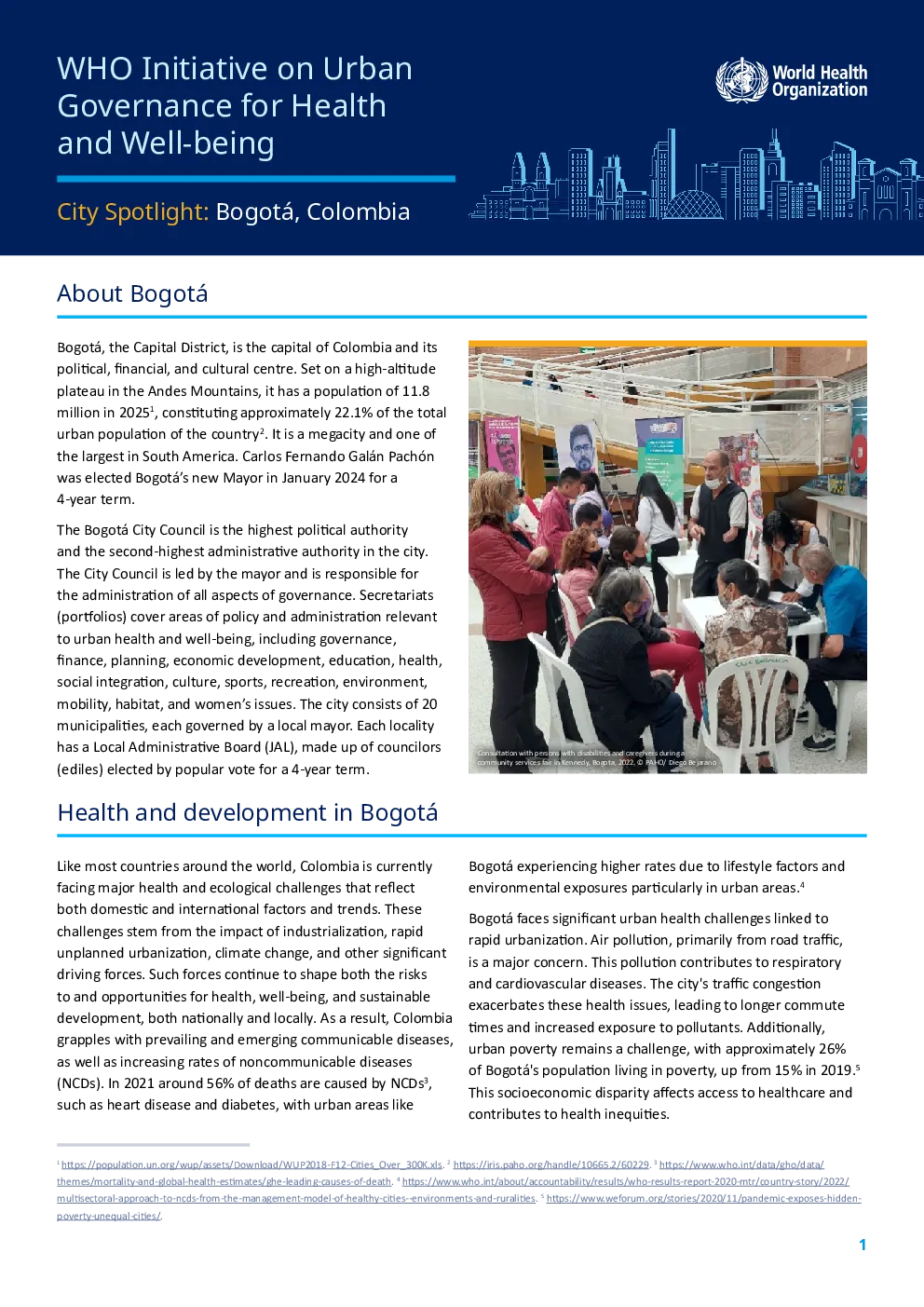
City Spotlight: Bogotá, Colombia About Bogotá Bogotá, the Capital District, is the capital of Colombia and itspolitical, financial, and cultural centre. Set on a high-altitudeplateau in the Andes Mountains, it has a population of 11.8million in 20251, constituting approximately 22.1% of the total The Bogotá City Council is the highest political authorityand the second-highest administrative authority in the city.The City Council is led by the mayor and is responsible forthe administration of all aspects of governance. Secretariats finance, planning, economic development, education, health,social integration, culture, sports, recreation, environment,mobility, habitat, and women’s issues. The city consists of 20municipalities, each governed by a local mayor. Each locality Health and development in Bogotá Like most countries around the world, Colombia is currentlyfacing major health and ecological challenges that reflectboth domestic and international factors and trends. Thesechallenges stem from the impact of industrialization, rapidunplanned urbanization, climate change, and other significantdriving forces. Such forces continue to shape both the risksto and opportunities for health, well-being, and sustainable Bogotá experiencing higher rates due to lifestyle factors andenvironmental exposures particularly in urban areas.4 Bogotá faces significant urban health challenges linked torapid urbanization. Air pollution, primarily from road traffic,is a major concern. This pollution contributes to respiratoryand cardiovascular diseases. The city's traffic congestionexacerbates these health issues, leading to longer commutetimes and increased exposure to pollutants. Additionally, Phase 1 (2020–2024) Key Achievements 1Mobilized USD 1 million from local governmentbudget for the construction of the Interactive Well- Strengthened social and community participationin the local Operational Committee on Womenand Gender Equity in the locality of Bosa, through 2Improved services from the CIBILK as a resultof strengthened participative decision-making Strengthened the Intersectoral District HealthCommittee (now elevated to a Commission on the6 3Empowered representatives of the Local DisabilitiesCouncil, people living with disabilities and their In November 2024, Bogotá formally joined theHealthy Municipalities, Cities, and CommunitiesMovement (HMCC) in the Region of the Americas, Secured commitment at the highest level togovernance for health and well-being and transition4 Activities Capacity building Leadership Research & evidence - Two Urbanlead cohort trainingswith over 30 sessions conducted inthe localities of Kennedy and Bosa.- Over 80 participants from 12civil society organizations and 5government institutions attendedthe Urbanlead workshops.- Four workshops held to strengthencapacities of urban health leaders - Participation in 16 international andregional cities exchange platforms. - Case study undertaken onthe Intersectoral DistrictHealth Committee to improve - Four local government leadersreceived training on Inclusive CitiesLeadership, Monitoring SocialDeterminants of Health and HealthInequalities, Addressing HealthInequities through intersectoralaction and Measuring HealthInequalities and Inequities. - Mapping of 76 governance bodies,leading to a refined list of 52intersectoral platforms for health. - Legislation review of local healthcompetencies undertaken. - Prioritization tool with equity focusdeveloped. Initiative progress In the Region of the Americas (AMR), there is a rich tradition ofsocial participation and established intersectoral mechanisms. the prevention of gender-based violence and care of victimswas adapted to the local context to strengthen local capacity. The second front was at a city level, where efforts focusedon strengthening the District Intersectoral Health Committeewhich has since been elevated to theDistrict IntersectoralCommission on the Social Determinants of Health and Well-being. The Commission aims to consolidate a governancemechanism capable of making more effective intersectoral The first was at the local level, in two areas of the city—Bosaand Kennedy—where it promoted social participation and thestrengthening of intersectoral action. It aimed to incorporate avision of participative governance, collective health, and health In both localities, multisectoral teams, having participatedin theWHO Urbanlead programme6accelerated actions to The Initiative gained further momentum with the endorsementof Bogotá’s former Mayor, Claudia López, who hosted the 2023Regional Wellness Week and committed Bogotá to the HealthyMunicipalities, Cities, and Communities Movement (HMCC) In Kennedy, partnership contributed to the local government’sapproval and allocation of budgetary resources for theestablishment of an Interactive Well-being Center for Peoplewith Disabilities. This milestone showcased the transformative However, the path forward is not without challen