AI智能总结
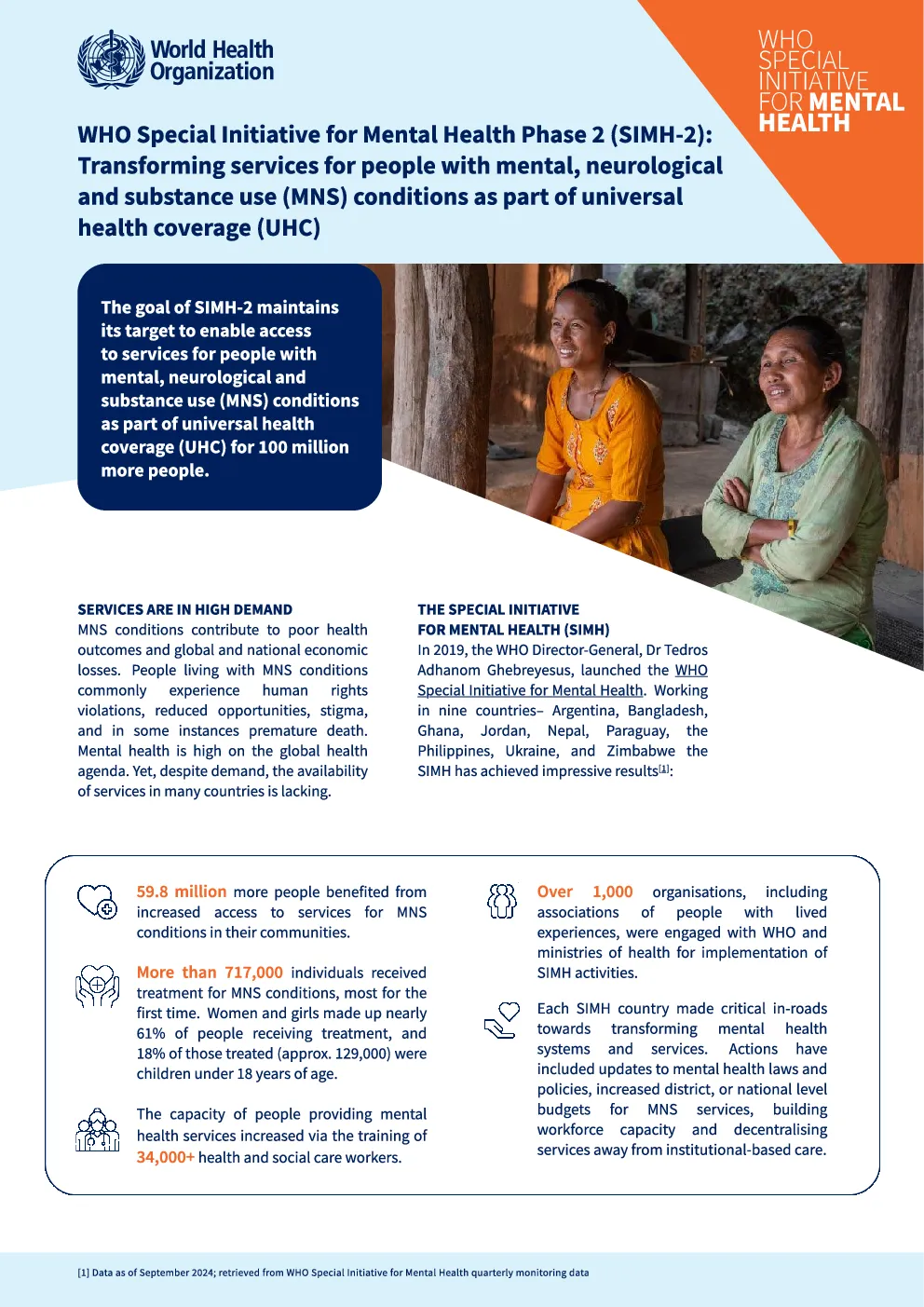
WHO Special Initiative for Mental Health Phase 2 (SIMH-2):Transforming services for people with mental, neurologicaland substance use (MNS) conditions as part of universalhealth coverage (UHC) ThegoalofSIMH-2maintainsitstargettoenableaccesstoservicesforpeoplewithmental,neurologicalandsubstanceuse(MNS)conditionsaspartofuniversalhealthcoverage(UHC)for100millionmorepeople. Services are in high demand MNS conditions contribute to poor health The Special Initiativefor Mental Health (SIMH) In 2019, the WHO Director-General, Dr Tedros outcomes and global and national economiclosses.People living with MNS conditionscommonlyexperiencehumanrightsviolations,reduced opportunities,stigma,andinsomeinstancesprematuredeath.Mental health is high on the global healthagenda. Yet, despite demand, the availabilityof services in many countries is lacking. Adhanom Ghebreyesus, launched the WHOSpecial Initiative for Mental Health. Workingin nine countries– Argentina, Bangladesh,Ghana,Jordan,Nepal,Paraguay,thePhilippines,Ukraine,and Zimbabwe theSIMH has achieved impressive results[1]: Over1,000organisations,includingassociationsofpeoplewithlivedexperiences,were engagedwithWHOandministries of health for implementation ofSIMHactivities. 59.8 millionmore people benefited fromincreasedaccess to services for MNSconditions in their communities. More than 717,000individuals receivedtreatment for MNS conditions,most for thefirst time.Women andgirls made up nearly61%of people receivingtreatment,and18%of those treated(approx.129,000)werechildren under18years of age. Each SIMHcountrymade critical in-roadstowards transforming mental healthsystems and services.Actions haveincluded updates to mental health laws andpolicies,increased district,or national levelbudgets for MNS services,buildingworkforce capacity and decentralisingservices awayfrom institutional-based care. The capacityof people providingmentalhealth services increased via the trainingofhealth and social careworkers.34,000+ Building on achievements for a second phase of WHOs SIMH (“SIMH-2”) Based on successes, learnings and experiences of WHO’s original SIMH, the programme will expand to “SIMH-2”, with some strategic operational shifts, which will: Retain the focus on transforming systems for MNSservices as part of universal health coverageContribute to WHOsGPW14goal and targets toPROVIDE increased access to services, and itsmentalhealth specific indicator:“Servicecoveragefor people with mental health andneurological conditions”.45 Supportthe transitionof 9 existing countriestowards local ownership and governanceExpand opportunities for12 additional countriestobenefit from short-term(~2-years)targetedinvestments to support systems-level actionsExpand opportunities for3additional countries tobenefit from longer-term (~3-4years) intensivesupport123 SIMH-2 Transformation Strategy Shown inFigure1, all actions for SIMH-2 target the core need for community-based services development forpeople living with MNS conditions.Transformation andexpanded availability of services will be driven byvariousintervention strategies,informed by globalrecommendationsand broader health systemsstrengtheningapproaches(e.g.,financing,policy,leadership, workforce).Each country will base theiractions on their unique priorities and context. Community-based services for peoplewith mental, neurological andsubstance use conditions refers tocarethat is provided outside of a psychiatrichospital.This includes services availablethrough primary health care, specifichealth programs (for example HIV clinics),district or regional general hospitals aswell as relevant social services.It alsoincludes a range of other communityservices, such as community mentalhealth centres and teams, psychosocialrehabilitation programmes and small-scale residential facilities, among others(World Mental Health Report, p.189). Supportingcountries with lower and higherinvestments (see Figure 2) in the SIMH-2 programmewill allow WHO to engage with more countries andexpand its influence towards global goals. In doing so,every SIMH-2 country will contribute to the SIMH-2 goalimpact indicator - to enable access to services forpeople with mental, neurological and substance use(MNS) conditions for 100 million more people. It willsubsequently support targets set out in WHOs GPW14,thesustainable development goals and theComprehensive Mental Health Action Plan (2013-2030),amongst other World Health Assembly mandates. The transformation of services for people with MNSconditions must be anchored by a strong health systemthat supports the availability, demand, and use ofthose services. This is indicated by the different workcountries may undertake during SIMH-2 programme,with examples provided in Table 1. WHO plans to work in countries where specific requestsfor SIMH-2 work have been made; and priority needshave been identified through WHOs Regional Offices;andexpanding to new countries when and as funding isgradually re