您的浏览器禁用了JavaScript(一种计算机语言,用以实现您与网页的交互),请解除该禁用,或者联系我们。[Ricardo]:发展金融机构空气质量工具包:将清洁空气融入多部门投资的实用指南 - 发现报告

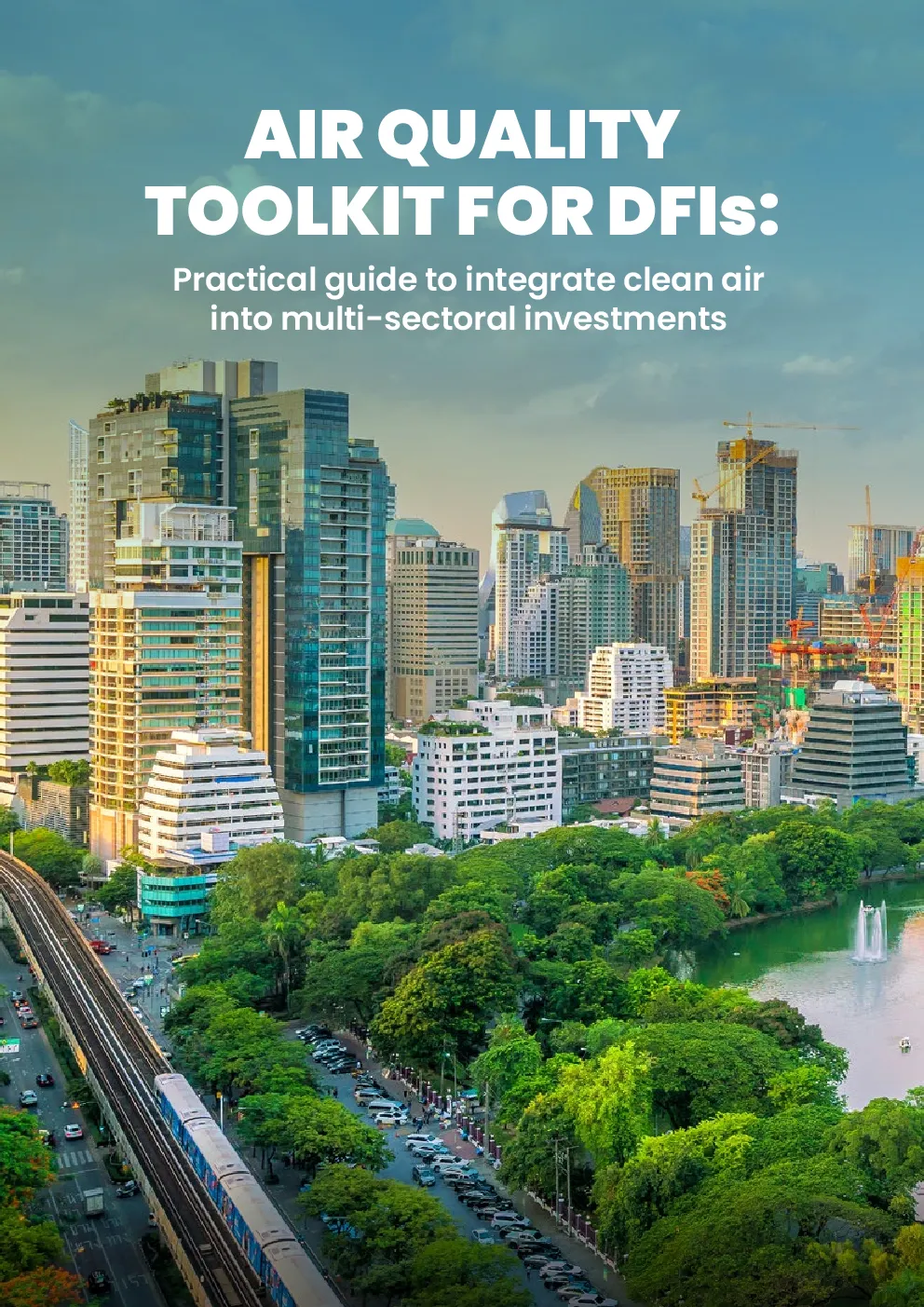
发展金融机构空气质量工具包:将清洁空气融入多部门投资的实用指南

公用事业2025-12-02-RicardoM***
AI智能总结
查看更多
发展金融机构空气质量工具包:将清洁空气融入多部门投资的实用指南

Practical guide to integrate clean airinto multi-sectoral investments Authors: Charlotte Day, Eleri Paterson Hughes, Joanne Green, Mark Broomfield, Tom Buckland (Ricardo) Contributors: Glynda Bathan-Baterina, Aimee Cabalo, Dang Espita-Casanova, Everlyn Tamayo (Clean Air Asia) Design and layout:Patrick Baker, Julie Cariño (Clean Air Asia), Pichie Basmayor Ricardo is a global engineering, environmental andstrategic consultancy, working with governments,cities and businesses around the world to deliverimprovements in air quality where it matters most. Forover 70 years, Ricardo have delivered market-leadingmeasurement, modelling, and emissions inventorycompilation and reporting for air quality pollutants andgreenhouse gases. Ricardo delivers projects assessingthe costs, benefits, health, and distributional impactsassociated with air quality policies and programs,supporting MDBs, BDs and NGOs to deliver air qualityprograms around the world. www.ricardo.com Clean Air Asia is an international non-governmentalorganization leading the regional mission for better airquality, and healthier, more livable cities across Asia. Itsmission is to reduce air pollution and greenhouse gasemissions in Asia and contribute to the development ofa more sustainable, equitable and healthier region. www.cleanairasia.org Supported by: Clean Air Fund is a global philanthropic organizationthat works with governments, funders, businessesand campaigners to create a future where everyonebreathes clean air. We fund and partner withorganizations across the globe that promote air qualitydata, build public demand for clean air and drive action.We also influence and support decision makers to acton air pollution. www.cleanairfund.org Many of the photos in this report capture real-life people and places by local photographers, andare available to use for free at climatevisuals.org p.60 - Gulshan Khan / Climate Visualsp.67 - Mary Turner / Climate Visuals p.15 - Aji Styawan / Climate Visualsp.24 - Gulshan Khan / Climate Visualsp.44 - Andy - stock.adobe.com ACKNOWLEDGEMENTS The concept for the toolkit was generated within the World Economic Forum’s Global FutureCouncil on the Future of Clean Air 2023-2024, Finance Working Group. We thank the members ofthe group for their vision and commitment to deliver it: •Amit Mehra,Founder, Reuters Market Light/RML AgTech and former Managing Director,Global Sustainability, Accenture•Bruno Carrasco, Director General, Climate Change and Sustainable DevelopmentDepartment, Asian Development Bank•Glynda Bathan-Baterina, Deputy Executive Director, Clean Air Asia•Gregga Baxter, General Manager, Gulf International Bank•Tolu Oni, Clinical Professor of Global Public Health and Sustainable Urban Development,University of Cambridge We acknowledge the following individuals and organizations who provided valuable inputs andfeedback which helped shape and improve this Toolkit: Allen Blackman, Inter-American Development Bank (IDB);Andrea Liverani, The World Bank;Anne-LaureUllmann, Agence Française de Développement;Dr. Aoife Kirk, World Economic Forum;Dr. BradleyHiller, Islamic Development Bank (IsDB);Catherine Frances Corpuz, Expertise France;Elena Golub,World Bank;Elisa Puzzolo, Clean Air Fund;Gayane Minasyan, The World Bank;GIZ TH SFF AQM&CC(AirQuality Management and Climate Change), Deutsche Gesellschaft für Internationale Zusammenarbeit(GIZ);Helena Naber, The World Bank;Hiroaki Takiguchi, Japan International Cooperation Agency;James Leather, Asian Development Bank (ADB);Jessica Halim, Asian Infrastructure Investment Bank;Joy Amor Bailey, Urban Resilience Trust Fund (URTF), Asian Development Bank (ADB);Kamau Ndirangu;Karma Yangzom, Asian Development Bank (ADB);Matt Whitney, Clean Air Fund;Merel Krediet, CleanAir Fund;Nina Renshaw, Clean Air Fund;Noriko Sato, Asian Development Bank (ADB);Pauline Bogey,MobiliseYourCity;Pawan Patil, The World Bank;Sameh Wahba, The World Bank;Sanjay Srivastava, TheWorld Bank;Sean Maguire, Clean Air Fund;Shakil Ferdausi;Tom Grylls, Clean Air Fund;Md. TowshikurRahman, Asian Infrastructure Investment Bank;Urvashi Narain, The World Bank,Yoko Watanabe, AsianDevelopment Bank. FOREWORD Polluted air is one of the most urgentenvironmental health issues that we facetoday. 8.1 million premature deaths annuallyare attributed to air pollution, which ranks asthe second largest risk factor for all deathsglobally. Air pollution now kills more peoplethan tobacco worldwide. Countries in SouthAsia and Africa faced the highest burdenof disease because of poor air quality.iEconomic losses from air pollution totaled$8.1 trillion globally in 2019 or 6.1% of globalGDP. In regions such as South Asia the losswas as high as 10.3% of GDP.ii enhancing monitoring and tracking systemsthat fully account for air quality. DFIs are well placed to scale up financingfor air quality, given their mandates foradvancing development projects andaddressing complex challenges in anintegrated and holistic manner. Wit