AI智能总结
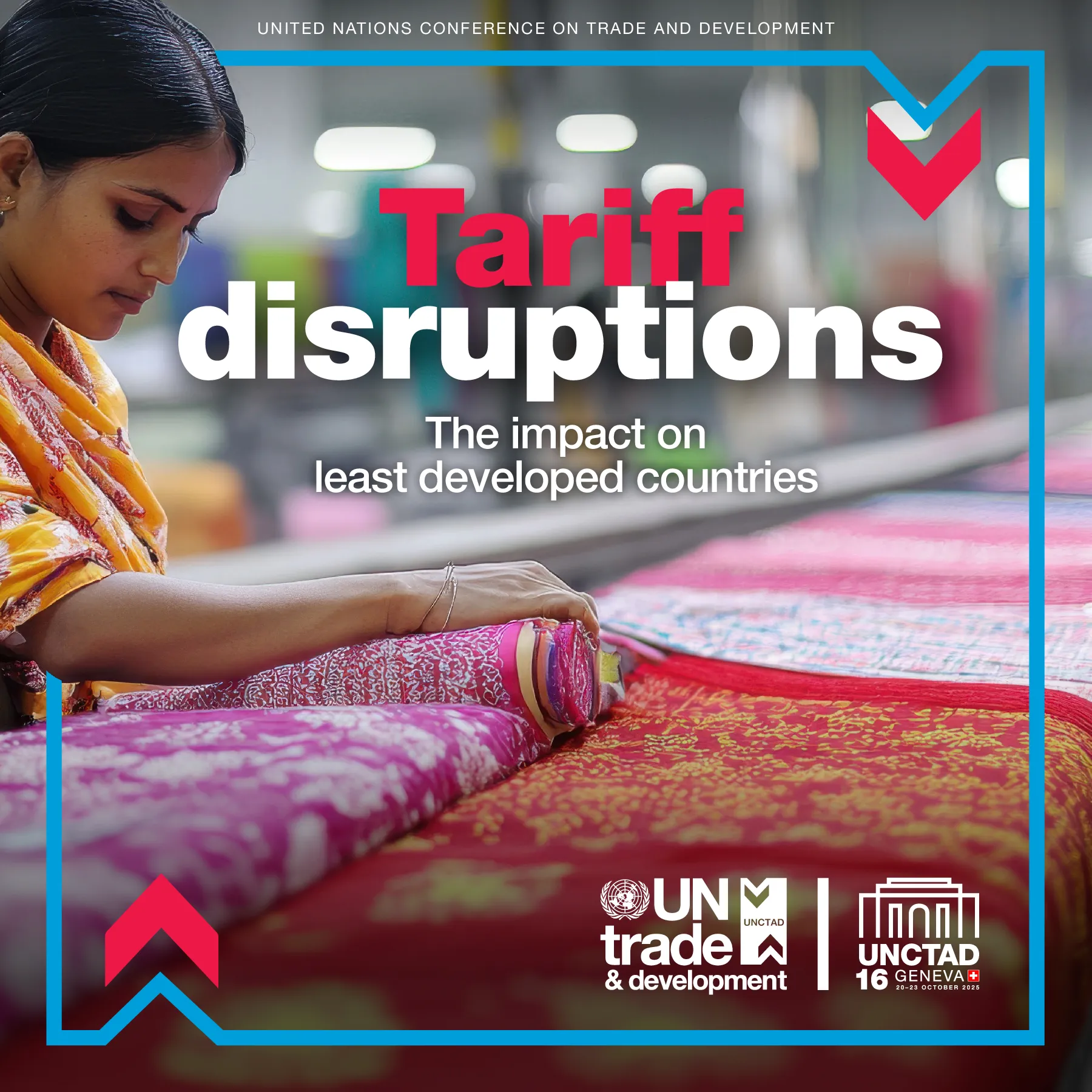
The impact onleast developed countries Introduction For over a decade the international community haspursued an elusive goal: doubling the 1% share ofglobal exports of the least developed countries (LDCs). While the goal remains largely off track, tariffs on LDCs’exports to the US market have recently tripled—and theyare twice as high as those faced by developed countries.This will erode the competitiveness of the 44 LDCs in amarket that represents nearly 10% of their exports. LDCs’ light manufacturing exports are hit the hardest.The end of AGOA and HOPE/HELP preferentialaccess to the US market may further undermine theircompetitiveness—especially in textile and apparel, keysectors for women’s employment. These factors can weaken the productivity spilloversand structural transformation historically associated withmanufacturing. Tariff disruptions underscore the need for LDCs to doubledown on regional integration and productive capacities asmeans for economic diversification. This would pave thepath to a more prosperous and resilient future. LDCs remain grossly off track indoubling their share in global exports. Share of world merchandise exports (%) and SustainableDevelopment Goal (SDG) 17.11 target 2.0% Source:UN Trade and Development (UNCTAD), based on UNCTADstat.Note:The goal of doubling LDCs’ share of world exports was first adopted in the Istanbul Programme ofAction for the LDCs (2011), and later incorporated in the SDGs. The loss of US trade preferences is achallenge for exposed LDCs. New US tariffs vary substantiallyamong countries. Additional tariffs based on US presidential actions between February andOctober 2025 Country-specific tariffs Source:UN Trade and Development (UNCTAD), based on US presidential actions.Note:Section 232 tariffs on medium- and heavy-duty vehicles, their parts, and buses have not been considered,as they will come into effect on 1 November 2025. IEEPA refers to the US International Emergency EconomicPowers Act, and Section 232 is a provision of the Trade Expansion Act of 1962. African Growth and OpportunitiesAct of 2000 (AGOA), Haitian Hemispheric Opportunity through Partnership Encouragement Act of 2006 (HOPE),Food Conservation and Energy Act of 2008 (HOPE II) and Haiti Economic Lift Program of 2010 (HELP). LDCs face tariffs twice as high as thoseimposed on developed countries. Trade-weighted applied US tariffs 30.0% LDC exporters of manufactured goodsare more exposed to US trade policy. Composition of LDCs’ exports to the US and the rest of the world Tariffs have risen sharply on LDCs’light-manufacturing exports. Trade-weighted applied US tariffs by sector, percentage Tariffs pre-January 2025Tariff increases as of October 2025 Source:UN Trade and Development (UNCTAD), based on US presidential actions.Note:Changes based on trade-weighted results across all least developed countries. Classification of goodsaccording to UNCTAD Handbook of Statistics 2024; textile & apparel refer to product codes 50-67 of theHarmonized System. Graduating LDCs, especially in Asia,face steep tariff surges. Increase of trade-weighted US tariffs by sector, in percentage points Scheduled for graduation before 2030 In the graduation pipeline Source:UN Trade and Development (UNCTAD), based on USITC and US presidential actions.Note:Trade weights for the year 2024. Classification of goods according to UNCTAD Handbook of Statistics2024; textile & apparel refer to product codes 50–67 of the Harmonized System. The end of AGOA affects many Africancountries, primarily apparel exporters. Trade-weighted applied US tariffs for selected LDCs affected by theAGOA expiry Tariff before January 2025Current tariff if AGOA still appliedCurrent tariff without AGOA AGOA with special textile/apparel preferences AGOA without special textile/apparel preferences Guinea-BissauMauritaniaGambiaComorosRwanda Source:UN Trade and Development (UNCTAD), based on USITC and US presidential actions.Note:Top-5 countries according to the highest current tariffs for countries with or without special preferenceson textile/apparel. Tariff increases strongly impact keysectors for women’s employment. Share of employment in textile, apparel and leather industries by gender Source:UN Trade and Development (UNCTAD), based on ILOSTAT, employment in the textile, clothing, leatherand footwear sector. Note:Latest available data. No data available for the Central African Republic, Djibouti, Eritrea, Guinea, Haiti,Malawi, South Sudan and Yemen. There is scope for diversification,especially in the Global South. Percentage share of LDC exports to all trading partners Source:UN Trade and Development (UNCTAD), based on UNCTADStat.Note:Three-year average over the period 2022-2024. Tariff disruptionsare a stark reminder of theimportance of the multilateraltrading system, including specialand differential treatment for LDCs. Structural transformationis more necessary than ever to copewith tariff shocks. Untapped