利用传统生态知识进行气候适应性初级卫生保健(英)
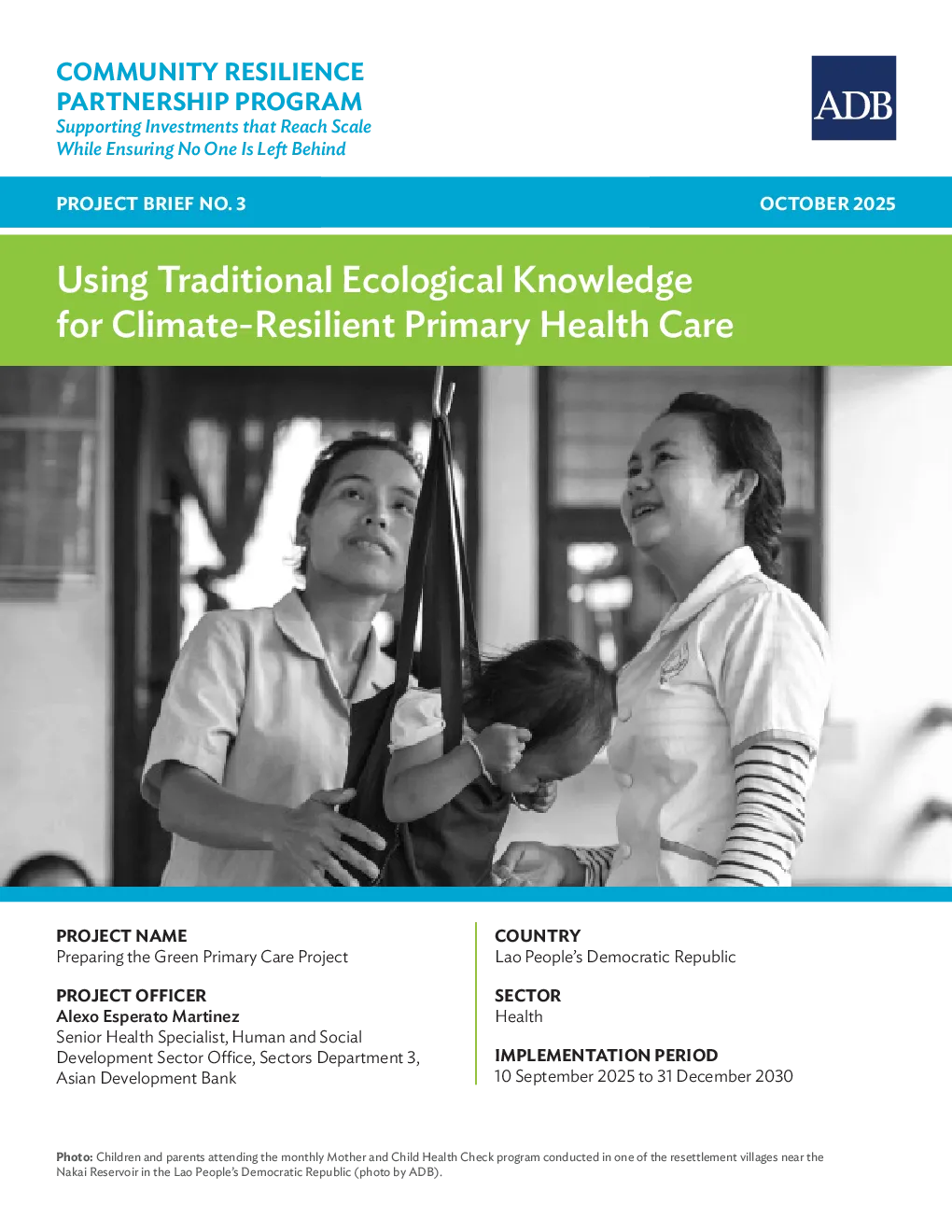
While Ensuring No One Is Left Behind Using Traditional Ecological Knowledgefor Climate-Resilient Primary Health Care PROJECT NAMEPreparing the Green Primary Care Project COUNTRY Lao People’s Democratic Republic PROJECT OFFICERAlexo Esperato MartinezSenior Health Specialist, Human and SocialDevelopment Sector Office, Sectors Department 3,Asian Development Bank SECTORHealth IMPLEMENTATION PERIOD10 September 2025 to 31 December 2030 CLIMATE RISK AND RESILIENCE PROFILE The Lao People’s Democratic Republic (Lao PDR) ranks 92nd in the 2022 Climate Risk Indexaand 140th in theND-GAIN Country Index.b The country is increasingly exposed to climate change as incidence of extreme heat poses a major threat to humanhealth while floods and landslides often hamper access to and cause damages to critical infrastructure like healthcenters and schools.c Climate change has increased the prevalence of malaria, dengue, and diarrheal diseases and through its impacts onlivelihoods and agriculture, it has increased the rates of malnutrition. The country’s health system shows critical gaps in climate preparedness. The health workforce is poorly trained inmanaging climate-related diseases, 25% of the 1,232 health facilities lack essential water and/or electricity, and earlywarning systems remain absent or underfunded.d aClimate Risk Index: The annualClimate Risk Indexanalyzes to what extent countries have been affected by the impacts of weather-related loss events (storms,floods, heat waves, etc.).bTheND-GAIN Country Index(accessed 16 July 2025) summarizes a country’s vulnerability to climate change and other global challenges in combinationwith its readiness to improve resilience, with higher rankings signifying greater vulnerabilities (i.e., 192 is the most vulnerable and 1 least vulnerable). A total of192 countries are ranked from low vulnerability and high readiness to high vulnerability and low readiness.cADB and World Bank. 2021.Climate Risk Country Profile: Lao PDR.dJ. Peabody et al. 2019.Quality of Health Care in the Lao People’s Democratic Republic.ADBI Working Paper Series. No. 981. Asian Development Bank Institute. CHALLENGES IN THE HEALTH SYSTEM �Limited community preparedness.Weak institutionalcapacity and lack of support for community-basedadaptation measures, including disaster risk management,leave communities vulnerable to health emergencies. The Lao PDR is among the high risk countries fromclimate-related hazards such as flooding, droughts, storms,and landslides, leading to frequent disruptions of healthservices and infrastructure. Climate change has led to higherprevalence and outbreaks of malaria, dengue, and diarrhealdiseases, especially in rural and ethnic minority communities.Climate-related disruptions to agriculture and water supplycontribute to malnutrition, particularly affecting children andvulnerable populations. The country’s health system capacity islimited and characterized by the following: �Gender and social inequities.Women and ethnicminorities are disproportionately affected byclimate-sensitive health risks due to social, economic,and cultural barriers. The Lao PDR faces a complex set of health challenges,primarily driven by climate change, inadequate health systemcapacity, and social inequities, resulting in a high burdenof both communicable and noncommunicable diseases,malnutrition, and poor resilience to health emergencies. �Lack of training on climate change impacts on health.Critical gaps exist in the health workforce’s ability tomanage climate-related diseases, with many health careproviders lacking training and health facility managersunprepared for emergencies. However, it is noteworthy that the Lao PDR was one of thefirst countries to have aHealth Sector National AdaptationPlan (H-NAP), which now guides the country’s efforts inbuilding a climate-resilient health system. It outlines strategies,adaptation actions, and multisectoral coordination to protectvulnerable populations and strengthen health sector capacity. �Inadequate infrastructure.About 25% of health facilitieslack essential water and electricity, and many communitiesface failures in water systems, especially during floods. �Poor early warning and risk communication systems.Early warning systems for climate-related health risksare often absent or underfunded, particularly in ethnicminority areas where language barriers limit effectivecommunication. CRPP TRUST FUND SUPPORT decision to work with the Lao Front for National Development(LFND)—the country’s largest mass government organization.Given LFND’s strong connections across all villages in theLao PDR, the project aims to develop activities such as buildinglocal climate ambassadors and health promotion activities thatcould be channeled through existing village health committee.By working through a mass organization such as the LFND,the project would develop local ownership of health adaptationactions, which can help bridge the gap between MOH andcommunitie