未来的工作:技术与全球最大劳动力的未来
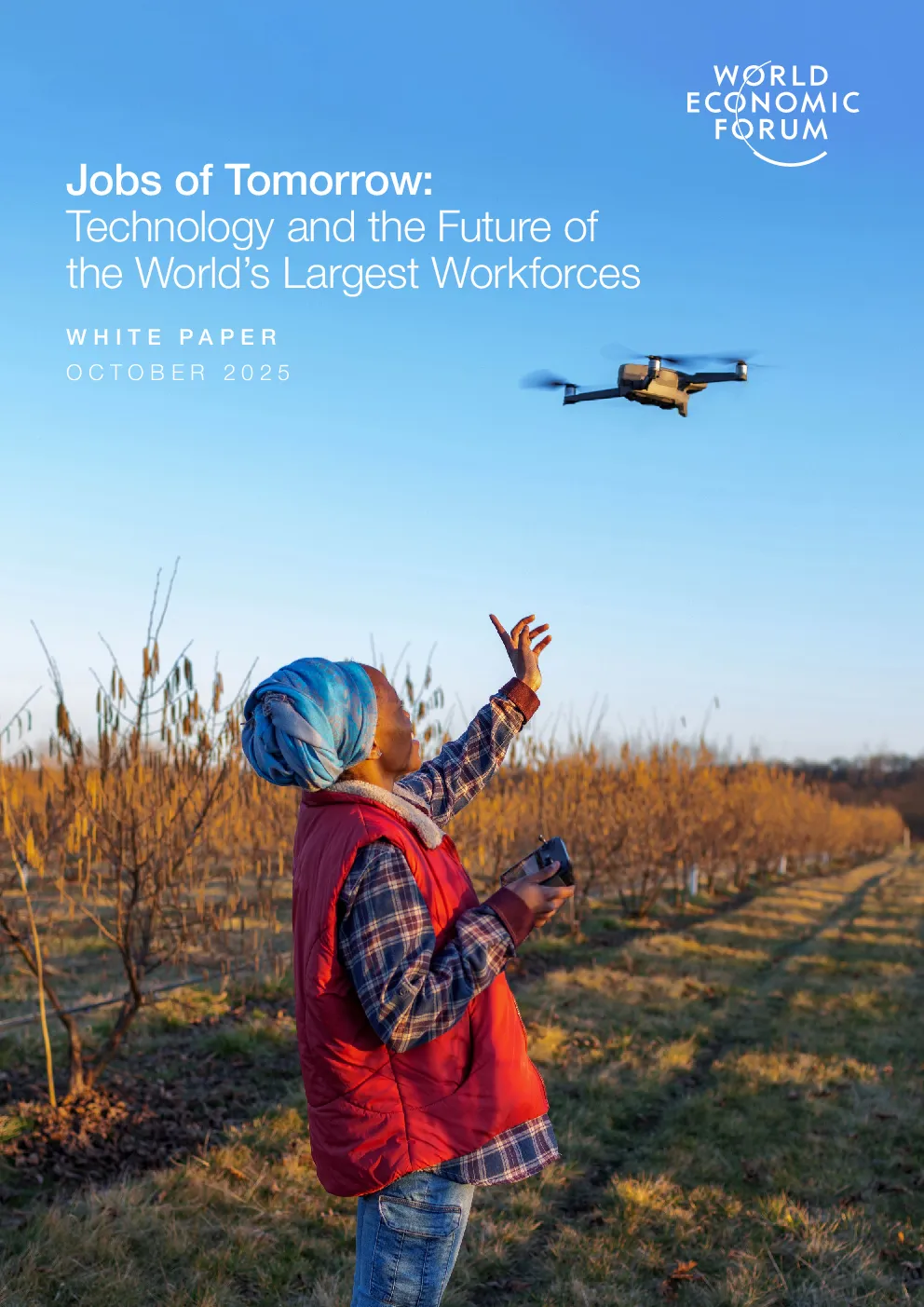
W H I T EP A P E RO C T O B E R2 0 2 5 Contents Executive summary3 Introduction4 1Workforce-transforming technologies5 1.1Artificial intelligence51.2Robotics and autonomous systems51.3Energy technology61.4Networks and sensing technologies6 2Large global workforces7 2.1Agriculture92.2Manufacturing92.3Construction102.4Wholesale and retail trade102.5Transport and logistics112.6Business and management122.7Healthcare12 3Workforce transformations and further workby the Global Future Council13 Conclusion14 Contributors15 Endnotes16 Disclaimer This document is published by theWorld Economic Forum as a contributionto a project, insight area or interaction.The findings, interpretations andconclusions expressed herein are a resultof a collaborative process facilitated andendorsed by the World Economic Forumbut whose results do not necessarilyrepresent the views of the World EconomicForum, nor the entirety of its Members,Partners or other stakeholders.©2025 World Economic Forum. All rightsreserved. No part of this publication maybe reproduced or transmitted in any formor by any means, including photocopyingand recording, or by any informationstorage and retrieval system. Executive summary Technology is transforming workforces;ensuring high-productivity, inclusive jobsrequires diverse actions across the world’slargest job families. Much of the recent debate on the future of jobs hasfocused on generative artificial intelligence (genAI),large language models and their impact on white-collar desk-based occupations, yet technology-driven labour market change is transformingoccupations beyond this space. This whitepaper considers four key technologies: artificialintelligence (AI), robotics, energy technology, andnetworks and sensing technologies. It assessesthe potential benefits and challenges of theiraccelerating application across seven job familiesthat comprise the world’s largest workforces:agriculture, manufacturing, construction, wholesaleand retail trade, transport and logistics, businessand management, and healthcare. leads to higher-productivity jobs, including enablinggreater investment in technology and enhancingdiffusion, facilitating efficient and supportive marketstructures, understanding employers’ strategicworkforce goals, and discovering the potentialcapability of a technology-enabled workforce. The Global Future Council on Jobs and FrontierTechnologies is a multidisciplinary expert groupexploring how technological progress can createhigher productivity jobs and prepare a globalworkforce to perform them. In accordance withits mandate, this white paper identifies keyareas where stakeholder actions are most likelyto be impactful. The remainder of the council’sterm will seek to identify specific actions thateconomies, industries, technology developers,employers and other key stakeholders cantake to enable a high-productivity, inclusivefuture of jobs that benefits businesses,workers and enhances global opportunity. The white paper finds that the potential benefits andchallenges differ significantly across these sevenworkforces, as well as an economy’s income leveland industrial make-up. This means several aspectsare necessary to ensure technology development Introduction Four technologies will transform majorworkforces, creating opportunities butalso risks that demand urgent action. (genAI), large language models and their impact onwhite-collar desk-based occupations, technology-driven labour market change is transformingoccupations beyond this space. To arrive ata more comprehensive understanding of thechanges under way, this white paper assessesthe potential impacts of the application of fourworkforce-transforming technologies on seven jobfamilies comprising the world’s largest workforces.It aims to identify the greatest potential workforceopportunities and challenges. According to the World Economic Forum’sFutureof Jobs Report 2025, technology changes areexpected to be the biggest driver of labour markettransformation in the coming years.1They have thepotential to create higher-wage, better-quality jobs,increase global productivity and exacerbate inequalitieswithin and across geographies. The decisionsmade now and in the coming years will determinethe future impacts of technology development.2 Decisions madenow and in thecoming yearswill determinethe future impactsof technologydevelopment. The Global Future Council on Jobs and FrontierTechnologies is a multidisciplinary expertgroup tasked with identifying ways to harnesstechnologies with labour market transformationpotential to inclusively provide more productive jobsto the global workforce. Future work from the Global Future Council on Jobsand Frontier Technologies will seek to understandhow these opportunities can be realised, and howrisks can be mitigated – providing guidance tobusinesses and policy-makers to enable higherproductivity in workplaces worldwide. While much of the recent debate on the future ofjobs has focused on ge