全球洗衣鸿沟:了解手洗衣物的负担——洗衣机项目的创新、影响与变革理论报告
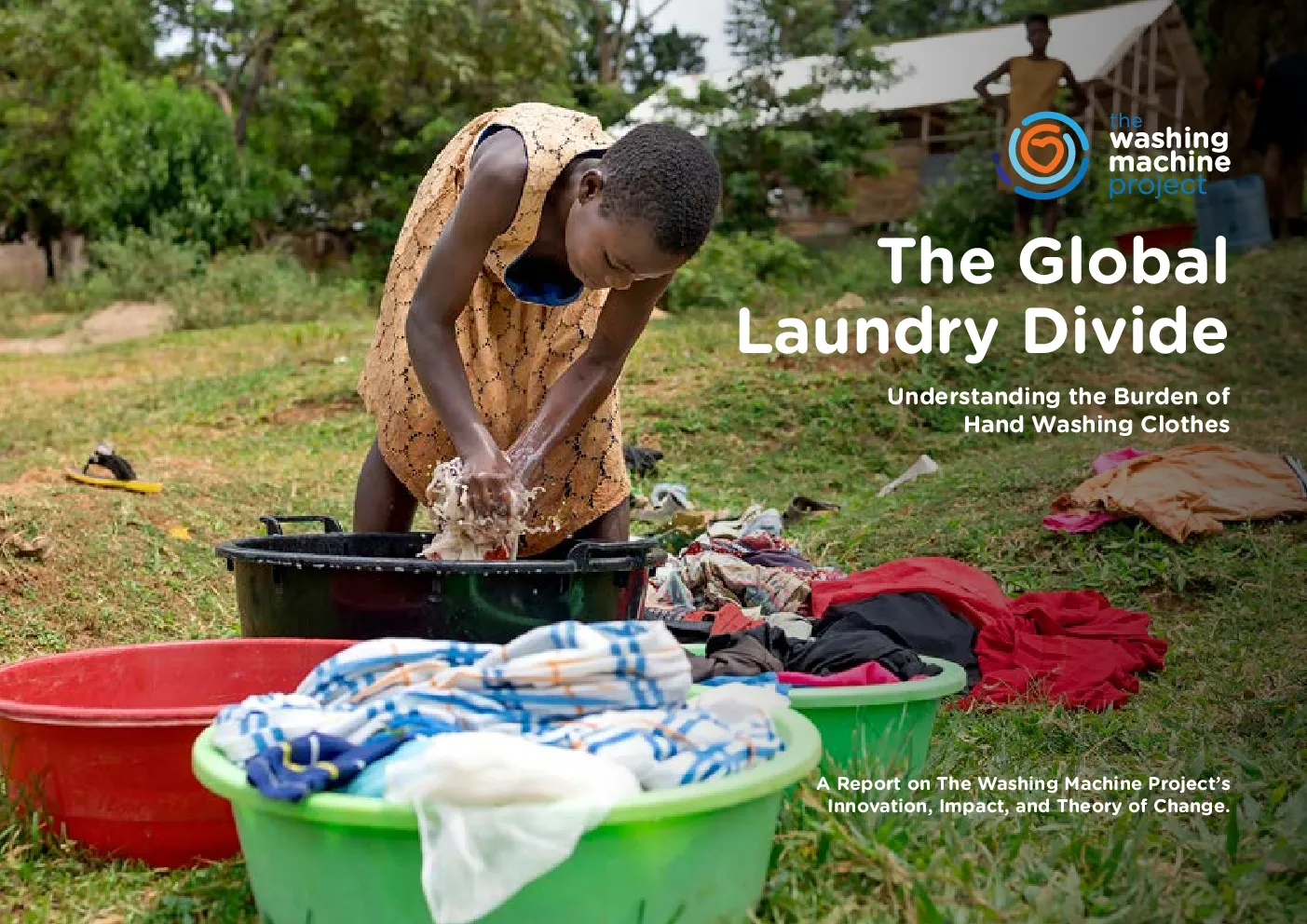
Understanding the Burden ofHand Washing Clothes How do you washyour clothes? For most of us, or rather, what we assume is most of us, the answer is simple. We use an electric washing machine. It might be in our kitchen. It might be in our utility room. It might be at the laundrettedown the road. Or maybe we still bring our clothes round to mum and dad’s.However we do it, the process is largely invisible; throw it in, press start, walk away. Contents Job done. For billions of people, washing clothes is not a background task. It is not somethingthat happens while you get on with your day. Sometimesit isyour day. Foreword3 Long hours. Back-breaking work. Bent over buckets. Kneeling on hard surfaces.Washing clothes with your hands, with harsh soap or detergent, using a huge amountof water fetched from far away or bought at a cost.Scrubbing fabric against stone, skin sore and cracking, bad backs- huge amounts oftime slipping away. Chapter 1 – The Global Laundry Landscape07 Chapter 2 – The Divya Washing Machine:Evolution and Product Development20 Chapter 3 – Washing Machine at Work27 In refugee camps, rural communities, informal settlements, and disaster zonesaround the world where reliable electricity and/or running water aren’t available- thisis daily reality. And the numbers back it up. Chapter 4 – The Impact of the Divya WashingMachine38 In some places, as The Washing Machine Project has found from its research over thepast six years: Chapter 5 – Partnerships in Practice45 Chapter 6 – The Road to 2030: Impacting1,000,000 Lives57 References and Studies Cited62 People can spend up to 20 hours a week handwashing clothes.1 Contact Information64 That’s time not spent working, learning, earning, or resting. That’s timelost - predominantly by women and girls. Indeed, there is an enormousgap between how much time men and women spend washing clothes. We are TheWashingMachine Project In rural India, for example, women typically spend 80 minutes per daywashing clothes, compared to two minutes for men (Walton, McAllister,& Rahael, 2025). We call this gap, between the convenienceof modern laundry in one part of theworld, and the physical burden of it inanother- combined with the genderdisparities world over,The Global Laundry Divide. The Washing Machine Project (TWMP) works to end theburden of hand washing clothes- a daily challenge faced byup to 50% of the global population, especially women andgirls, in low-income, remote and displaced communitiesworldwide. Based in the UK, The Washing Machine Project is a socialenterprise working with corporate partnerships andcollaborations, local organisations, charities, consultantsand in-country partners in 13 countries to design,manufacture and distribute the use of its manual washingmachines. This report is The Washing Machine Project’s first annual diveinto the real, human cost of washing clothes by hand, whatimpact a manual washing machine is having and a baselinefor how The Washing Machine Project will measure its impactin the coming years. The development of the Divya Washing Machine startedin 2018 and since then, hundreds of machines have beendistributed to households and communities, impacting46,840 people as of August 2025. The Washing MachineProject and partners also provide support and advice tomanual washing machine users to help them maintain themachines independently, whilst also providing grants andtraining for income related activities. It explores: •What is the problem with hand washing clothes?•What is the current laundry landscape?•What is the Global Laundry Divide?•The Washing Machine Project approach,, methodologyand what we can do better.•The Impact of the Divya Washing Machine.•What The Washing Machine Project’s future plans and theroad to reaching 1,000,000 people by 2030. Through innovation,collaboration and care we willend the burden of hand washingclothes. One wash at a time. Back in 2017, I was working in a corporate engineering job. On paper, things looked fine. Good job, goodsalary, career ladder in front of me. But I felt unfulfilled - so I took a secondment with Engineers WithoutBorders. It would take me to India to design clean cookstoves for families without clean, reliable energy.It was there that I met Divya, my neighbour, who would go on to change my life. I often watched Divya’s daily routine. She worked tirelessly: foraging for firewood, cooking meals,cleaning, caring for her children. And after all of that, she would sit down to wash clothes by hand.Not once in a while, but every single day; often late at night when her kids were asleep, or early in themorning before the heat set in. One day, I offered to buy her an electric washing machine. She laughed and said “What am I going to dowith that?” Electricity was unreliable, with blackouts almost every day. Water only flowed for 15 minutesin the morning from the municipal taps. A conventional, electric machine wasn’t an option. Instead of buying one, I promise