您的浏览器禁用了JavaScript(一种计算机语言,用以实现您与网页的交互),请解除该禁用,或者联系我们。[UNStudio]:探索全球扩建、翻新、重建与转型:如果过去重塑未来? - 发现报告

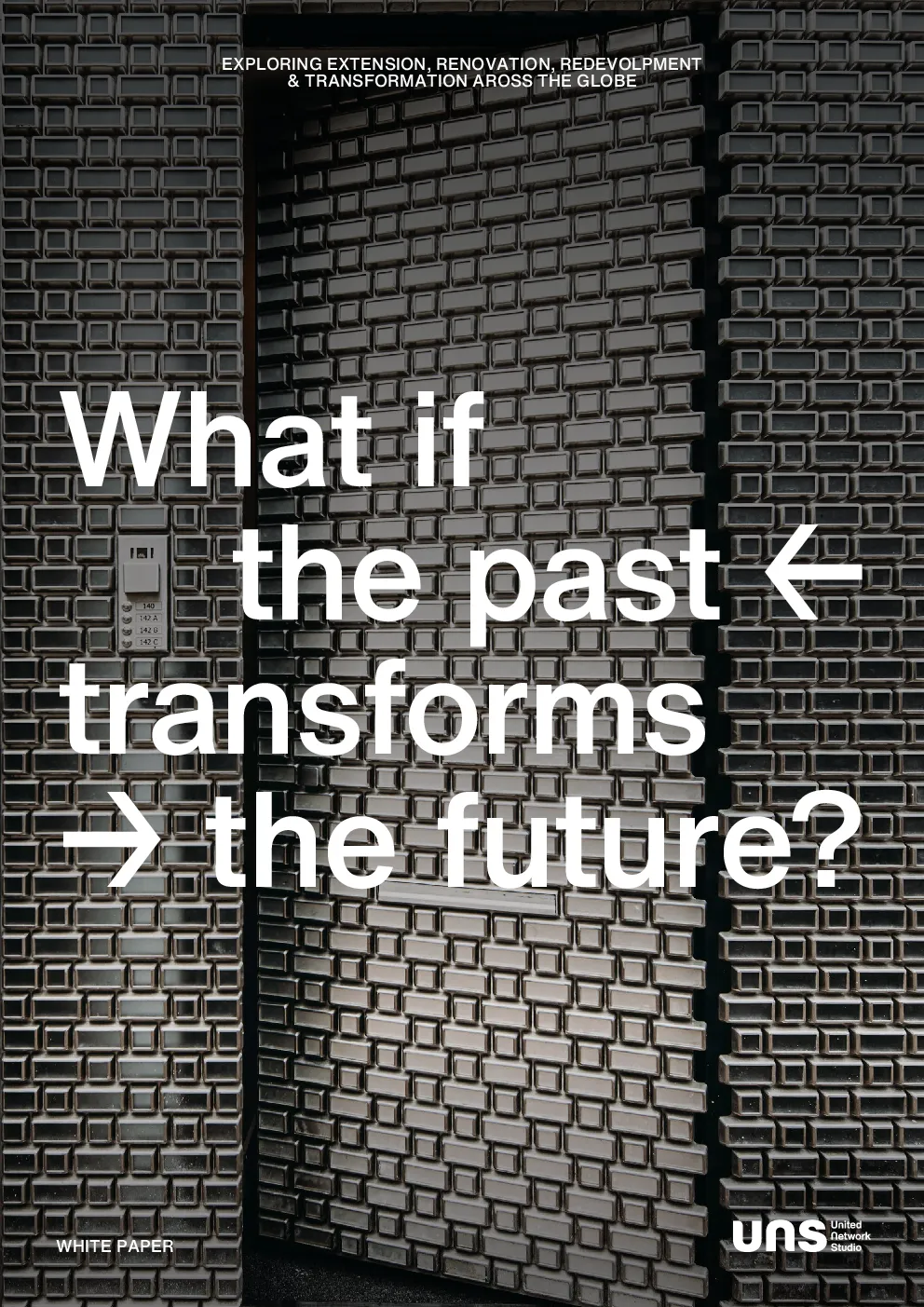
探索全球扩建、翻新、重建与转型:如果过去重塑未来?

建筑建材2025-09-02UNStudio王***
AI智能总结
查看更多
探索全球扩建、翻新、重建与转型:如果过去重塑未来?

(ABSTRACT) The built environment is not working to its full potential. Our offices,homes, malls, theatres, and public spaces are all aging; our new buildsare accelerating global carbon emissions; and our cities are losing theirlocal heritage. Architects and designers are in a position to help leadthe charge on addressing the environmental, social, and economicchallenges posed by the existing built environment through thoughtfulextension, renovation, redevelopment, and transformation. Yet transformation also extends beyond the existing building stock,opening up opportunities to explore how architects and designers caninfluence larger societal challenges. By encouraging developers to adoptmore sustainable practices, prioritising the needs of users, and shapinghow people engage with public spaces, design has the potential to impactnot only the success of individual developments but also to drive culturaland behavioural change. Through a balance of learning from the past andenvisioning the future, there is a chance to create spaces that are not onlyfunctional but also sustainable, resilient, and rich in cultural significance.It is equally important to focus on post-occupancy performance and long-term economic viability. Doing so, ensures the delivery of projects thatprovide lasting value for clients and communities. Introduction7 Europe11 Hanwha H.Q. P.C. Hooftstraat FOUR Frankfurt 18T Mansion The Bridge Chamartín-Clara Campoamor Station Footnotes and References63 Expo City Dubai SeoulONE Schwanthalerstrasse The adage “the most sustainablebuilding is the one that alreadyexists” lays bare a unique tensionwithin the architecture and designsectors. Those in the business of envisioning the builtenvironment need to ask themselves how they candesign new projects with the health of the planet inmind. However, they must equally ensure that ourbuildings and cities are healthy for people too. Butwhat do we do with the urban fabric that we alreadyhave? And how do we prepare it for the future?It is well known that the building and construction industries are responsible for around 40% of globalraw material consumption and nearly 40% of energy-related CO2 emissions. Retrofitting existing buildings,rather than constructing new ones, has the potentialto cut total carbon emissions by 50% to 75%,according to McKinsey.1To align with the IEA’s net-zero targets for 2050, regions such as Asia-Pacific,Europe, and North America will need to retrofitapproximately 3% of their building stock annuallyby 2030. Similarly, Latin America, the Middle East,and Africa are projected to require retrofitting ratesof 2.3% each by 2030, equating to roughly 4 millionand 7 million buildings, respectively.2On the whole, today’s architecture and design firms recognise their responsibility to createspaces that align with global sustainability goals.By embracing such practices, they should aim toinspire and lead by example, fostering a mindsetshift towards high-performance, holistic andenvironmentally conscious extensions, renovations,redevelopments, and transformations. It is also crucialfor architects and designers to acknowledge thepressing challenges of our time, including the growinghousing shortage. Globally, and particularly in Europe,this issue presents a significant challenge, yet thesolution often lies within our existing building stock.Through thoughtful extensions, vertical additions, andadaptive reuse, we can meet demand while minimisingenvironmental impact. FELLENOORD 15Eindhoven, Netherlands, 2017 - 2022.Photo © Evabloem → INTRODUCTION Aesthetics also play a critical role in thetransformation of the built environment,requiring a careful approach thatreserves the historical value ofexisting structures while incorporatingforward-looking design solutions. While sustainability sits at the fore, it is essential torecognise that our current building stock also holdsan historical - and, often, emotional - significancewithin our cities and countries. Governments arelooking to maintain the essence of iconic places, whileupdating buildings to stay on track with sustainabilityqualifications, with many aiming to reach carbonneutrality by 2050. These are parameters withinwhich architecture and design studios need to explorenew realms of possibilities. and transformations. While most of the below casestudies revisit spaces that already exist, they eachrequire a different approach during the designprocess. These all differ in scope, purpose, structuralchanges, sustainability, cultural and historical value.Extensionsthoughtfully expand spaces, balancingpreservation with innovation to meet moderndemands.Renovationsencompass a wide range ofinterventions, from restoring a building’s aestheticsto upgrading its functional properties, ensuringspaces remain relevant and efficient.Redevelopmentrevitalises outdated spaces, executing changesefficiently without compromising quality, and adaptingthem to meet today’s needs while remaining flexibl