2024年漂浮光伏市场调查
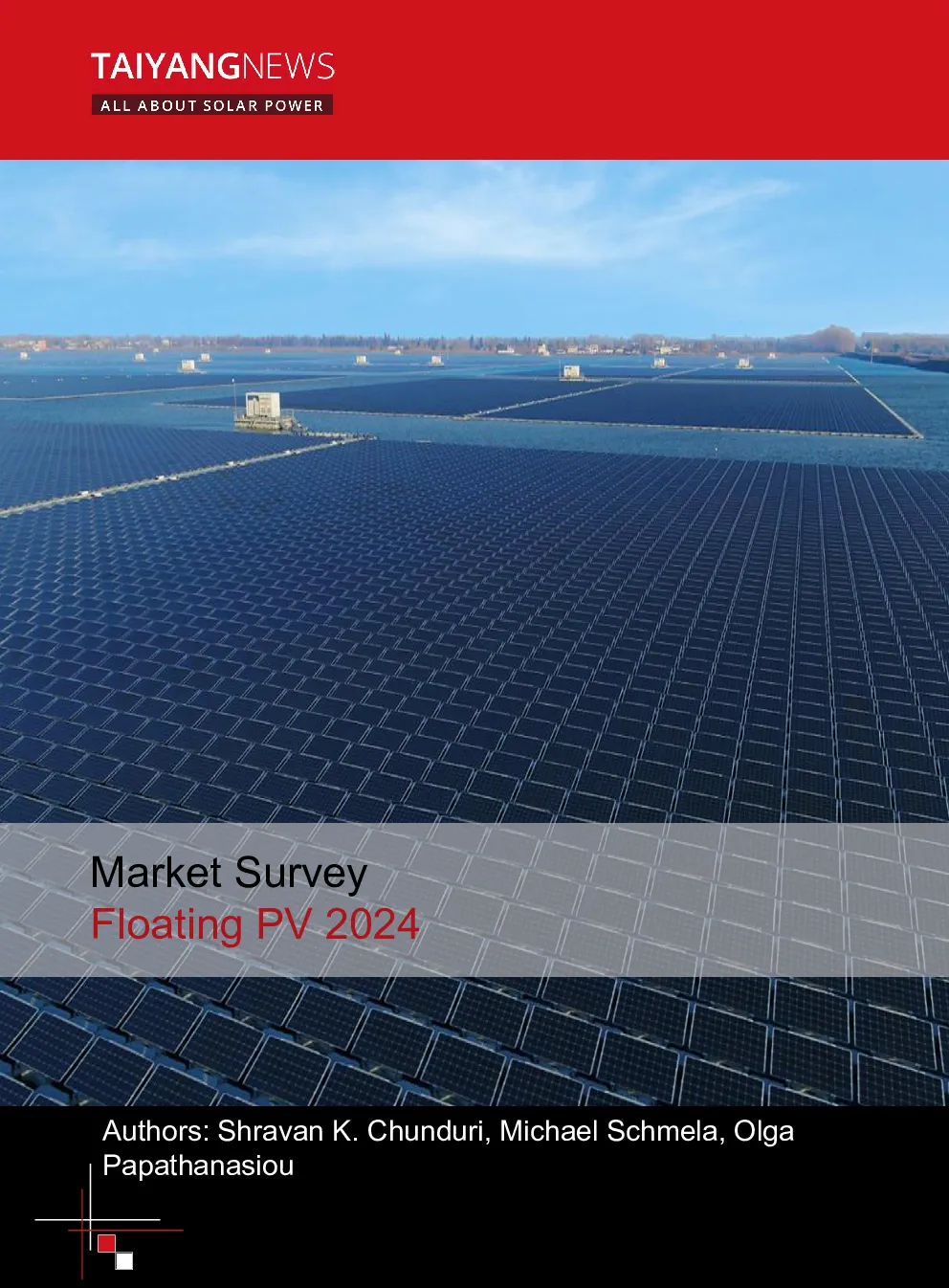
Market SurveyFloating PV 2024 Authors: Shravan K. Chunduri, Michael Schmela, OlgaPapathanasiou Executive Summary The global FPV market has been on an upward trajectoryin recent years, growing from a 1 GW level in 2018 to atotal of 4.3 GW by the end of 2022, with further stronggrowth anticipated. We provide some insights into thehistorical growth of FPV and future expectations inChapter 3.1 & 3.2. There is a wide variety of FPV solutionsavailable from companies that come from differentbackgrounds, and the survey has inputs from most of themarket leaders – with Sungrow from China heading thesegment with an installed capacity of 2.6 GW. Chapter3.3 sheds some light on these FPV players, includingtheir business models, range of solutions and installedcapacities. Although the share of solar power in global electricitygeneration is still small, the technology is growing veryrapidly – and in more advanced solar markets, occasionallydevelopers already face local opposition to solar powerparks due to competing interests on land use. Among thesolar industry’s efforts to optimize utilization of land andfind and boost alternatives to traditional ground-mountedapplications, an interesting option is increasingly emerging– Floating Photovoltaics (FPV), also called floating solaror floatovoltaics. Simply put, FPV is a configuration wheresolar systems float on water bodies. This brings severalbenefits compared to land-based solar parks – fromconservation of land, protection of water quality, lowerwater evaporation, and the potential for higher systemyields. There are different types of floaters, and everymanufacturer has different products under each floatercategory. While many focus on inland water bodies,offshore PV is gaining momentum. Alternative solutionslike membrane-based floaters are emerging. While FPVdevelopers often use typical standard modules, someleading module manufacturers have started to producepanels specifically designed for FPV environments. Aniche technology, FPV still faces many challenges – fromcost, to missing standards and policy frameworks. Wediscuss FPV technology developments and the challengesin Chapter 4. While there are already some FPV reports available,they are mostly about market potential or best practicerecommendations. Our 1st Market Survey on FPV focuseson the commercial products on offer today. We havetalked to FPV manufacturers around the world to provideproduct level details of the key system components, likefloaters, and discuss other important aspects of a floatingsolar system. This TaiyangNews survey lists 13 productswith technical specs from 9 suppliers, including the marketleaders in this segment. A typical FPV system features a floating bed designed tohouse the PV system's components. To ensure stabilityand minimal movement, the platform is anchored andmoored. This floating foundation is made of floaters andother essential electrical components like combiner boxes,inverters and transformers. Solar modules are mountedon these floaters, and maintenance walkways are alsointegrated. Specialized floats are used for the cables thatlink to the grid. Chapter 2 delves into the details of theseFPV components. Floater technologies, while several, can be broadlycategorized into 3 types. The most popular are thepontoon-type floaters offered by 4 companies: Sungrow,Ciel & Terre, Fost and Isigenere. Metal-based mountingstructures supported by floating bodies are also offeredby 4 companies: Zimmermann, SolarisFloat, Swimsoland SolarDuck. Ocean Sun is the only supplier of themembrane-based FPV solution. Chapter 5 providesdetailed descriptions of the products listed in this survey. After the conclusions in Chapter 6, the survey ends with atable listing the specs of the 13 products in Chapter 7. Enjoy reading our 1st Market Survey on Floating PV Shravan K. ChunduriHead of Technology, TaiyangNewsshravan.chunduri@taiyangnews.info+91 996 327 0005Hyderabad, India Olga Papathanasiou Michael Schmela Contents © TaiyangNews 2024All rights reserved.TaiyangNews Market Survey Floating PV 2024ISBN: 978-3-949046-23-0 The text, photos and graphs in this report are copyrighted (cover photo credit:Sungrow, TaiyangNews). TaiyangNews does not guarantee reliability, accuracy orcompleteness of this report's content. TaiyangNews does not accept responsibilityor liability for any errors in this work. Publisher: TaiyangNews UG (haftungsbeschraenkt)An der Golzheimer Heide 2340468 Duesseldorf, Germanywww.taiyangnews.info 1. Introduction Solar power is shining brighter than ever. Thissource of renewable energy is quickly growing asa reliable and clean energy source that can helpreduce greenhouse gas emissions and combatclimate change while securing local and regionalenergy security. However, the rapid deployment ofsolar power, which grew to around 440 GW in 2023and is expected to increase further to TW-levelannual deployments before 2030, also requires theuse of vast amounts of appropriate land, which h