您的浏览器禁用了JavaScript(一种计算机语言,用以实现您与网页的交互),请解除该禁用,或者联系我们。 [英国自然历史博物馆&苏格兰海洋科学协会]:2025年世界海藻状况 - 发现报告

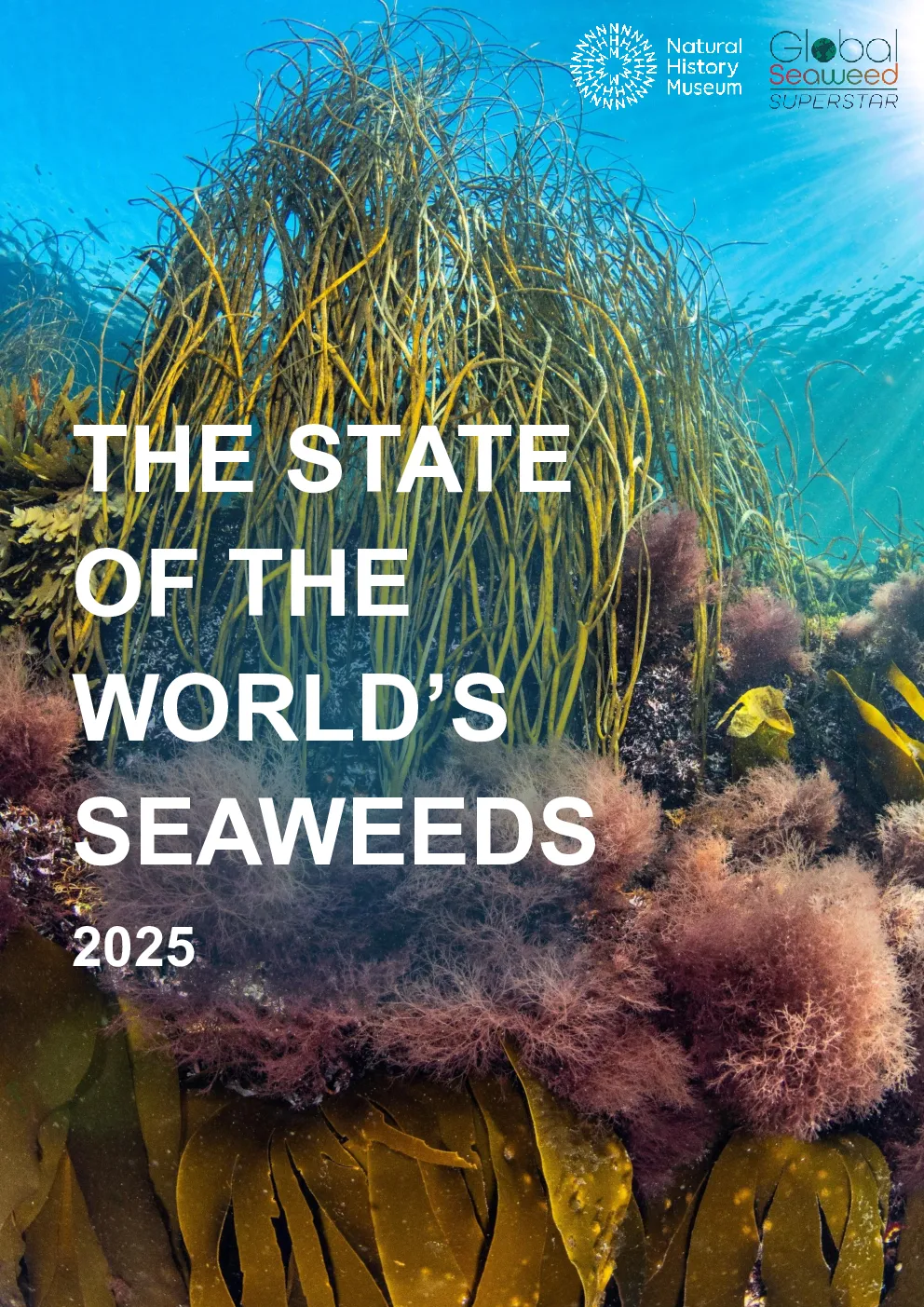
2025年世界海藻状况

报告封面

Authors:Sophie Corrigan1, ElizabethJ.Cottier-Cook2, Phaik-Eem Lim3, Juliet Brodie 1Natural History Museum, Science, London, UK2Scottish Association for Marine Science, Scottish Marine Institute, Oban, UK3Institute of Ocean and Earth Sciences, University of Malaya, Kuala Lumpur, Malaysia Editors:Juliet Brodieand Elizabeth J.Cottier-Cook Corresponding author:Professor Juliet Brodiej.brodie@nhm.ac.uk Reviewers:Alan Critchley, Mélanie Cueff, Aaron Eger,Angie Gall,Jason Hall-Spencer,Christine Maggs,Flower Msuya, Philippe Potin. Imagecredits:All photographs, images and figures arecredited throughout. Permissionhas been sought directly from the images creators as necessary. All images/figures inthis document that have already been published in the scientific literature are usedunder Creative Commonslicences and this has been noted in the figure legends as arequirement of the licences. Cover image:Alex Mustard Suggested citation:Corrigan, S., Cottier-Cook, E.J., Lim, P.-E. & Brodie, J.,2025.Thestate of the world’s seaweeds.Natural History Museum, London.doi.org/10.5519/4ln9oqk7. DOI provided by the Natural History Museum, London. Forfurther information:https://globalseaweed.org/ Acknowledgements Weare very grateful tothe reviewers of this documentand thank them for their work:Alan Critchley, Mélanie Cueff, Aaron Eger,Angie Gall,Jason Hall-Spencer, ChristineMaggsandFlower Msuyaand Philippe Potin. We also thank everyone who has providedimages and given us permission to use them in this document.We also thank theGlobal Seaweed Coalitionteamwho have provided input throughoutthe creation of thereport. We also thankCyrielle Lâm(Ocean & Climate Platform)and KristinaRodriguez(UN Climate Championsteam)who have provided input in relation to theUNFCCC HighLevel Climate Champion 2030 Breakthrough Agenda. Funding:We gratefully acknowledge that this work is funded as part ofi)GlobalSeaweed-SUPERSTAR (grant number GCBC RGC1 G01-007211) project underthe Defra-funded Global Centre on Biodiversity for Climate (GCBC) programme, and ii)GlobalSeaweed-PROTECT (grant number BBSRCAPP34799) project under the UKRI-fundedSustainable and Resilient Aquaculture Systems in Southeast Asiaprogramme. Contents Acknowledgements..................................................................................................2Preface....................................................................................................................5Executive summary..................................................................................................61. Introduction.........................................................................................................92. The world of seaweeds........................................................................................122.1 The diversity of seaweeds..............................................................................122.2 The distribution of seaweeds..........................................................................142.3 Seaweed habitats.........................................................................................163. The importance of seaweeds...............................................................................243.1 Seaweeds and ecosystem services................................................................243.1.1 Supporting services................................................................................253.1.2 Regulating services.................................................................................323.1.3 Provisioning services...............................................................................433.1.4 Cultural services.....................................................................................523.2 Economic value of seaweed ecosystem services.............................................584. Threats to seaweed distribution and diversity.......................................................604.1 Threats to seaweeds......................................................................................604.1.1 The climate crisis....................................................................................604.1.2 Overharvesting.......................................................................................644.1.3 Fishing and boating.................................................................................654.1.4 Overfishing and overgrazing.....................................................................674.1.5 Pollution, coastal development and ocean sprawl.....................................684.1.6 Pests and diseases.................................................................................694.1.7 Invasive non-nativespecies.....................................................................714.2 Changes to seaweed distribution patterns......................................................724.2.1 Kelp forests.......................................................