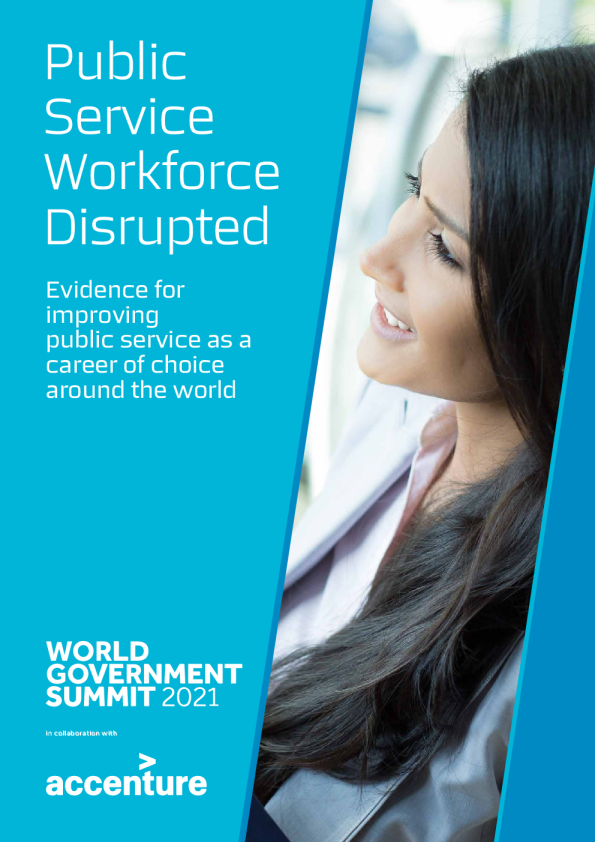
公共服务劳动力中断。世界各地将改善公共服务作为职业选择的证据
AnsweringTomorrow’sQuestionsTodayThe World Government Summit is aglobal platform dedicated to shaping thefuture of governments worldwide. Eachyear, the Summit sets the agenda for thenext generation of governments with afocus on how they can harnessinnovation and technology to solveuniversal challenges facing humanity.The World Government Summit is aknowledge exchange center at theintersection of government, futurism,technology, and innovation. It functionsas a thought leadership platform andnetworking hub for policymakers,experts and pioneers in humandevelopment.The Summit is a gateway to the future asit functions as the stage for analysis offuture trends, concerns, andopportunities facing humanity. It is alsoan arena to showcase innovations, bestpractice, and smart solutions to inspirecreativity to tackle these futurechallenges. Three CriticalAreas forInterventionsEmergedto ImproveGovernment as aCareer of Choice:1. Employer Brand2. EmployeeExperience3. Future Skills Executive SummaryGlobal public services are at a pivotal moment. The sameagencies and departments that are delivering on thepublic mission of preventing, eradicating, and recoveringfrom the deadly COVID-19 pandemic, have also beenunder long-term talent stress. Incremental approachesto improving government as an employer cannotwithhold the immediate pressures of the pandemic.What comes after the pandemic will be a crucialopportunity for fast-tracking innovations in humancapital. That includes building on the innovations arisingfrom working during a crisis, capitalizing on a renewedinterest in public service, and anticipating austerityfollowing the economic downturn. These all make everyhuman resource decision that much more important.Accenture’s research comes at a very timely moment tounderstand the current experience of the public sectorworkforce. Our interview and research program coveredall levels of seniority, across six countries, three levels ofgovernment, and multiple sub-industries. We have alsocompared public service with for-profit industries. At ahigh level, we found that public service was under stress:public service was recommended the least to peers ofall sixteen industries evaluated. Many executivespointed to a lack of investment in people developmentand technologies.Three critical areas for interventionsemerged to improve government as a career of choice,including: employer brand, employee experience, andfuture skills.Focusing on the theme ofemployer brand, our surveysfound that working in a ‘Purpose’ industry (the prospectof doing meaningful work that makes a positivedifference to individuals/the community) differentiatespublic sector employment for job seekers. And yet,public service workers today are not feeling connected tothe sense of mission which attracted them to the work inthe first place. Without an understanding of theirunique employer brand, public sector agencies will findit even harder to attract talent in high-demand criticalskill areas.There are some clear areas for improvement of theemployee experiencein public service. These includemore flexible work arrangements, including remotework, and personalized career paths. The pandemiclockdowns dislodged many of the traditional barriers toflexible working, with remote work enabled by digitaltechnologies becoming the default. The next step inimproving employee experiences is to actively listen toworkers’ feedback, formalize coaching experiences, andco-create an individualized worker experience inalignment with workers’ goals.Finally, governments sense that a majorskillsdisruptionis underway. In our survey, Chief HumanResources Officers (CHROs) identified “Reskilling theWorkforce” as the number one priority for the nextthree years. Intelligent technologies are alreadybeginning to automate and augment public sectoremployees’ tasks to make meeting the public missionmore effective and efficient. Not all jobs will be affectedevenly though, so public sector leaders need to startplanning now for investments in digitization,automation, and most importantly, training.Now is the moment for bold transformation of publicsector employment. In addition to long-standing laborforce pressures, the very dynamic ofemployee-employer relations has also changed. Insharing this report, we hope that governmentemployers around the world can set their prioritiesbased upon this evidence and emulate the approachesof more mature organizations.IMPROVEMENT AREAPRIORITY INITIATIVES•Collect and/or review organizational data•Review organizations’ values•Gap analysis•Messaging and communication plan•Enhance work flexibility•Listen to workers•Mentorship and coaching arrangements and programs•Co-create and design the experience•Start with data•Chart an investment path•Emphasize trainingEmployer BrandEmployee ExperienceFuture Skills 4 Table of ContentsIntroductionA. Employer BrandFindings: Brand Centered on PurposeStrategies for ChangeB. Employee ExperienceFindings: Flexibility and PersonalizationStrat