解锁硬件创新所需的平等方法
 AI智能总结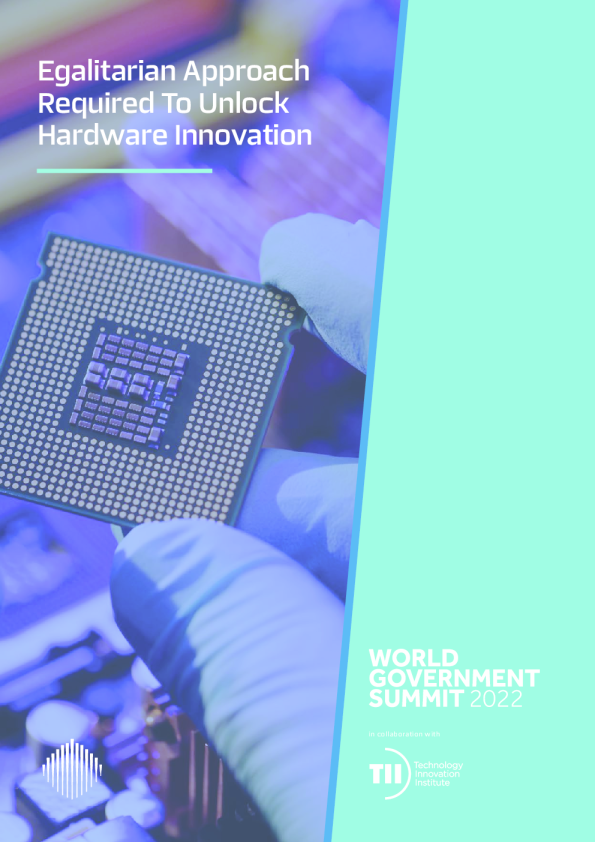
The World Government Summit is a global platform dedicated toshaping the future of governments worldwide. Each year, the Summitsets the agenda for the next generation of governments with a focuson how they can harness innovation and technology to solve universalchallenges facing humanity.The World Government Summit is a knowledge exchange center at theintersection of government, futurism, technology, and innovation. Itfunctions as a thought leadership platform and networking hub forpolicymakers, experts and pioneers in human development.The Summit is a gateway to the future as it functions as the stage foranalysis of future trends, concerns, and opportunities facing humanity.It is also an arena to showcase innovations, best practice, and smartsolutions to inspire creativity to tackle these future challenges.To Inspireand EnableThe Next Generationof GovernmentsWorld Government Summit02 Table of ContentsThe Next Wave Of InnovationBridging The Skills GapFinding A New BalanceRecommendations For Unlocking Hardware InnovationTopicsOpen PrototypingOpen InstructionsOpen Core DesignsSystems On A ChipDecentralization Of Tech EcosystemsTable of ContentEgalitarian Approach Required To Unlock Hardware InnovationBuilding The Pillars For Egalitarian TechnologyIncentivizing Diverse Talents 061230384446323334353642 Innovative silicon chipsand system design willdrive the next wave ofeconomic development.However, this innovationis now controlled bythe US and a few Asiancountries such as Korea,Japan, and Taiwan.EgalitarianApproach RequiredTo Unlock HardwareInnovation06Section 1 Between 1995 and 2015 , semiconductordesign and production has directly generatedUS$4-5 trillionin global GDP and indirectlygenerated anotherUS$15 trillion.Totalrevenues for the chip industry are now morethan$600 billiona year and growing at anannual year-over-year rate of 29%.1But the fruits of this renaissance are not beingshared equally today and are predominantlycontrolled by a few Western and Asiancompanies. A more egalitarian approach todeveloping hardware could help share thesedividends across more countries. It would alsoaccelerate the innovation required to meetglobal sustainable development goals. (SDG)Countries around the world – specificallyemerging economies that are making sizableinvestments in innovation - face considerablechallenges to meet this opportunity.Even countries in Europe with advancedeconomies are discovering their growingdependence on silicon supply chainconsolidation in Asia. Europe has been verysuccessful in creating the building blocks fornew chips, called silicon intellectual property(IP). However, Europe is getting cut outbecause they stopped making silicon at scale.Supply chain bottlenecks and geopoliticaltensions are driving uncertainty. Also, thevulnerability of the core chip-producingregions to China/US strategic competition area source of major supply chain risk.071IHS report “Moore’s Law Impact”, May 2015. New monopolies are growing on the backsof companies willing to participate and drivethe next wave of innovation. For example, PCchips and data centers are US-centric (Inteland AMD), phones are dominated by Apple(US), Qualcomm (US), Samsung (Korea),and MediaTek (Taiwan). AI and graphicsare dominated by NVIDIA (US). Computernetworking is led by Cisco (US) and Huawei(China).2Some developing countries are starting tocatch up. India, Malaysia, and Singapore havemade considerable progress, thanks to solidscience, technology, and math programs,close relations to the US, and proximity tolow-cost Asian labor. Intel and Qualcommmade considerable investments to createsilicon design centers, which helped jumpstarttheir digital economies. These design centersfurther catalyzed the growth of smallerstartups innovating on new chip designs.3Developing countries like Saudi Arabia,Egypt, and Turkey, face significant challengesin building up the local talent required toparticipate in the next wave of hardwareinnovation. Africa is behind everyoneelse in terms of investment, training, andgovernment infrastructure. They provide a lotof the minerals that go into the new economyyet do not get much opportunity to participate.This creates a chicken or egg problem in whichleading system design houses are hesitant toinvest owing to the limited market and skills.Moreover, students are unwilling to learn therequisite skills due to limited job prospects intheir own geo.082IVaras, A., Varadarajan, R., Goodrich, J. Yinug, F., 2020. Government Incentivesand US Competitiveness in Semiconductor Manufacturing.https://www.semiconductors.org/wp-content/uploads/2020/09/Government-Incentives-and-US-Competitiveness-in-Semiconductor-Manufacturing-Sep-2020.pdf3Ticky, 2022 The current lock on silicon and system designis also exacerbating a brain drain of the bestand brightest of the developing world towardswestern markets like the US. This erodes thelimited opportunities that exist for developingcountries to participate in the new economy.A new approac