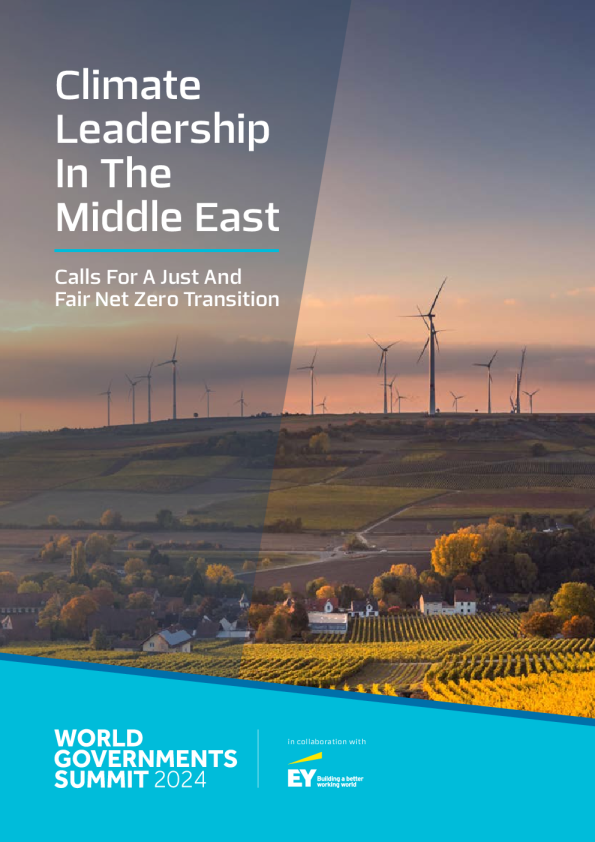
中东气候行动的可持续政策:实现净零排放目标
in collaboration with The World Government Summit is a global platform dedicated toshaping the future of governments worldwide. Each year, the Summitsets the agenda for the next generation of governments with a focuson how they can harness innovation and technology to solve universalchallenges facing humanity.The World Government Summit is a knowledge exchange center at theintersection of government, futurism, technology, and innovation. Itfunctions as a thought leadership platform and networking hub forpolicymakers, experts and pioneers in human development.The Summit is a gateway to the future as it functions as the stage foranalysis of future trends, concerns, and opportunities facing humanity.It is also an arena to showcase innovations, best practice, and smartsolutions to inspire creativity to tackle these future challenges.To Inspireand EnableThe Next Generationof GovernmentsWorld Government Summit Table of ContentsContextChallenges and OpportunitiesPolicy Actions to Reduce EmissionsPrinciples and Guidelines for Implementing Policy ActionsConclusionApply CCS and CCU Technologies to the Energy and Industrial SectorsAcknowledge and Communicate the Why, What and HowReduce Emissions in Heating and Cooling BuildingsDecarbonize Value Chains End to EndScale-Up Low-Emissions Power GenerationManage Carbon Pricing WiselyTarget Emissions in Logistics and TransportFacilitate Creative Financing ToolsIncrease the Energy Efficiency of Industrial ProcessesLeverage the Capabilities of National Oil CompaniesIncrease Women’s Participation in SustainabilityEnsure Success of Early Pilot Projects 0608102232112415271628182820293031 ContextThe Oliver Wyman Climate Action Navigator,launched in 2021, has been designed as a toolto help policy and decision-makers to achievenet zero goals by navigating the relationshipbetween global emissions targets and the leversto achieve them. The Navigator provides specificdetails on potential actions, policy best practicesand tools that can be used across all economicsectors and geographies to reduce emissionsand meet emission targets.The Oliver Wyman Climate Action Navigator defines theMiddle East region as including:• United Arab Emirates (UAE)• Bahrain• Iran• Iraq• Israel• Jordan• Kuwait• Lebanon• Oman• Palestine• Qatar• Saudi Arabia• Syria• YemenGovernments in the Middle East have realizedthe importance of reducing emissions. SaudiArabia3and Bahrain4have pledged to reach netzero emissions by 2060, while the United ArabEmirates5is set to do so by 2050.In addition, the Saudi Green initiative has set anambitious target to reduce CO2 emissions by 278MTA by 20306. Qatar has also committed to reducinggreenhouse gas emissions by 25% by 20307.These goals for achieving net zero emissionssignal a momentous shift in the region’s climate6 World Government SummitThe world must act immediately to avoid theworst impacts of irreversible climate changeand environmental catastrophe. To prevent theworst effects of climate change, we need tolimit global warming to 1.5 degrees Celsius1.This means cutting global emissions by 7% eachyear until 20302. To achieve this, we must closethe gap between the emissions expected as percurrent trends and the targeted levels needed toachieve a sustainable future.policies, especially since they significantlyimpact the region’s economic and socialdevelopment. Achieving the net zero targets isparticularly challenging for these countries asthey rely largely on oil production to financetheir public spending and grow their economies.It is also worth noting that Middle Easterneconomies are still transitioning towardsdeveloping industrial and manufacturingcapabilities, which presents significantstructural challenges to switch to loweremissions and greener technologies. Figure 1Announced Carbon Zero Targets for Select MENA GeographiesUnited Arab Emirates(UAE)Kingdom of Saudi Arabia(KSA)QatarEmission ScopeNet zero carboncommitment by 2050No specified emissionscoverageIt is assumed the UAE’starget only covers CO2emissionsNet zero emissions by 2060No explicit informationon the sectors and gasescovered by the net zero targetIt is assumed Saudi Arabia’starget currently only coversCO2 emissions25% cut in greenhousegas emissions by 2030Execution Approach$160 billion in energy sectorinvestments towards 2050In line with Vision 2021,the UAE:Generates 27% energy fromclean sourcesReduce share of powergeneration from gasReduce per capitagreenhouse gas emissions,andAchieve average oilconsumption of 5 tonsper person“Carbon Circular Economy”approach focuses on CarbonCapture Storage (CCS)technologies over reducedreliance on fossil fuelsAims to reduce “carbonintensity” of its liquefiednatural gas (LNG)facilities by 25% by 2030Pledged to intensifyefforts at carbon captureand storage at its gasproduction facilitiesCurrently the world’slargest producer of LNGAims to expand LNGproduction to 127 milliontonnes annually by 2027Source: Climate Action Tracker, ReutersThis report is written in the cont