您的浏览器禁用了JavaScript(一种计算机语言,用以实现您与网页的交互),请解除该禁用,或者联系我们。[世界政府峰会]:政府人力资源的未来前沿:引领工作的发展 - 发现报告

政府人力资源的未来前沿:引领工作的发展

AI智能总结
查看更多
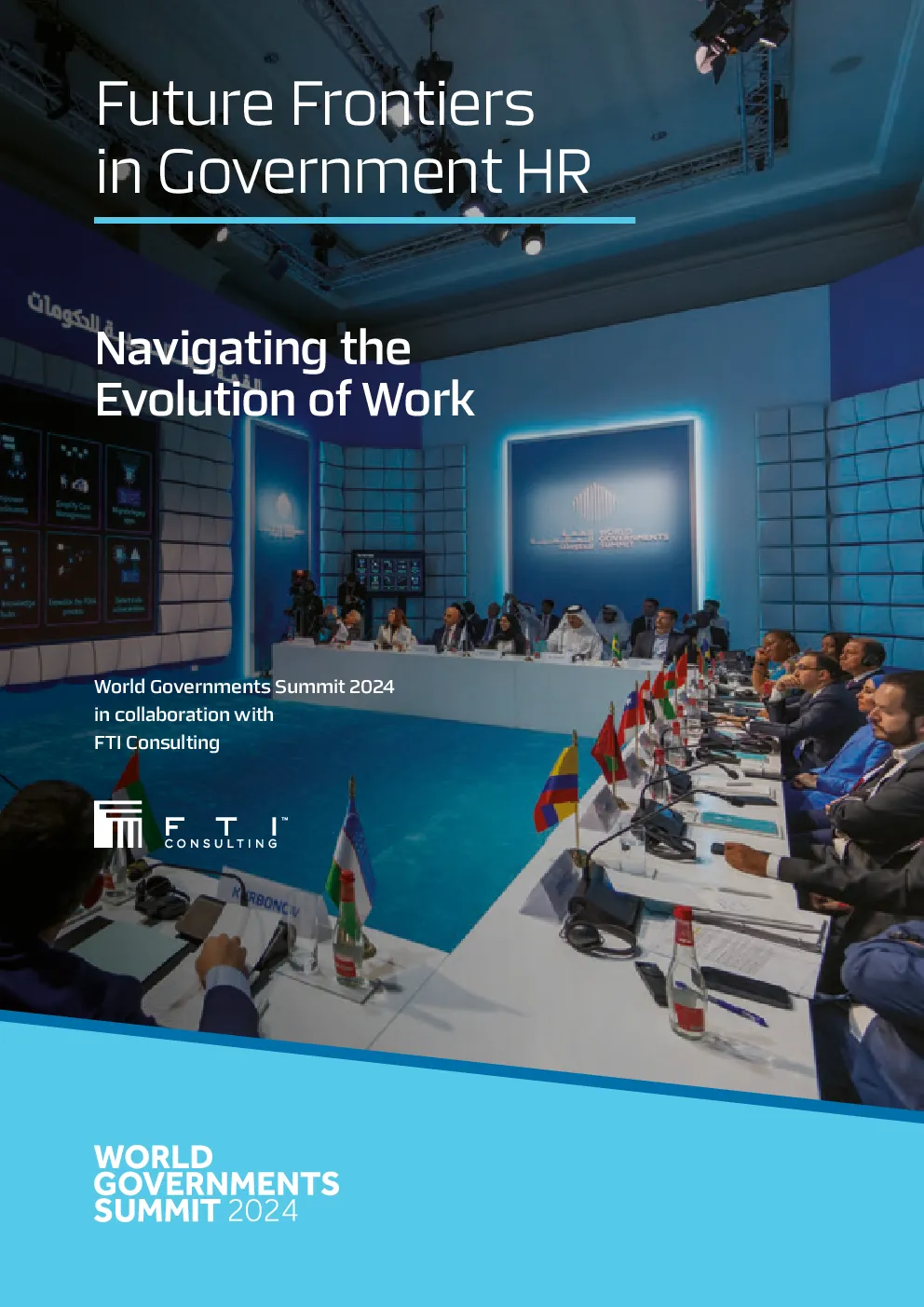
政府人力资源的未来前沿:引领工作的发展

The World Governments SummitSHAPING FUTURE GOVERNMENTSThe World Governments Summit is a global platformdedicated to shaping the future of governmentsworldwide. Each year, the Summit sets the agenda for thenext generation of governments with a focus on how theycan harness innovation and technology to solve universalchallenges facing humanity.The World Governments Summit is a knowledge exchangecenter at the intersection of government, futurism,technology, and innovation. It functions as a thoughtleadership platform and networking hub for policymakers,experts and pioneers in human development.The Summit is a gateway to the future as it functionsas the stage for analysis of future trends, concerns, andopportunities facing humanity. It is also an arena toshowcase innovations, best practice, and smart solutionsto inspire creativity to tackle these future challenges. ABOUT THEROUNDTABLEAs part of World Governments Summit 2024, aroundtable discussion under the title of“Future ofGovernment HR”was held with the participation ofsenior public sector representatives from governmentsaround the world. The roundtable also included privatesector representatives from leading organizations, andtechnical subject matter experts in the fields of humancapital development and technology.The roundtable discussion examined long-rangeissues with respect to the evolution of work, andparticularly work in the public sector (also referred toas civil service). Technological innovations such asgenerative AI took center stage throughout all partsof the roundtable discussion which covered skills, productivity, and digital systems. The speakers sharedinnovative practices in talent attraction, development,and retention based on real experiences and learningsfrom futuristic applications of HR management withineach of their governments.Throughout the session, the importance of suchknowledge and experience sharing amongstgovernments was further underlined. Inputs from theroundtable were a pivotal source of information for thisreport, encompassing a wide range of market insights,public sector case studies, and vibrant discussionswhich were integral to understanding the potentialfuture landscape of government HR. TABLE OF CONTENTSTOPICSExecutive SummaryConclusionReferencesChapter 1:REDEFINING SKILLSReshaping work with future models and skillsChapter 2:CULTIVATING PRODUCTIVITYPaving the way for a new workforceChapter 3:ENABLING SUCCESSBuilding ecosystems for talent to thrive Page6353981727 In a world reshaped by climate change, artificialintelligence, and pandemics, the very essence ofnormality is undergoing a profound transformation.These forces are not only altering habits, but alsothe ways in which people communicate, learn, andperform tasks.Humans and machines are gradually merging,especially in sectors where production or servicedelivery are heavily influenced by technology; thiscalls for continuous skills adaptation and training tostay relevant in the job market. Workflow dynamicsare evolving, with transitions occurring both ona macro scale through the identification of newmanufacturing zones, and at a micro level with a risein remote work over conventional office settings.The increased focus on long-term sustainability ischanging growth and wellbeing metrics, leading toa reassessment of human capital management andcompensation policies.As we navigate the complex intersection ofsocietal shifts and technological advancements,investigating the trajectory of the future of humanresources is critical for governments and institutionsseeking resilience and competitiveness. Thisrevolution cannot be effectively addressed only byindividuals or corporate HR departments: as withevery systemic change, it is key that the public sectorleads the process by conceiving a general strategicvision and providing the tools to implement it inspecific areas, industries and organizations.Governments are called upon to:•Identify future skills,appreciating thecapabilities needed in the long term and issuingpolicies that enable people and professionals tofully develop them.•Redefine productivity,reflecting on the newmeaning of this concept and its associatedindicators, while taking into consideration itssustainability over time as well as digital tools tofoster it.•Design new work environments,enhancingorganizational agility and experience, andmaximizing the potential for efficiency gains.While global leaders chart the path ahead and dealwith transformative forces, the need for proactiveadaptation and strategic foresight has never beenmore evident. The future of work and humanresources will require a forward-thinking approachthat addresses evolving needs and harnesses thepower of technology to drive growth.EXECUTIVE SUMMARY The third chapter will zoom in on evolving workenvironments, emphasizing the importance of sharedinfrastructures, a new concept of talent experience,and the reinvention of offices. While organizations keepdecentralizing their support functions an