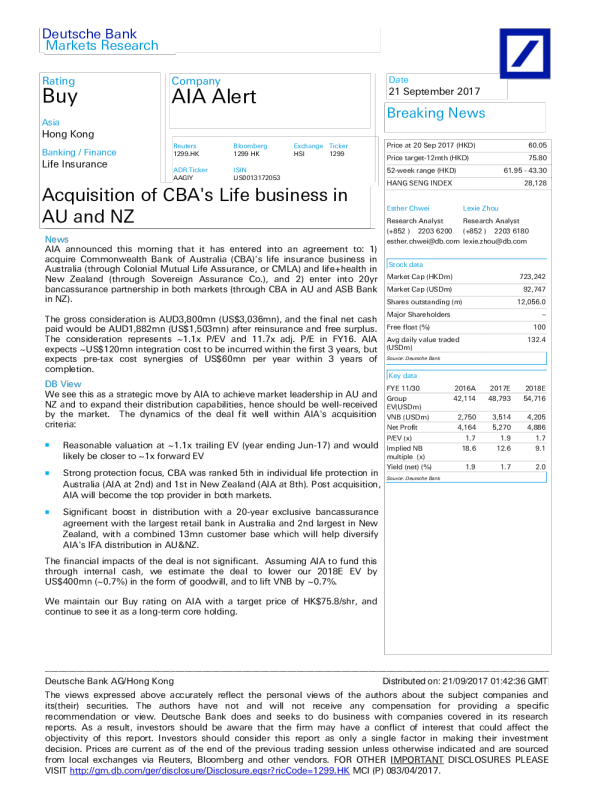
英国公平人寿:监管和重组的十年
The Geneva AssociationThe Geneva Association is the leading international insurance think tank for strategically important insurance and riskmanagement issues. The Geneva Association identifies fundamental trends and strategic issues where insurance plays asubstantial role or which influence the insurance sector.Through the development of research programmes, regular publicationsand the organisation of international meetings, The Geneva Association serves as a catalyst for progress in the understanding ofrisk and insurance matters and acts as an information creator and disseminator. It is the leading voice of the largest insurancegroups worldwide in thedialoguewith international institutions. In parallel, it advances—in economic and cultural terms—thedevelopment and application of risk management and the understanding of uncertainty in the modern economy.The Geneva Association membership comprises a statutory maximum of 90 chief executive officers (CEOs) from the world’stop insurance and reinsurance companies. It organises international expert networks and manages discussion platforms forsenior insurance executives and specialists as well as policymakers, regulators and multilateral organisations.Established in 1973, The Geneva Association, officially the ‘International Association for the Study of Insurance Economics’, isbased in Zurich, Switzerland and is a non-profit organisation funded by its members. Equitable Life U.K.: a Decade ofRegulations and RestructuringWritten by Dalit Baranoff and Christopher O’Brien. Edited by Etti Baranoff. Equitable Life U.K.: a Decade of Regulations and Restructuring© The Geneva AssociationPublished by The Geneva Association—‘International Association for the Study of Insurance Economics’, Zurich.The opinions expressed in The Geneva Association newsletters and publications are the responsibility of the authors. We thereforedisclaim all liability and responsibility arising from such materials by any third parties.Download the electronic versionfromwww.genevaassociation.org.The Geneva AssociationThe Geneva Association—‘International Association for the Study of Insurance Economics’Zurich | Talstrasse 70, CH-8001 ZurichEmail: secretariat@genevaassociation.org | Tel: +41 44 200 49 00 | Fax: +41 44 200 49 99 www.genevaassociation.org@TheGenevaAssocSeptember 2016Cover page—Fotolia©Bluebay2014 2Photo Credits: ContentsExecutive SummaryReport1. Background2. Guaranteed Annuity Rates3. Underlying Problems4. Crisis and Action Taken5. Conditions and Rules in 2015 and InsightsReferencesNote on the Authors 3Equitable Life U.K.: a Decade of Regulations and Restructuring49111316192224 4www.genevaassociation.orgExecutive SummaryThe Equitable Life Assurance Society was a major U.K. lifeinsurer that ran into severe financial difficulties in the late1990s. It nearly went insolvent after a judgment in 2000by the House of Lords concerning its pension policies withguaranteed annuity rates (GAR). The judgment led to an ad-ditional £1.5 billion in liabilities. The Society stopped takingnew business in December 2000, reached a compromiseagreement with its policyholders and began selling off itsassets. Fifteen years later, Equitable Life is still running downits business. However, this ‘run-off’ was only one part ofthe Equitable Life’s actions in response to the sudden andunexpected increase to its liabilities following the House ofLords judgement.Equitable Life’s products with guarantees:A mutual insur-er founded in 1762, Equitable Life primarily sold with-profitspolicies (equivalent to participating policies in the U.S.), inwhich the Society's surplus was shared with its policyhold-ers. The policies that led to the troubles were issued from1957–1988 and contained a guaranteed annuity rate. Thesepolicies typically guaranteed that £100 cash at retirementcould be converted into a £10 per annum annuity, regardlessof external financial conditions at the time. The GAR was setat the time a policy was written (during times when interestrates were relatively high), with no special guarantee fee: itwas the equivalent of a free guarantee. Furthermore, in itsannual statements sent to policyholders, the Society didnot distinguish between classes of policyholders, providingsimilar estimates of benefits to both GAR and non-GARpolicyholders. While Equitable Life stopped offering GARpolicies in 1988, this product would have financial implica-tions for years to come. In 2000, 20 per cent of the Society'sliabilities were on policies with a GAR.How aGAR policyworked:At retirement, a GAR policyholderused the cash sum, including bonuses awarded, to buy an an-nuity that provided either the market rate or the guaranteedrate, whichever was higher. Thus, when the GAR exceeded themarket annuity rate, policyholders selecting the GAR requiredmore outlay of annuity amounts from the Society.Equitable’s deteriorating capital condition:Equitable Lifedid not have the reserves to pay the additional costs forguarantees that we