新的护理模式:保险公司如何应对老龄化和疾病加重社会的挑战
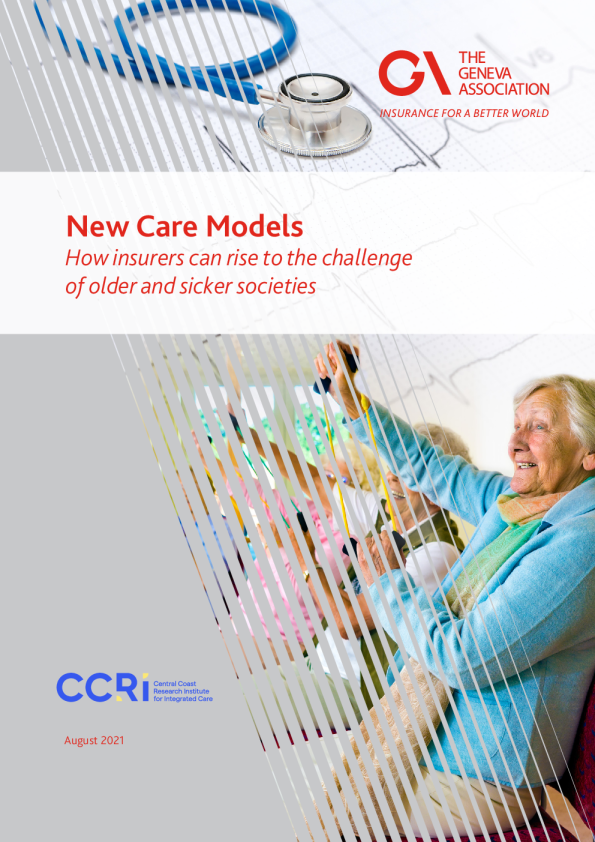
Adrita Bhattacharya-CravenDirector Health & AgeingThe Geneva AssociationNicholas GoodwinDirector, Central Coast Research Institute for Integrated CareUniversity of Newcastle and the Central Coast Local Health DistrictNew Care ModelsHow insurers can rise to the challengeof older and sicker societies 2www.genevaassociation.orgThe Geneva AssociationThe Geneva Association was created in 1973 and is the only global association of insurance companies; our membersare insurance and reinsurance Chief Executive Officers (CEOs). Based on rigorous research conducted in collaborationwith our members, academic institutions and multilateral organisations, our mission is to identify and investigatekey trends that are likely to shape or impact the insurance industry in the future, highlighting what is at stake forthe industry; develop recommendations for the industry and for policymakers; provide a platform to our membersand other stakeholders to discuss these trends and recommendations; and reach out to global opinion leaders andinfluential organisations to highlight the positive contributions of insurance to better understanding risks and tobuilding resilient and prosperous economies and societies, and thus a more sustainable world.Photo credits:Cover page— Boris Ryaposov, Belushi andJimmy Yan / Shutterstock.comGeneva Association publications:Pamela Corn, Director CommunicationsHannah Dean, Editor and Content ManagerPetr Neugebauer, Digital Media ManagerSuggested citation:The Geneva Association. 2021.New Care Models: How insurers canrise to the challenge of older and sicker societies.Authors: AdritaBhattacharya-Craven and Nicholas Goodwin. August.© The Geneva Association, 2021 All rights reservedwww.genevaassociation.org ContentsForeword1.Executive summary2.Introduction3.The case for New Care Models4.Highlights from key informant interviews5.Recommendations for insurers6.ConclusionReferences 3New Care Models: How insurers can rise to the challenge of older and sicker societies691023293233 4www.genevaassociation.orgAcknowledgementsThis publication is a product of the Health & Ageing work stream of The Geneva Association, co-sponsored by ThomasBuberl, CEO of AXA, and Michel Khalaf, CEO of MetLife.We are very much indebted to the members of the Working Group, established in support of the research activities ofour Health & Ageing work stream, who guided the development of this report, as well as our external partners at theUniversity of Newcastle and the Central Coast Local Health District, NSW, Australia.In addition, we extend our deepest gratitude to those who contributed key insights and data for this report:Andrew Wong (Prudential Asia), Bruno Scaroni (Generali), Christian Wards (AIA), Jeff Brenner (UnitedHealthcare), JonathanBroomberg (Vitality Health International and Discovery), Lauren Liang (Swiss Re Asia), Lindsay Hanson (John Hancock),Margaret-Mary Wilson (UnitedHealth), Sanjeev Kapur (MetLife), Simon Guest (Generali Vitality), Sneh Khemka (AetnaInternational), Stacy Borans (Advance Medical Strategies), Stephen Brenzek (AXA Germany), Steve Woh (ReinsuranceGroup of America), Tasha Barbour (PartnerRe), Thanos Moulovasilis (Generali), Zhu Yougang (Ping An Health). Foreword The landscape of health and social care is not fit for purpose.The prevalence and impact of non-communicable diseases (NCDs) – such ascardiovascular diseases, cancer, diabetes, and mental illness – are on the rise. NCDs affectolder, middle-age and even younger populations alike, meaning a person may requiredisease care and management for decades of their life. Low-income populations are atspecial risk of unhealthy habits and exposures linked to NCDs.Despite this greater occurrence of sickness, people are living longer. The World HealthOrganization projects that by 2050 there will be two billion older persons (people overthe age of 60) worldwide, more than double the number in 2015. With decreased fertilityrates, there are already more older persons than children under five years old. Olderpopulations are often, of course, afflicted by comorbidities and have multiple care needs.The cost implications of these trends for societies are severe. However, it is hardlyworthwhile to think only about how to absorb care costs; we must rethink the nature ofcare itself, with the sustainability of the health and life insurance industry in mind.New Care Models (NCMs), the focus of this report, carry a great deal of promise. First, byemphasising prevention, they help people mitigate the factors that contribute to the onsetof disease. Second, they integrate all aspects of care needs, from health to age-related.Third, they aim to ‘de-institutionalise’ care by moving it out of expensive hospitals andfacilities and into home- and community-based settings, often aided by digitalisation.If implemented successfully, the improvements will be significant: a more positivecare experience for people, better health outcomes, and less costly services for allstakeholders in