您的浏览器禁用了JavaScript(一种计算机语言,用以实现您与网页的交互),请解除该禁用,或者联系我们。 [RLB]:全球建筑业的逆风和头痛 - 发现报告

全球建筑业的逆风和头痛

建筑建材 2023-06-28 RLB 顾小桶🙊
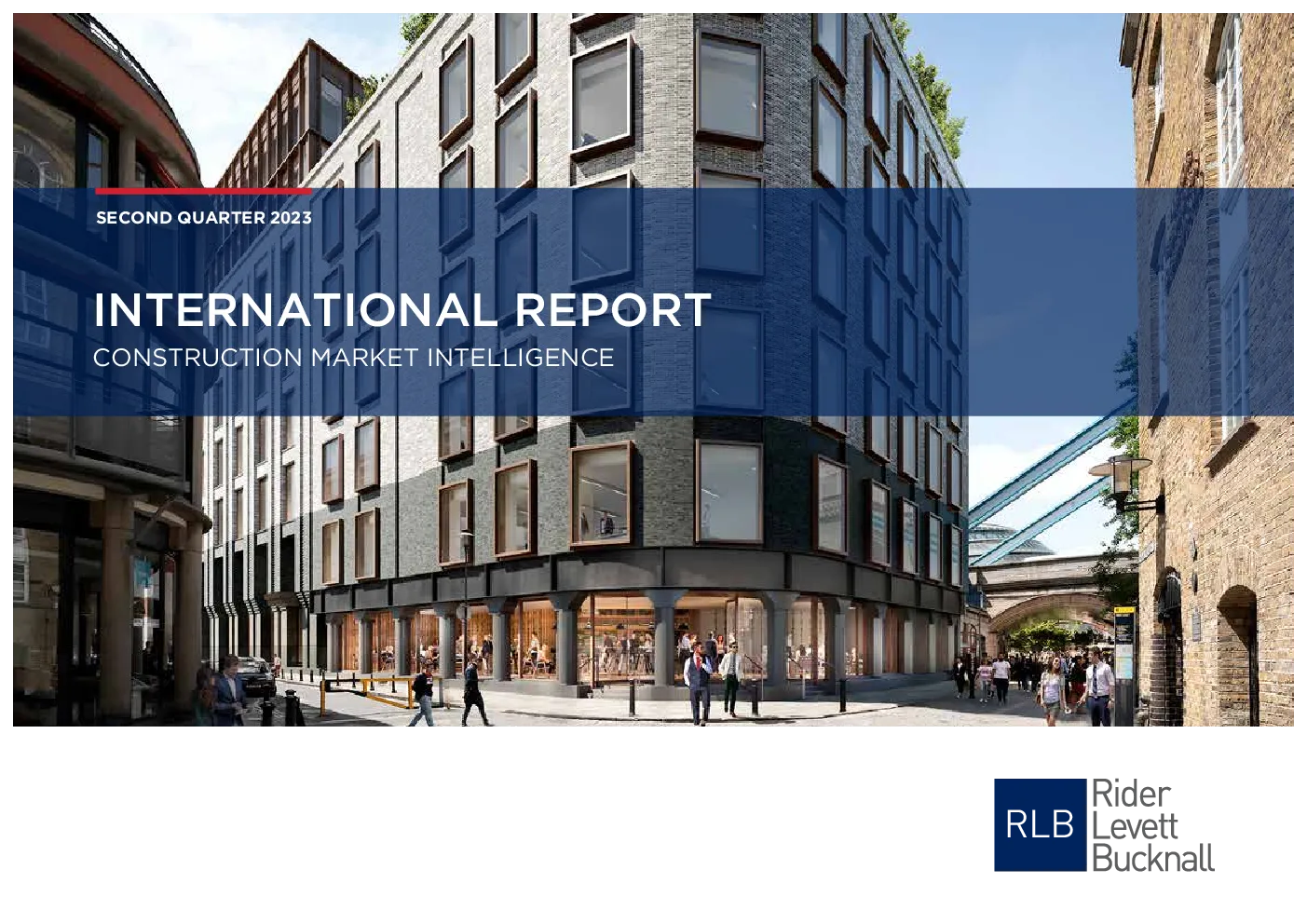
报告封面

CONSTRUCTION MARKET INTELLIGENCE INDEPENDENT CONSULTANTS, LOCAL KNOWLEDGEAND EXPERTISE, GLOBAL NETWORK Each RLB office contributes to the global intelligence providing insights into theconditions and trends that impact the local construction industry The informationgathered and disseminated by each office includes As the largest independent and most geographically prevalent construction costconsultancy of its kind in the world Rider Levett Bucknall (RLB) has access to theforemost construction market intelligence §RLB Crane Index§Forecast Tender Price Index uplifts§RLB Construction Market Activity Cycle§Key building type cost ranges in local currencies RLB collects and collates construction data and forecast trends—on a globalregional country city and sector basis—from its comprehensive network of officesaround the globe The RLB International Report which is published half-yearlypresents a snapshot of this data TENDER PRICE INDEX BUILDING COST RANGES CONSTRUCTION MARKET INTELLIGENCE RLB’s Tender Price Index (TPI) showcases the historicaland forecast movements in construction cost inflationand escalation on an annual basis The TPI annual raterepresents an overall forecast of the movement ofconstruction costs for the industry within the key cities ofRLB’s network of offices RLB’s regularly updated Building Cost Ranges canbe found via the RLB website (wwwrlbcomccc) A summary of Construction Market Intelligence isprovided by each region highlighting the issuesthat are impacting the construction industry andproviding key insights into current constructionprice movements Each region’s Cost Intelligence publication featurescurrent building cost ranges and each publicationcan be found on wwwrlbcom under the ‘Insights’tab RLB MARKET ACTIVITY CYCLE RLB CRANE INDEX RELATIVITY INDEX The RLB Crane Indexprovides a simplifiedmeasure of the current state of the constructionindustry’s workload in key locations around theworld RLB offices record fixed crane numbersacross key cities by project sector which providesan overview of how markets change over time Using TPI data and cost modelling RLB provides ageneral cost comparison for building costs betweenlocations The Relativity Index ranks each city inrespect of other locations within the RLB network ofoffices Currently  cities are included in the index The RLB Market Activity Cycle focuses on ten key sectorswithin the overall construction economy Local RLBDirectors assess the current position of each sector withinthe market activity cycle for each respective city EXECUTIVE SUMMARY In April  RLBs Global Board identified several global challenges impacting the group and the wider construction industry The industry is dynamic and continuallyevolving facing disruptive changes in politics economy society and environment leading to a redefinition of traditional construction delivery One of the most significantimpacts is the shift towards sustainable development creating new client offerings such as carbon quantification in buildings Consequently the demand for skilledexpertise in sustainable design features and green building practices is increasing as the industry transitions towards greener and more sustainable outputs vulnerabilities However in the past six monthsthere has been a slight easing of pressures within theindustry The RLB Market Activity Cycle survey resultsshow a general trend of a shift from the trough zone tothe mid zone indicating an upward movement withinthe cycle Some sectors that were previously in thepeak zone have also moved to the mid zone indicatinga global realignment towards a more cautious market Technology adoption and integration Theconstruction industry is undergoing a digitaltransformation with the adoption of technologies likeBuilding Information Modelling (BIM) drones andautomation However integrating these technologiesinto existing workflows and upskilling the workforceremain significant challenges for many companies The application of disruptive technologies suchas D printing robotics modular constructionbioplastics and engineered wood can improve theefficiency safety and sustainability of traditionalconstruction However the impact of technology onthe industry is also changing the skills and expertiserequired by construction professionals Thereforeinvestment and training in digital surveying toolsand the use of artificial intelligence (AI) are crucialin enhancing efficiency accuracy and collaborationThese technologies necessitate a new set of skills andexpertise from our staff Infrastructure funding gaps Many countries strugglewith significant funding gaps in infrastructure limitingtheir ability to invest in new projects and maintainexisting infrastructure As the development cycle moves towards the midzone future development commencement decisionswill be influenced by current factors affectingconstruction inflation While conc