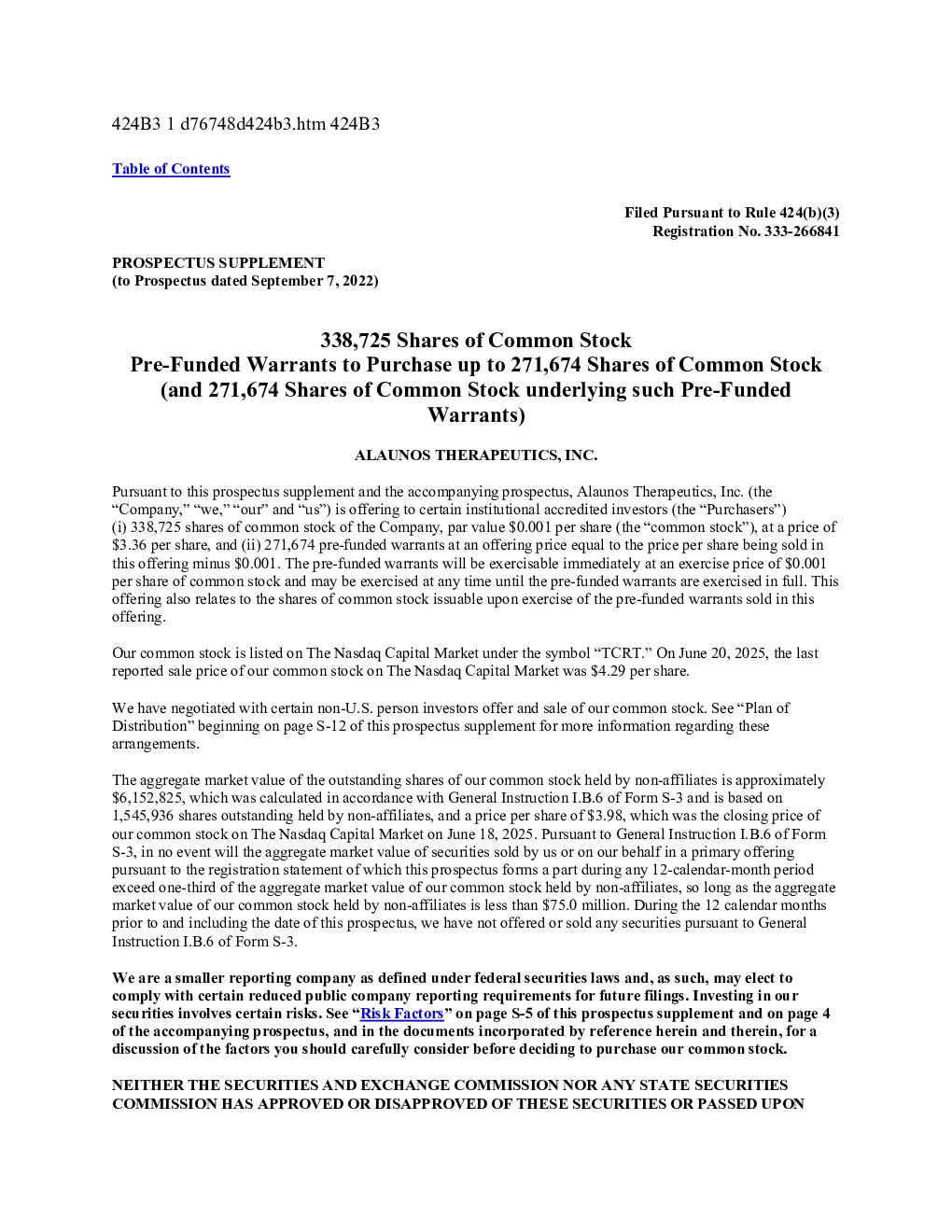
Alaunos Therapeutics, Inc. (TCRT) is a preclinical-stage biopharmaceutical company focusing on obesity and metabolic health. The company is developing ALN1001, a small molecule obesity treatment, and previously worked on TCR-T cell therapies for cancer.
Current Status:
- The company has shifted its focus from TCR-T to ALN1001 following the termination of its cancer program in 2023.
- ALN1001 is in preclinical development with in vitro studies underway to evaluate its impact on lipid deposition and gene expression.
- The company plans to conduct a proof-of-concept study in rodent models if the in vitro results are positive.
Financials:
- The company has experienced declining cash reserves and received a delisting notice from Nasdaq due to its shareholder equity falling below the required threshold.
- The company is seeking to raise capital through the offering of 338,725 shares of common stock at $3.36 per share and 271,674 pre-funded warrants at $3.359 per share.
- The net proceeds from the offering are expected to be approximately $1.89 million and will be used for working capital and general corporate purposes.
Risk Factors:
- The company faces significant risks, including the potential failure of ALN1001 to reach clinical trials or achieve commercial success.
- The company's stock price is highly volatile, and future sales of its common stock could negatively impact its value.
- The company has a high degree of dilution risk due to the issuance of additional shares and warrants.
Future Plans:
- The company is exploring strategic alternatives, including potential acquisitions, partnerships, or further capital raises.
- The company intends to continue its development of ALN1001 and potentially resume TCR-T development if market conditions change.
Market Outlook:
- The global obesity market is experiencing rapid growth, driven by increasing obesity prevalence and demand for effective weight management solutions.
- The company believes ALN1001 has a differentiated profile compared to existing obesity treatments and aims to address the shortcomings of injectable GLP-1 receptor agonists.