新机遇:多资产公告
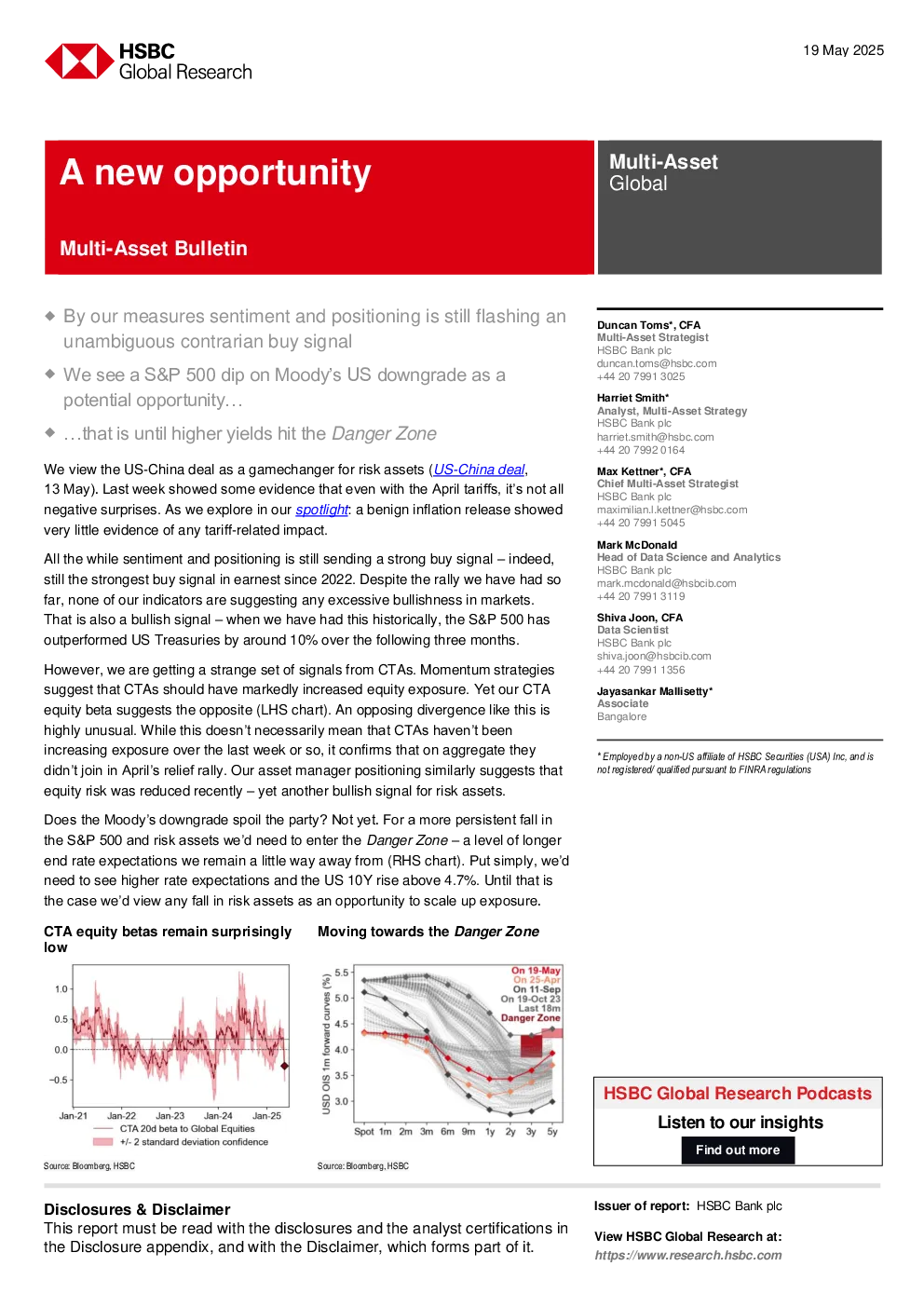
Disclosures & DisclaimerThis report must be read with the disclosures and the analyst certifications inthe Disclosure appendix, and with theDisclaimer, which forms part of it.By our measures sentiment and positioning is still flashing anunambiguous contrarian buy signalWe see a S&P 500 dip on Moody’s US downgrade as apotential opportunity……that is until higher yields hit theDanger ZoneWe view the US-China deal as a gamechanger for risk assets (US-China deal,13 May). Last week showed some evidence that even with the April tariffs, it’s not allnegative surprises. As we explore in ourspotlight: a benign inflation release showedvery little evidence of any tariff-related impact.All the whilesentimentandpositioningis still sending a strong buy signal–indeed,still the strongest buy signal in earnest since 2022. Despite the rally we have had sofar, none of our indicators are suggesting any excessive bullishness in markets.That is also a bullish signal–when we have had this historically, the S&P 500 hasoutperformed US Treasuries by around 10% over the following three months.However, wearegetting a strange set of signals from CTAs. Momentum strategiessuggest that CTAs should have markedly increasedequity exposure. Yet our CTAequity betasuggeststhe opposite(LHS chart). Anopposingdivergencelike thisishighly unusual. While thisdoesn’t necessarily mean that CTAs haven’t beenincreasing exposure over the last week or so, it confirmsthat on aggregate theydidn’tjoin in April’s relief rally.Our asset manager positioning similarly suggests thatequity risk was reduced recently–yet another bullish signal for risk assets.Does the Moody’s downgrade spoil the party? Not yet. For a more persistent fall inthe S&P 500 and risk assets we’d need to enter theDanger Zone–a level of longerend rate expectations we remain a little way away from (RHS chart).Put simply, we’dneed to see higher rate expectations and the US 10Y rise above 4.7%. Until that isthe case we’d view any fall in risk assets as an opportunity to scale up exposure.CTA equity betas remain surprisinglylowMoving towards theDanger ZoneSource: Bloomberg, HSBCSource: Bloomberg, HSBCA new opportunityMulti-Asset Bulletin ◆◆◆ SpotlightLast Monday’s US-China trade deal was a gamechanger in our eyes (US-China deal, 13 May).Risk assets look attractive again, and many asset classes that came under pressure in theaftermath of‘liberation day’couldrebound furtherfromhere. For example, we would expect USequities to continue gaining ground.We think Monday’s trade deal now changes how the market views economic data for April.If some of the hard data surprises negatively in the coming weeks, markets may well shrugthat off as a ‘pre-China-tariff-deal’ world and thus no longer relevant. Meanwhile continuedresilience in the hard data or even upside surprises would likely be taken as a positive–aclassic win-win situation.Take inflation:it waslower-than-expected for April. And not just that–it’s hard to see anyconcerningtrends across key categories for the MoM increase (chart 1). Even goods inflationshowed a rather benign 0.7% MoM (annualised) rise.1. April CPI: Key categories of inflationSource:HSBC, BloombergFurther still,there are relatively fewpockets of strong goods inflation among the subcategories.Chart2shows all subcategories ofUSgoodsinflation on a 3m annualised basis.Categories atthe bottom have the strongest inflation momentum–notably Audio equipment, computersoftware, and bedroom furniture. Indeed, prices for furniture and bedding rose 1.5% MoM. Yetas our economists note, this isn’t atypical enough to be viewed as conclusively reflecting highertariffs (US CPI: Stable so far, 13 May). If we take the same data as above and sort from high to low each month, it becomes hard tosee any particular evidence of an inflationary wave for goods emerging (Chart3).We willcontinue to track this closely, especially as our economists are still expecting some strongergoods inflation later in the year.3. Goods inflation heatwave–benign vs historySource: HSBC, BloombergMeanwhile on the activity side of thingswe would only be seriously worried about a weakerlabour market.Initial jobless claimsareagain running in line with seasonal norms (chart 4).Wethink aweakening labour market would be the main data category that the market couldn’t lookthrough as not reflecting the latest US-China deal.It would threaten our more positive view. Butfor now, there is little evidence to suggest any concerning weakness. 3 All the while, sentiment remainsextremelydepressed.After Monday’s sharp risk asset rally,we were expectingamoderationin how strong a contrarian buy signal we would get. That is notthe case.Quite the opposite–we still are getting very strong buy signals that we haven’t seenin earnest since 2022.Even the sell signal at 0% is bullish in itself–on average that suggeststhe S&P 500will outperformUS Treasuriesby around 10% over the following three months(Sentiment Shape-Up, 5 March 2024).5. Our sentiment buy