GLP-1 受体激动剂在 Medicaid 中的使用、增长和管理
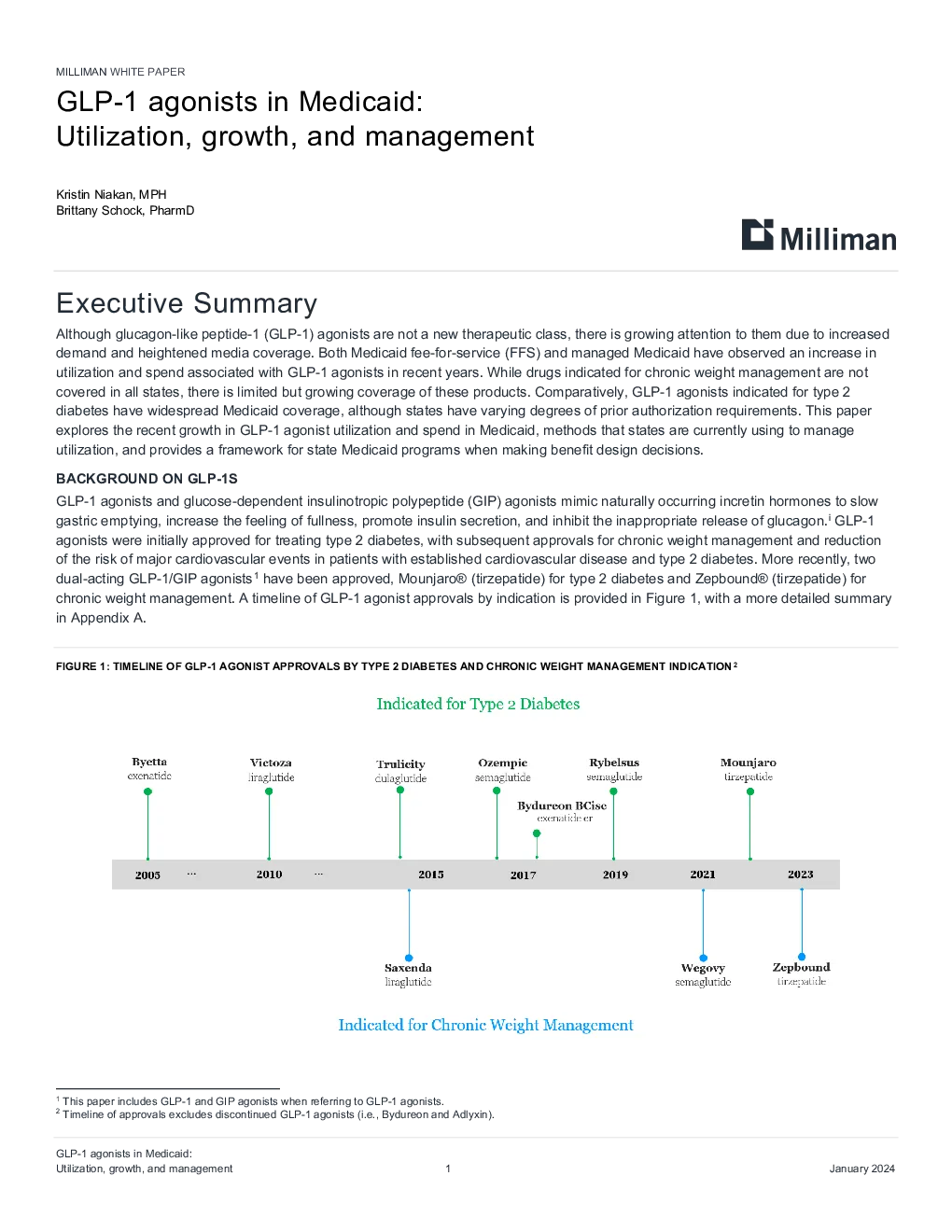
背景:GLP-1 受体激动剂最初用于治疗 2 型糖尿病,随后获批用于慢性体重管理和降低心血管事件风险。这些药物通过模拟自然增素激素来减缓胃排空、增加饱腹感、促进胰岛素分泌和抑制胰高血糖素释放。
近期增长和市场需求:近年来,GLP-1 受体激动剂的使用和需求显著增长,这归因于该药物类别的发布结果、成功案例、社交媒体的普及以及远程医疗和数字健康公司提供的处方。根据对州药物利用数据的分析,Medicaid 中 GLP-1 受体激动剂的使用量和支出都在增长。2019 年至 2022 年间,Trulicity 和 Ozempic 的处方量分别增长了 278% 和 405%,Saxenda 的处方量增长了 543%。
GLP-1 受体激动剂使用增长的驱动因素:Medicaid 中 GLP-1 受体激动剂使用增长的原因包括对治疗 2 型糖尿病和肥胖/超重的药物的需求强劲、GLP-1 受体激动剂用于慢性体重管理的覆盖范围扩大、用途扩展、新产品获批以及潜在的标签外使用。
Medicaid 对慢性体重管理 GLP-1 受体激动剂的覆盖范围:由于联邦 Medicaid 药物回扣计划要求州 Medicaid 计划提供参与制造商的所有 FDA 批准的药物,但州可以排除某些药物类别,例如慢性体重管理药物,因此 Medicaid 对 GLP-1 受体激动剂用于慢性体重管理的覆盖范围有限且因州而异。
州 Medicaid 计划如何管理慢性体重管理 GLP-1 受体激动剂的使用:为 GLP-1 受体激动剂用于慢性体重管理的州,其覆盖范围标准因州而异。例如,密西西比州要求三个阶段的授权:初始授权、重新授权和维护授权。弗吉尼亚州要求患者计划通过综合生活方式干预来减肥,并提供对肥胖是残疾和危及生命的医疗保健提供者的证明。密歇根州要求对所有用于慢性体重管理的 GLP-1 受体激动剂进行预先授权。
Medicaid 对 2 型糖尿病 GLP-1 受体激动剂的覆盖范围:虽然用于体重管理的药物并非所有州 Medicaid 计划都覆盖,但用于 2 型糖尿病的 GLP-1 受体激动剂在 Medicaid 中得到广泛覆盖,尽管各州可能有不同的预先授权要求。
州 Medicaid 计划如何管理 2 型糖尿病 GLP-1 受体激动剂的使用:各州采取了不同的方法来管理 2 型糖尿病 GLP-1 受体激动剂的使用。例如,密歇根州不需要对首选 GLP-1 受体激动剂进行预先授权,而其他州则有不同程度的预先授权标准。常见的首选 GLP-1 受体激动剂的预先授权标准包括记录 2 型糖尿病诊断、步骤疗法和/或记录合并症。
确保 Medicaid 中适当使用的框架:由于 GLP-1 受体激动剂的使用和支出不断增长,州 Medicaid 计划可能应用利用管理标准来减少与低依从性和持续性相关的浪费,确保正确的患者获得治疗,并减轻标签外使用的可能性。
利用管理策略:综合覆盖政策对于 Medicaid 计划至关重要,因为利用增加、需要生活方式改变患者支持来补充药物治疗,以及潜在进入市场的产品数量众多。例如,密西西比州药物利用审查委员会建议推广首选产品以应对非首选处方的增加,并提倡实施电子预先授权以鼓励具有适当诊断的治疗。
诊断验证:州可能需要实施系统编辑或利用管理计划来验证诊断,以防止药物被用于非覆盖或标签外用途,包括用于体重指数 (BMI) 低于阈值、缺乏合并症或用于急性减肥的患者。
预先授权以确保适当使用:预先授权是利用管理的一个核心工具,用于限制非覆盖药物的使用、减少州资源的浪费,并确保患者获得正确的药物。州可能实施预先授权要求,以确保患者在开始治疗之前具有适当的诊断,以限制 2 型糖尿病 GLP-1 受体激动剂的标签外使用。同样,州可能对用于慢性体重管理的 GLP-1 受体激动剂实施预先授权,以确保患者符合 BMI 和合并症阈值并参与生活方式改变。
生活方式改变和非药物方法的患者支持:随着对药物治疗慢性体重管理的日益普及,付款人正在寻求全面参与患者,以参与包括生活方式改变在内的多模式方法。综合生活方式干预包括减少卡路里饮食、增加体育活动和行为疗法,这些干预措施可能为患者带来长期益处。
监测 GLP-1 受体激动剂的使用和相关成本:州还可以考虑监测 GLP-1 受体激动剂患者的潜在浪费和总医疗保健成本,包括与副作用相关的成本增加,以及与改善长期健康结果相关的潜在节省。
依从性和持久性:付款人表示对 GLP-1 受体激动剂的依从性和持久性表示担忧。根据对美国 2 型糖尿病患者使用 GLP-1 受体激动剂的分析,12 个月后只有超过一半的人依从药物,47.7% 的人在 12 个月后停止治疗。一项由两家药品福利管理公司 (PBM) 对商业保险中肥胖或糖尿病前期患者新启动 GLP-1 受体激动剂治疗进行的分析发现,一年后 32% 的成员坚持治疗,一年内 27% 的成员依从治疗。
相关成本:虽然 GLP-1 受体激动剂批准用于慢性体重管理的临床试验表明体重减轻,但尚不清楚与使用这些疗法相关的健康益处是否会导致医疗保健成本的降低,以及如果会的话,时间范围是多少。州可以考虑监测 GLP-1 受体激动剂患者的潜在浪费和总医疗保健成本,包括与治疗相关的副作用成本增加,以及与改善长期健康结果相关的潜在节省。
价值为基础的合同的机会:州 Medicaid 计划可以考虑通过补充或价值为基础的协议与制造商签订合同,以帮助降低药物的成本,并引导州为其有限的资源获得更多价值。价值为基础的合同还可以作为州监测和展示积极患者结果的工具,例如:减轻主要健康问题(降低 HbA1C、体重或 BMI)或其他合并症(高血压、高胆固醇、睡眠呼吸暂停等)或减少医疗保健资源利用(住院、急诊或急诊科就诊)。
结论:Medicaid 中 GLP-1 受体激动剂的使用和支出都在增加。由于州 Medicaid 计划可能需要实施适当的利用管理标准来解决 GLP-1 受体激动剂日益增长的利用和支出、潜在的标签外利用、患者获取问题以及与依从性或中断相关的潜在浪费。在制定福利设计决策时,州 Medicaid 计划可以考虑哪些患者有资格获得这些疗法,以及如何在患者接受 GLP-1 受体激动剂治疗期间管理患者。随着这些疗法支出的持续增长,州 Medicaid 计划可能受益于监测和解决其人群中的 GLP-1 受体激动剂依从性、持久性、潜在浪费、副作用、纵向医疗结果和医疗保健利用影响。这项研究特别重要,因为缺乏 Medicaid 人群的真实世界证据,并且临床试验结果可能与真实世界结果不同。监测和分析结果可以为资源优先排序和政策决策提供见解,旨在改善患者短期和长期结果。