您的浏览器禁用了JavaScript(一种计算机语言,用以实现您与网页的交互),请解除该禁用,或者联系我们。 [奥纬咨询]:人工智能的偏见可能比人类更容易解决,原因如下 - 发现报告

人工智能的偏见可能比人类更容易解决,原因如下

信息技术 2023-06-30 奥纬咨询 CS杨林
报告封面

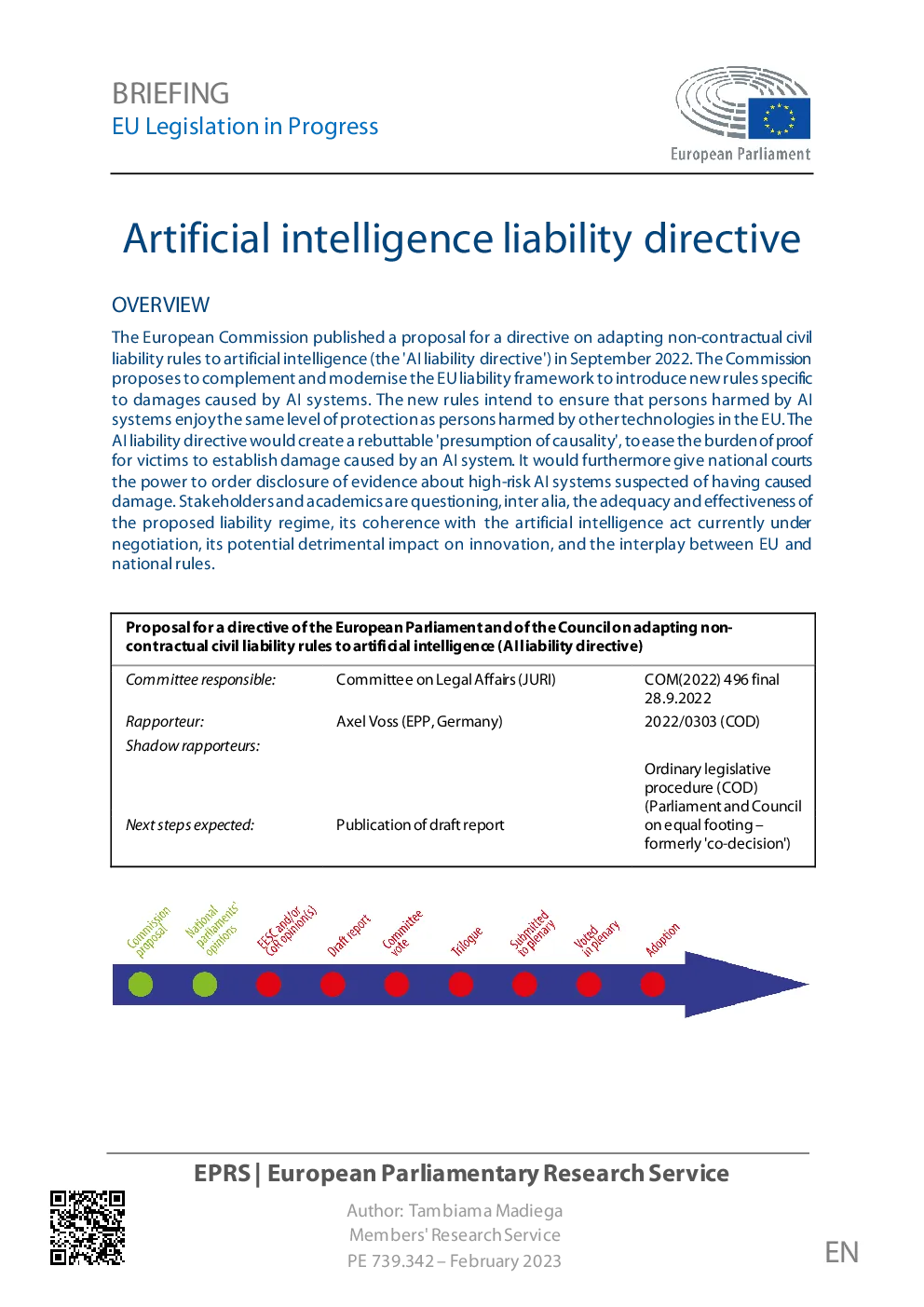
BRIEFING EULegislationinProgress Artificialintelligenceliabilitydirective OVERVIEW TheEuropeanCommissionpublishedaproposalforadirectiveonadaptingnon-contractualcivilliabilityrulestoartificialintelligence(the'AIliabilitydirective')inSeptember2022.TheCommissionproposestocomplementandmodernisetheEUliabilityframeworktointroducenewrulesspecifictodamagescausedbyAIsystems.ThenewrulesintendtoensurethatpersonsharmedbyAIsystemsenjoythesamelevelofprotectionaspersonsharmedbyothertechnologiesintheEU.TheAIliabilitydirectivewouldcreatearebuttable'presumptionofcausality',toeasetheburdenofproofforvictimstoestablishdamagecausedbyanAIsystem.Itwouldfurthermoregivenationalcourtsthepowertoorderdisclosureofevidenceabouthigh-riskAIsystemssuspectedofhavingcauseddamage.Stakeholdersandacademicsarequestioning,interalia,theadequacyandeffectivenessoftheproposedliabilityregime,itscoherencewiththeartificialintelligenceactcurrentlyundernegotiation,itspotentialdetrimentalimpactoninnovation,andtheinterplaybetweenEUandnationalrules. ProposalforadirectiveoftheEuropeanParliamentandoftheCouncilonadaptingnon-contractualcivilliabilityrulestoartificialintelligence(AIliabilitydirective)Committeeresponsible: CommitteeonLegalAffairs(JURI) COM(2022)496final28.9.2022 Rapporteur: AxelVoss(EPP,Germany) 2022/0303(COD) Shadowrapporteurs: Ordinarylegislativeprocedure(COD)(ParliamentandCouncil Nextstepsexpected: Publicationofdraftreport onequalfooting–formerly'co-decision') EPRS|EuropeanParliamentaryResearchService EN Author:TambiamaMadiegaMembers'ResearchServicePE739.342–February2023 Introduction Artificialintelligence(AI)technologiesareincreasinglyusedtoimprovedecision-makingprocessesinanumberofsectorssuchashealth(e.g.diseasediagnosistools),mobility(e.g.autonomousdrivingsystems),oragriculture(e.g.monitoringtools).1ToensurethatEuropeanscanbenefitfromthesenewtechnologiesinfullrespectofEUvaluesandprinciples,theEuropeanCommissionpledgedtoadopta'human-centric'approachtoAIandtoaddresstherisksassociatedwithAIusesinits2020WhitePaperonArtificialIntelligence. Liabilityrulesthatdeterminehowdamage–causedbyhumanactivitiesorgoodsforwhichhumansareconsideredliablebylaw–canbecompensatedhaveprovedparticularlycomplextoenforceinthecontextofemergingdigitaltechnologieslikeAI,theinternetofthingsandrobotics.2Asaresult,EUcitizensandEUbusinesses'trustinAItechnologiesisimpaired.WhileEuropeanconsumersgenerallyconsiderAIapplicationspotentiallyusefulfortheireverydaylife,suchapplicationsareperceivedasrisky,which,inturn,leadstoalowerpotentialleveloftake-up.3Likewise,arecentEUsurveyontheuseoftechnologiesbasedonAIconcludedthat33%ofenterprisesfindliabilityforpotentialdamagestobeoneofthemajorexternalchallengestoAIadoptionintheEU. Againstthisbackground,theEuropeanCommissionproposestoaddressliability-relatedchallengestoencouragetrustinthesenewemergingdigitaltechnologiesandcreatetheinvestmentstabilitynecessaryforthesuccessofAIproductandservicetake-upintheUnion.4ThenewEUrulestoaddressliabilityissuesrelatedtoAIsystemsarepartofabroadersetofinitiativesincludingaproposalforsettingcommonrulesapplicabletoallAIsystemsplacedonthemarketorusedintheEU(i.e.theAIact)andtherevisionoftheGeneralProductSafetyDirectiveandMachineryDirective. Existingsituation Existingliabilityrules TheexistingEUliabilityframeworkconsistsoftheProductLiabilityDirective85/374/EEC(the'PLD')andofnationalliabilityrulesthatapplyinparallel. Nationalliabilityrulesofferdifferentavenuestovictimstoclaimcompensation.Avictimcanmakeaclaimfordamagescausedbyproductsandservicesbasedonaperson'sconduct('fault-basedliability').Afault-basedclaimusuallyrequiresprovingtheexistenceofdamage,afaultoftheliableperson,andacausalitybetweenthatfaultandthedamage.Avictimcanalsomakeaclaimfordamagesufferedirrespectiveoffault('strictliability').Strictliabilityrulesassignliabilityfortherelevantrisktoapersonwithouttheneedtoproveafault.Undernationalrules,thevictimhasusuallyonlytoprovethattheriskstemmingfromtheliablepersonidentifiedbylaw(e.g.theoperatorwhobenefitsfromanactivitythatexposesthepublictoarisk)materialised.5 ThePLDharmonisesno-faultbased(strict)liabilityregimesforclaimsfordamagecausedtoaconsumerduetothedefectivenessofaproductatEUlevel.Thedirectiveappliestoavastrangeofproducts(fromrawmaterialstoAI-drivendevices)andlaysdowncommonrulesunderwhichtheproducer(andinsomecasesthesupplier/seller)isheldliablefordamagecausedbyadefectintheirproduct,providedthattheinjuredpartyprovesthedamage,thedefectandthecausallinkbetweenthetwo.UnderthePLD,thevictimcanclaimcompensationforpersonalinjuryordamagetoconsumerpropertystemmingfromadefectiveproductupto10yearsaftersuchproductisputintocirculation.6 Asaresult,threeavenuesforliabilityclaimsexistintheEU.Thevictimcanseekcompensationbasedonafault-basedliabilityclaim(requiresprovingdamage,faultandcausality),onastrictliability claim(independentoffault),oronaclaimagainsttheproducerofadefectiveproduct(victimsmustprovethattheproductwasdefectiveandthecausallinkbetweenthatdefectandthedamage). Concernsregardingexistingliabilityrules The201