世界旅游经济趋势报告(2022)
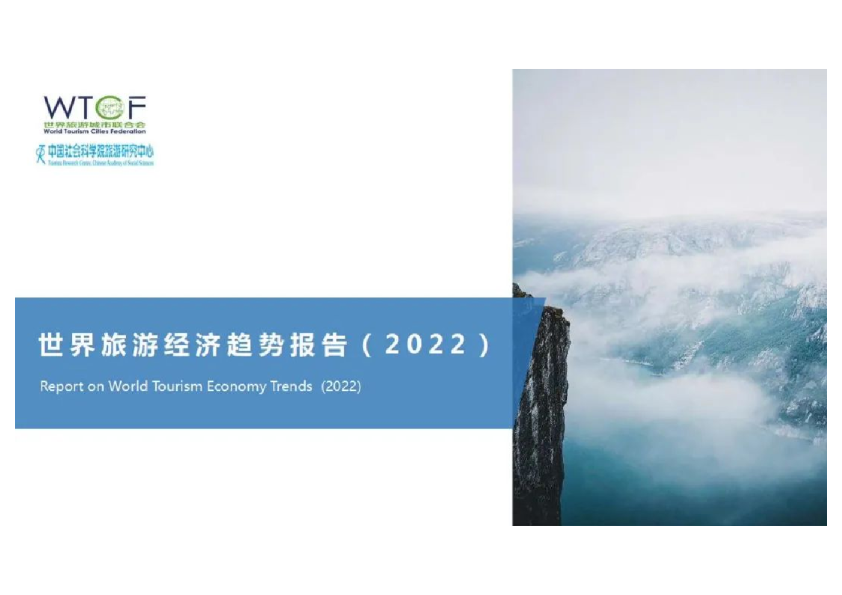
世界旅游经济趋势报告(2022) ReportonWorldTourismEconomyTrends (2022) Ⅲ.五大区域:旅游发展格局显著变化 发展环境:全球经济处于复苏之中 1.2021年美洲、欧洲占比上升,亚太占比下降2.2021年美洲、欧洲旅游复苏相对较快3.2021年欧洲、美洲和亚太旅游的经济贡献位列前三4、2022年美洲、欧洲和亚太旅游恢复程度依序降低5,2022年美洲、欧洲旅游占比上升,亚太、中东占比下降 1.全球经济增长前最改善2.新冠疫情走势仍不确定3.未来经济形势扑朔迷离4.各经济体复苏进程不一 IⅡ.全球旅游:复苏根基依然不基坚实 IV.T20国家:旅游发展与疫情走势基本吻合 1.2021年全球旅游恢复至疫情前的不足六成水平2,2021年全球派游急收入相当十GDP的比例降全3.8%3.2022年全球旅游恢复至疫情前的七成左右4.2021年全球旅游业复苏情况好于全球航空业5.2022年全球国际旅游收入将恢复至疫情前四至六成6.2021年全球国际旅游表现于国际贸易7.全球国内旅游复苏情况好于国际旅游8.发达经济体旅游复苏情况好于新兴经济体 1.七成T20国家排名位次发生变化2.T20国家多数面临挑战3.T20国家旅游经济表现均逊于本国经济4.3各T20国家确诊病例和疫苗接种率差异较大5.T20国家旅游总收入之和占全球比重连创新高6.T20国家国际旅游收入总和占全球比重先降后升7,2022年T20国家旅游恢复状况差异较大 V.重点城市:积极制定多元化发展策略 VI.细分行业:以创新手段推动旅游市场复苏 1.OTA:复苏步伐有所加快,亚太地区受到关注2.酒店业:品牌酒店发展强劲,新科技新场景成为亮点3,主题公园:疫情之下不之热点,虚实场景融合将成趋势4,博物馆业:数字化升级、内容创新和开源创收成为重点5,邮轮业:不断完善应急体系,调整和创新产品线路6.航空业:复苏程度各不相同,提质增效成为必然 VI.旅游企业:上市公司呈现结构性变化 1.旅游上市公司估值受疫情压制明显2、经营情况呈现分化,恢复基础仍不牢固3,旅游相关企业融资活力再现 VIII.未来展望:全球旅游在结构性复苏中蜕变 发展环境:全球经济处于复苏之中 DevelopmentEnvironment:TheGlobalEconomyisRecovering. 全球经济增长前景改善 是全球经济复苏态势明显 2021年10月12日,国际货币基金组织(IMF)发布《世界经济展望》指出,全球经济在2021年和2022年将分别增长5.9%和4.9% 二是全球货物贸易强劲复苏。 2021年10月4日,世界贸易组织(WTO)发布的《贸易统计及展望》中,将2021年货物贸易增速预期从8.0%上调至10.8% 三是国际投资复苏趋势相对温和 2021年10月,联合国贸发会议(UNCTAD)发布《投资趋势监测》报告指出 外国直接投资流量将进一步增长,外国直接投资流量可能恢复到2019年的水平。 First, there is stronger momentum for global economic recovery. According to the World Economic Outlook released bythe IMF on October 12, 2021, the global economy is expected to grow by 5.9% and 4.9% respectively in 2011 and 2022Second, there is stronger momentum for growth in the global trade in goods. According to the World Trade StatisticalReview released by the WTO on October 4, 2021, the expected growth rate of trade in goods in 2021 is adjusted from8.0% to 10.8%. Third, there is relatively modest recovery in the international investment. According to the GlobalInvestment Trends Monitor released by the UNCTAD in October, 2021, the global foreign direct investment (FDI) flovin the first half of 2021 is expected to reach S852 billion. It is forecast that the FD1 flows in 2022 will continue to groand might reach the level of 2019 according to the highest prediction. 新冠疫情走势仍不确定 2021年以来,从阿尔法、贝塔、伽马、德尔塔到奥密克戎,新冠病毒持续变异,疫情反复卷土重来。全球疫苗分配不均导致一些国家疫苗接种率偏低,新变异病毒出现和蔓延风险加大:新冠病毒变异加速或可破坏既有疫苗的有效性,新冠疫情未来走势仍不确定。 With new variants of coviD-19 keep popping up from Alpha, Beta, Gamma, Delta to Omicron, thepandemicmakes comebacks from time to time.The uneven distribution of vaccines globally result inrelatively low vaccination rate in some countries, which increases the risks of new variants and the spreadofthepandemic.Theacceleratedmutation maydestroythe effectivenessof existingvaccines,and thefuture of the pandemic remains uncertain. 未来经济形势扑朔迷离 受疫情走势不确定性的影响,全球经济前景仍然不基明朗。世界银行2021年6月发布的《全球经济展望》指出,在大多数地区,经济前景仍面临下行风险,包括新冠病毒的变异、巨额债务负担加剧财务压力、食品价格上升引发的社会动荡加剧等。国际货市基金组织(IMF)2021年10月发布《世界经济展望》指出,2022年之后全球经济增速预计将在中期内放缓至3.3% Amid the uncertainties of the COVID-19, the outlook for the global economy remains unclear. The Global EconomicProspects released by the World Bank in June, 2021 noted that in most regions, the economic outlook remains subject tosignificant downside risks, including a mutated virus, increased financial stress from a huge debt burden, and heightenedsocial unrest triggered by rising food prices. According to the World Economic Outlook released by the IMF in October,2021, the global economic growth is expected to slow down to 3.3% over the medium term after 2022. 各经济体复苏进程不一 世界银行2021年6月发布的《全球经济展望》报告指出,全球经济的强劲复苏集中在少数主要经济体,大多数新兴市场和发展中经济体相对滞后,疫情对低收入国家的影响正在逆转早先在减贫方面取得的成果并加剧了粮食不安全和其他长期挑战。国际货币基金组织(IMF)2021年10月发布《世界经济展望》指出,各国经济走势的分化将对中期经济表现产生持久影响,疫情造成的“断层”将持续较长时间。 The Global Economic Prospects released by the World Bank in June, 2021 noted that the strong recovery of the globaleconomy has been concentrated in few major economies, with most emerging markets and developing economiesrelatively lagging behind. The impact of the pandemic on low-income countries is reversing earlier gains in povertyreduction and exacerbating food insecurity and other long-term challenges. According to the World Economic Outlookreleased by the IMF in October, 2021, the divergence in the economic trends of different countries will have a lastingimpact on medium-term economic performance, and the abruption caused by the pandemic will last for a long time. 全球旅游:复苏根基依然不甚坚实 GlobalTourism:theFoundationofRecoveryisyettobeConsolidated 2021年全球旅游恢复至疫情前的不足六成水平 Ⅱ.全球旅游:复苏根基依然不基坚实Global tourism: the foundation of recovery is yet to be consolidated PART2 2021年全球旅游总人次(含国内旅游人次和国际旅游人次,下同)和全球旅游总收入(含国内旅游收入和国际旅游收入,下同)恢复 至2019年的53.7%和55.9% In 2021, the global tourismrecovered to less than 60%of the level beforethe pandemic. In 2021, the global total tourist arrivals (including domestic and international tourist arrivals, the same as below)) and total tourismrevenue were less than 60% of the level before the pandemic. Specifically, in 2021, the total number of global tourist arrivals was 6.6billion (see Figur